




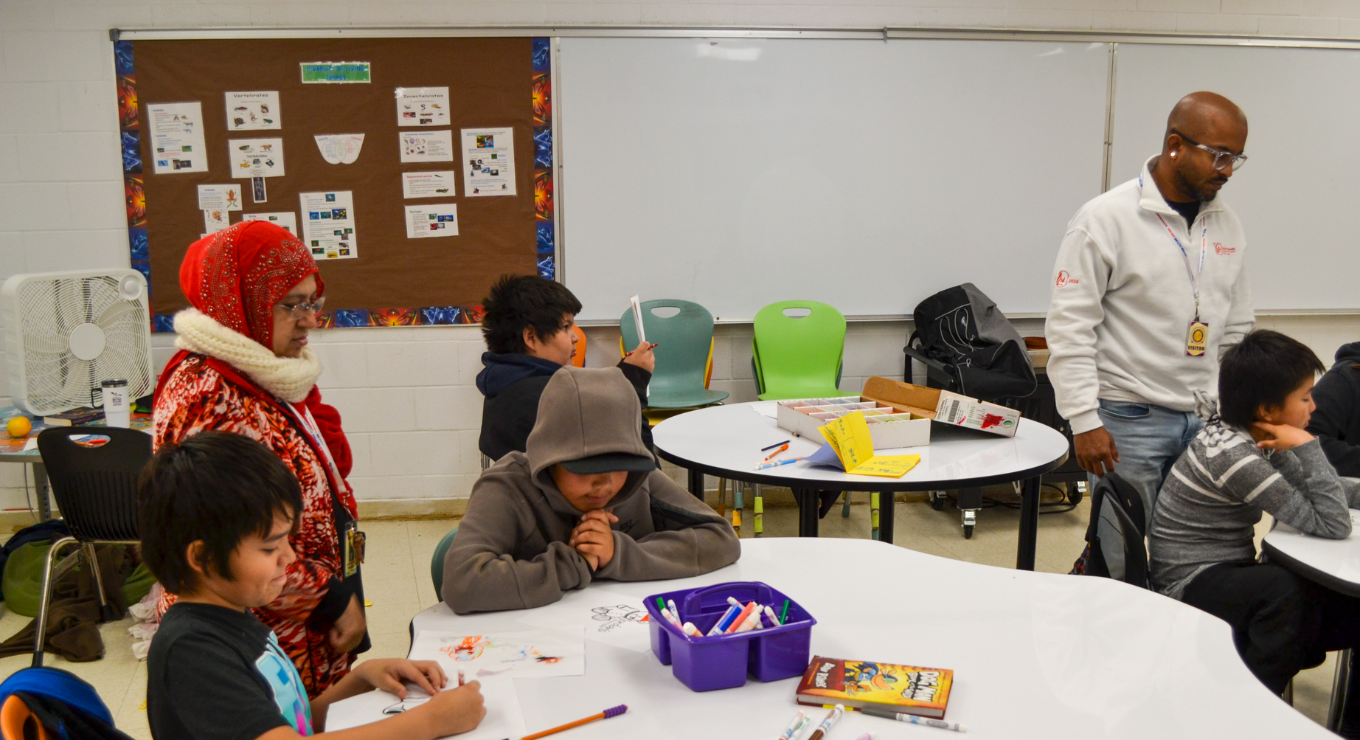
Mahid Yasin is a Teacher Development Manager at Gakino’amaage, where he provides ongoing, one-on-one support to educators teaching in northern and remote First Nations during their first two years in the classroom. Through regular check-ins by email, text, and phone—alongside in-classroom visits—Mahid works alongside educators to build relationships, share resources, support ongoing professional learning, and problem-solve as challenges arise.
Drawing on his previous experience in northern education, Mahid’s story explores how relationship-based, sustained support strengthens educators’ practice and reflects Gakino’amaage’s First Nations-led approach to teacher development.
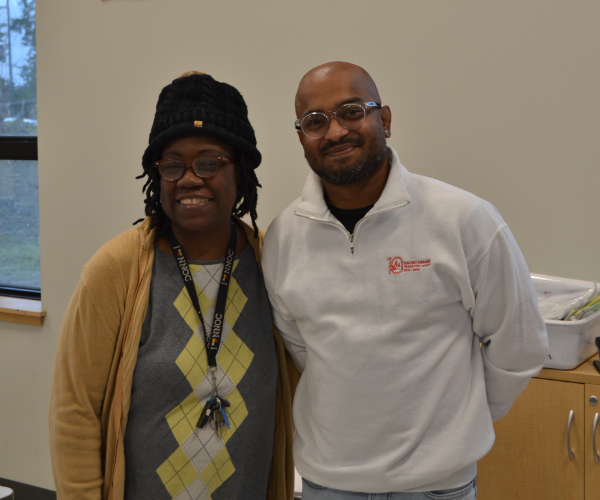
During an in-community visit, Mahid Yasin, Teacher Development Manager at Gakino’amaage, stands with Desreen Dyer, a Grade 7 teacher in Nisichawayasihk Cree Nation and member of the 2023 Cohort. In-classroom support is one form of ongoing support available to Gakino’amaage teachers.
Before joining Gakino’amaage, Mahid Yasin spent years working in northern education as a Vice Principal in the James Bay Cree Nation, which includes nine Cree First Nations across a vast region of northern Treaty 9 territory, with a combined population of roughly 30,000.
“I have seen what happens when teachers who are committed to their practice are left unsupported in the classroom,” Mahid says. “Without dedicated, ongoing support like what Gakino’amaage offers, it can be difficult for teachers coming from outside of the North to navigate cultural differences, build meaningful connections within the community, and truly practise a trauma-informed approach. Having to figure all of this out on your own can be demanding and complex.”
Seeing this firsthand shaped how Mahid understands both the challenges facing northern education and what effective support for educators actually looks like.
Now a Teacher Development Manager at Gakino’amaage, Mahid sees his role as ensuring teachers are not navigating those challenges alone.
“School administrators are often juggling multiple hats; providing long-term, individualized support to teachers coming outside of the North, which can create growing gaps and overburden school teams as a whole. This is exactly the challenge Gakino’amaage helps address through the work we do.”
Unlike many recruitment-focused models, Gakino’amaage does not stop once a teacher is hired and placed. Educators are recruited, prepared, and supported before they arrive in community, and that support continues throughout their first two years.
“We don’t just send teachers North and hope for the best,” Mahid says. “We stay connected. We problem-solve alongside them. That consistency matters.”
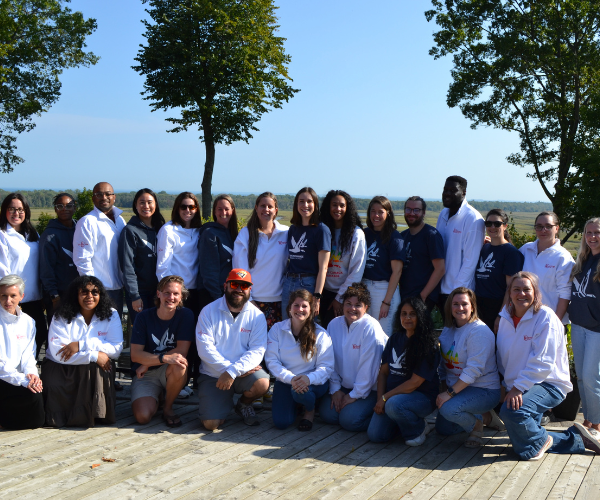
Mahid Yasin alongside the Gakino’amaage team. Our work is strengthened by a culture of collaboration, reflection, and support—for educators, First Nations Community Partners, and one another.
For teachers working in northern and remote First Nations, the need for sustained support becomes clearer over time. “The first month or two can feel manageable,” Mahid explains. “But once you’re fully teaching, building relationships, and understanding the realities of the classroom and community, that’s when having someone walking beside you makes a real difference.”
That approach is shaped not only by Mahid’s experience in schools, but also by the internal culture at Gakino’amaage. “I feel genuinely supported by my director,” he says. “That kind of leadership allows us to do this work well, because the support we provide teachers starts with how we work as a team.”
For Mahid, what truly distinguishes Gakino’amaage is its First Nations-led approach. The organization works in partnership with First Nations, centring community priorities, leadership, and Indigenous knowledge rather than applying external solutions.
“This work isn’t about bringing in outside answers,” Mahid says. “It’s about listening, learning, and responding to what communities have identified as important.”
Mahid points to examples where educators are supported to move beyond surface-level curriculum delivery and engage meaningfully with Indigenous ways of knowing.
“In one Grade 8 class, a teacher expanded an English Language Arts lesson into land-based learning,” he explains. “Students explored Indigenous-sourced materials that conduct electricity, discussed renewable energy, and examined how natural systems—like leaves—can inspire solar technology.”
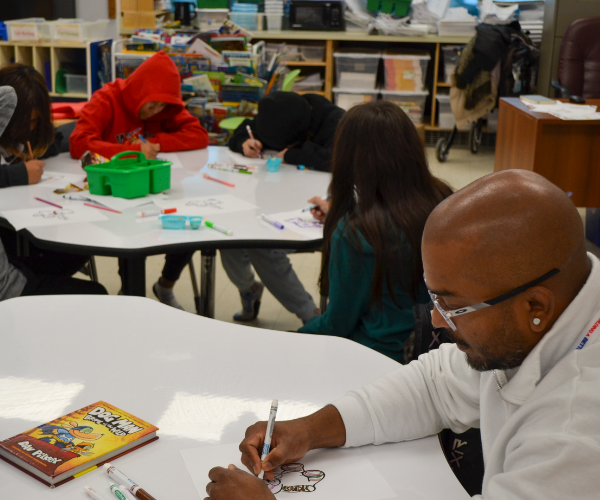
Mahid Yasin, Teacher Development Manager at Gakino’amaage, colouring alongside students during an in-classroom visit. These visits support relationship-building and allow for hands-on, responsive support for educators.
For Mahid, this kind of teaching reflects what is possible when educators are supported to learn from community, adapt their practice, and connect curriculum to lived experience.
“There’s a lot to learn from education in northern and remote First Nations,” he says. “Being invited into that learning is a responsibility—and one that requires support.”
For educators considering teaching in northern or remote First Nations, Mahid believes clarity and honesty matter most.
“This work isn’t for people looking for a short-term experience,” he says. “It’s for educators who want to build relationships, learn from community, and grow in their practice—while knowing they won’t be doing it alone.”
Gakino’amaage is designed for teachers who are committed to learning, who value guidance and accountability, and who understand that strong teaching in the North is built through partnership, preparation, and ongoing support.
“If you’re willing to show up, listen, and stay engaged,” Mahid says, “we’ll be there to support you every step of the way.”
Educators interested in teaching in northern and remote First Nations can learn more about Gakino’amaage’s teacher recruitment, preparation, and ongoing support here.
Ready to take the next step? Apply at teachforcanada.ca/apply.
Those interested in working alongside educators and First Nations in roles across recruitment, teacher development, and operations can explore current opportunities on our Careers Page.