




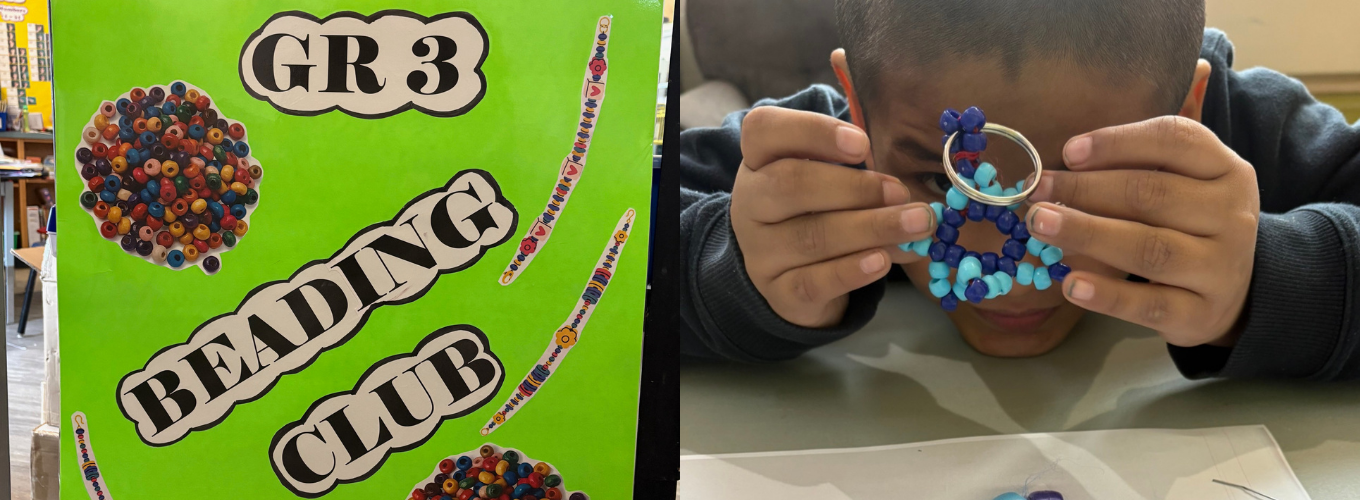
In St. Theresa Point First Nation, Florina Scott is creating space for students to slow down, focus, and learn through beading. As an educator in the resource program, she helped start the Early Years Beading Club for students in Grades 2 and 3—an after-school program grounded in hands-on learning, language, and connection.
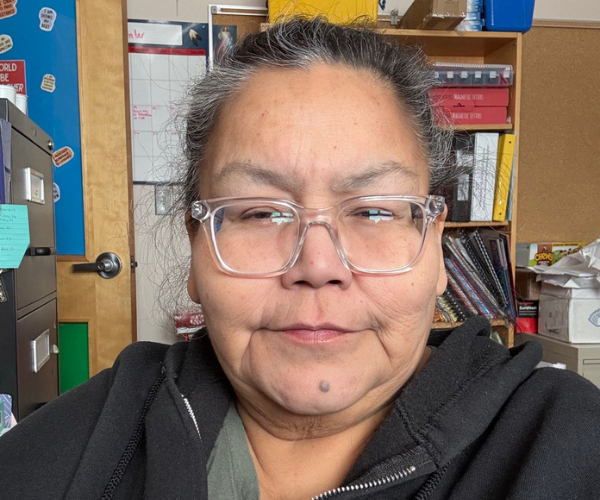
Florina Scott of St. Theresa Point First Nation teaches students in Grades 2 and 3 how to bead.
The club began in the 2023–2024 school year. Florina and her colleague, Rena Monias, wanted to create something students could look forward to after school—and to share something that had supported them in their own lives.
“When we started the club, we weren’t just looking for something to fill time,” Florina says. “We wanted to share what beading gave us.”
For Florina, beading has always been close to home. She learned by watching her grandmother, who made everything from moccasins to guitar straps, and by listening to the stories shared while they worked.
“I wasn’t always interested in beading when I was younger,” she says. “But I loved watching and listening.”
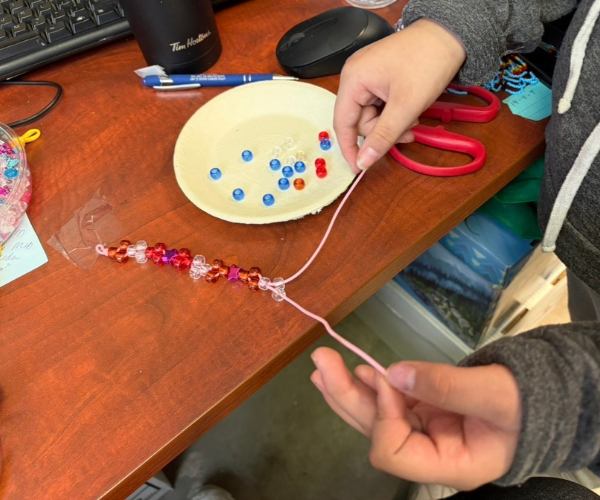
A student learning to bead while building math and problem-solving skills.
Over time, beading became more than something she grew up around. During difficult periods in her life, including the loss of her mother and sister in an airplane accident, it became a steady way to cope.
“If I felt sad, I’d bead. If I felt anxious, I’d bead,” she says. “It was my go-to for support.”
That experience shapes how she approaches the club today.
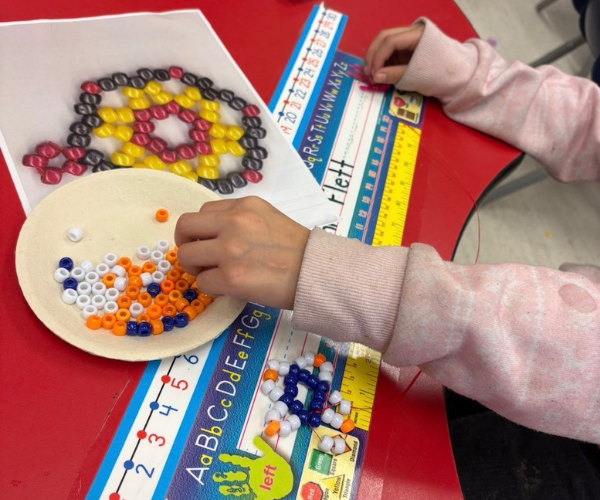
At St. Theresa Point First Nation, Florina Scott’s beading club is a space where students build focus, learn Cree, and connect to culture.
Many of the students who attend have difficulty focusing in a traditional classroom setting. Some struggle to sit still, follow directions, or stay engaged. But during beading, Florina sees something shift.
“You see them wanting to learn,” she says. “They choose their patterns and colours. They count, they group, and they settle down.”
Sessions are structured but flexible. Students start with simple projects and gradually build their skills. They work in small groups, share materials, and help one another as they go.
In the process, they are also picking up language. Florina weaves in Cree words for colours, numbers, and animals, so students learn as they bead.
For Florina, this is an important part of the work. Beading is not just an activity—it is a way for students to connect with language, history, and identity in a setting that feels natural to them.
“We were told if we lose our language and traditions, we lose our identity,” she says. “I try to use words with them so they can learn as we go.”
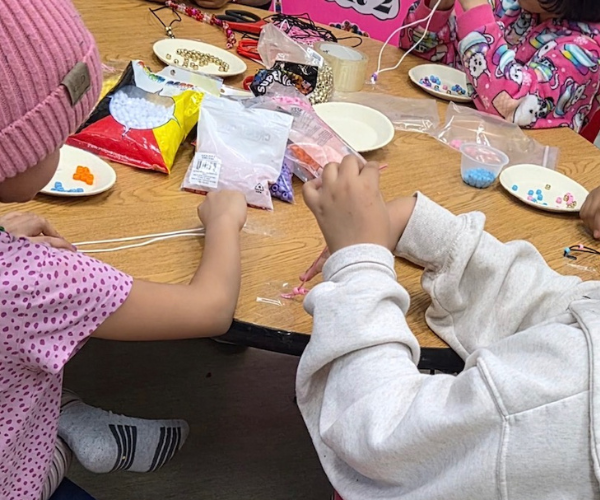
Students learning to bead together and support one another.
The impact shows in small, everyday moments. When students finish a piece, they often know who they want to give it to—a parent, a grandparent, a sibling.
“I love the way they look when they complete something,” Florina says. “You can see the pride on their faces.”
Some students have even started asking for beads to take home so they can continue their work outside of the club.
This year, continuing the club was not easy. After the loss of a close colleague who helped run it, Florina wasn’t sure she could start again. But students kept asking when the club would return.
“I had to do it for the kids,” she says. “I knew she would have wanted it to go on.”
Now, alongside her teaching, Florina is exploring these experiences through her Master’s research. She wants to better understand how beading supports students, particularly those with learning disabilities and anxiety.
She also thinks about what students will carry forward.
“If they don’t use it right away, they’ll remember how they started,” she says. “Later on, they can come back to it.”
For Florina, teaching beading is about making sure the practice continues.
“I teach beading hoping to catch future beaders that will carry on our tradition,” she says. “I already know some that will carry it on.”
Culturally grounded learning is essential to how students see themselves, their communities, and their futures. At Gakino’amaage, we work alongside First Nations to support education that reflects local knowledge, language, and ways of learning. Learn more about how you can be part of this work.