




At Gakino’amaage‘s recent Education Assistant Learning Summit in Winnipeg, we spoke with Celine Tamarack about her experience as an Education Assistant in Woodland Cree First Nation and her pathway toward teacher certification.
As a participant in Gakino’amaage’s Education Assistant Program, Celine is strengthening her classroom practice while working toward her Bachelor of Education at Portage College.
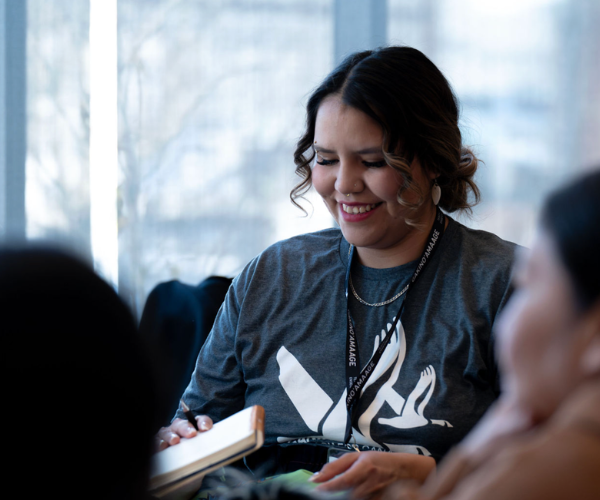
Celine’s path into education began in the Cree Language classroom alongside her mother. Now, she is pursuing her Bachelor of Education and building toward becoming a certified teacher in her community.
Celine grew up speaking Cree at home. She remembers hearing the English words “grandma” and “grandpa” and not understanding them. Those weren’t the words she used—she knew kokum and mosom.
When her mom needed support designing posters, preparing materials, and navigating digital tools, Celine stepped in.
“I went into her classroom, and I stayed there,” she says.
Three years later, Celine is an Education Assistant supporting students from Grades 1 through 9. She works alongside her mother in the Cree Language classroom and helps develop resources in the Y-dialect of Cree.
In many English-language classrooms, ready-made materials are widely available. For Indigenous language educators, resources aligned to specific dialects and community contexts are limited. Materials often need to be developed from the ground up.
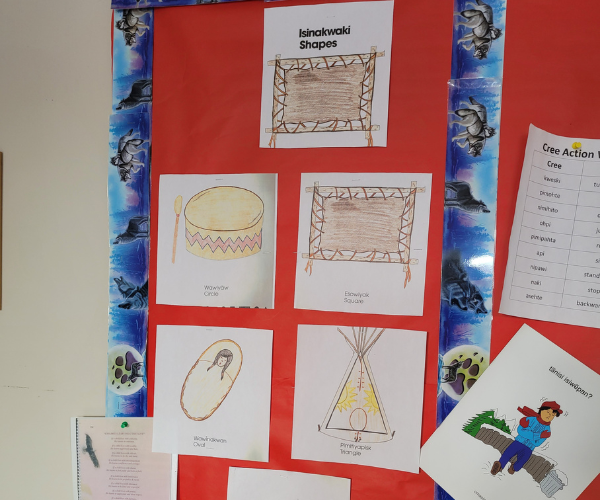
A hand-made Cree language resource created in a classroom in Beaver Lake Cree Nation. Across First Nations, educators and Education Assistants are developing culturally grounded learning materials that reflect language, identity, and community knowledge.
Digital tools can help streamline design, but Indigenous language educators carry the responsibility of ensuring materials are accurate, culturally grounded, and reflective of their community. It is detailed and time-intensive work.
Celine describes herself as fluent in Cree, though she is still building confidence speaking in full sentences.
“My mom is fluent, and I’m slowly learning,” she says.
Working alongside her mother has strengthened both her language and her confidence in the classroom.
Before beginning her Bachelor of Education at Portage College, Celine completed her Early Learning and Child Care diploma and earned her Level Three certification. She also completed an Artisan and Entrepreneur diploma at Portage College – a program she says she would take again in a heartbeat.

The Education Assistant Program is grounded in four core areas of learning: teaching strategies, individual student needs, classroom community, and professional connections. Together, these focus areas strengthen Education Assistants in their critical role of contributing to strong, culturally grounded learning environments for students in First Nations classrooms.
Applying to the B.Ed. program felt intimidating. When she received her acceptance letter, she thought it might not be real.
“I couldn’t believe it,” she says. It is a competitive program, and she had been accepted.
Now in her third year, Celine is navigating the demands of university coursework. Still, she continues forward. Her Education Director encouraged her to apply to Gakino’amaage’s Education Assistant Program as additional support along her pathway.
At the Learning Summit, Celine connected with Education Assistants from First Nations across the country.
“I love it over here,” she says. “It’s really empowering.”
During the opening circle, Elder Victoria McIntosh shared reflections on Residential School Survivors that stayed with her.
“It made me self-reflect and think about how we are still here,” Celine says. “We’re resilient.”
Growing up, Celine says she did not always feel fully grounded in her identity beyond the language she spoke.
“I didn’t know who I was, what my culture was, where I came from,” she shares.
Today, working in the Cree Language classroom while pursuing her B.Ed. feels like strengthening that foundation.
“I want to give my students my cultural practices and language,” she says. “I want to give them confidence in being who they are and where they come from. I want to be that person who encourages them.”
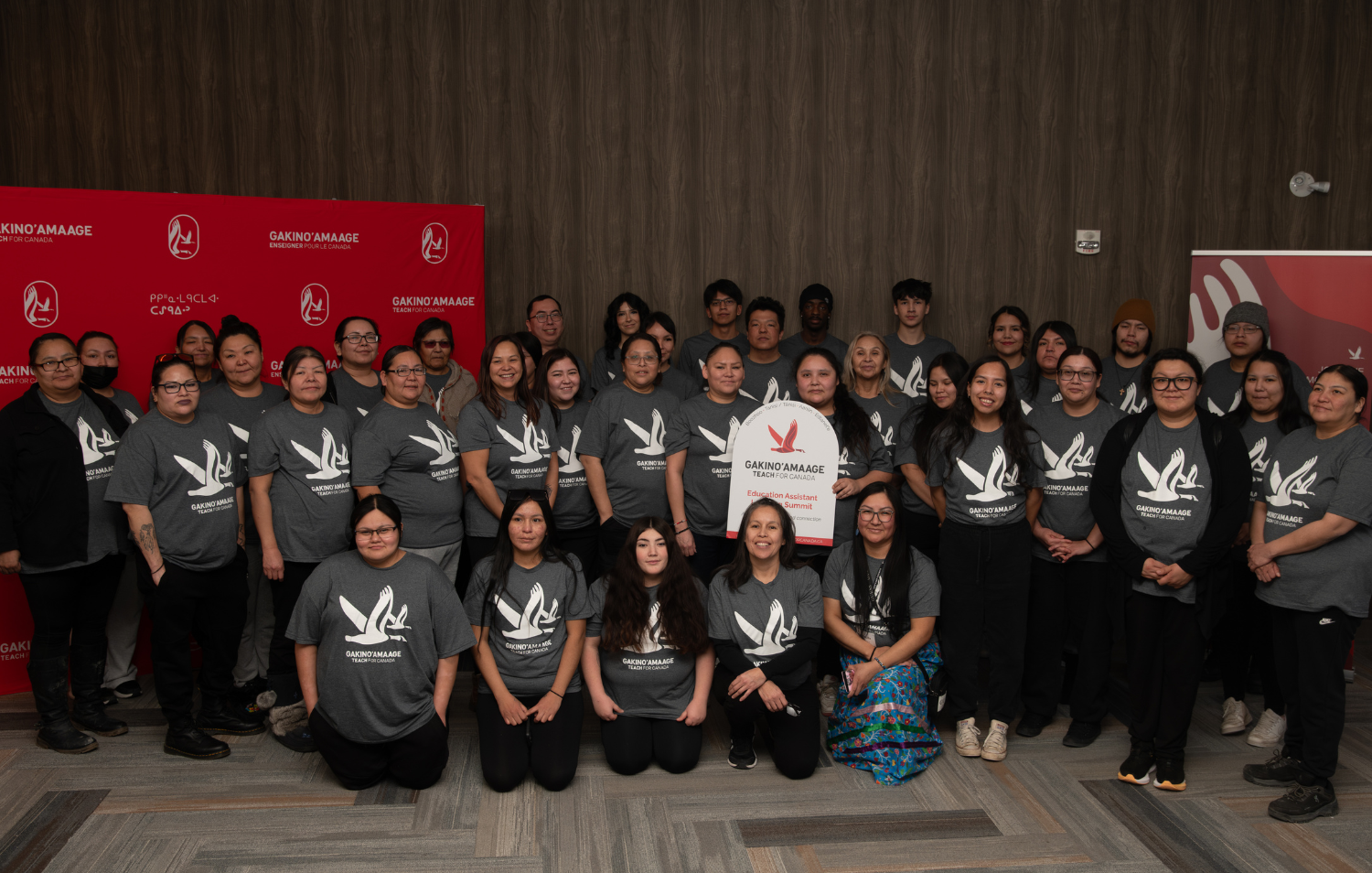
Celine is a participant in Gakino’amaage’s 2026 Education Assistant Program and one of 39 Education Assistants from 18 First Nations who gathered in Winnipeg, MB for this year’s Learning Summit.
Gakino’amaage’s Education Assistant Program supports pathways like Celine’s – recognizing that Education Assistants are often deeply rooted in their communities, languages, and cultural knowledge. Through professional development, mentorship, and gatherings like the Learning Summit, the Program supports both immediate classroom impact and long-term aspirations toward teacher certification.
For Celine, the journey began by helping her mom prepare classroom materials.
Today, it is leading her toward becoming a certified teacher – someone her students can look to and see their language and culture reflected in the classroom.
“I’m thankful for this opportunity,” she says. “Thankful for the funding and the people who allow the EA Program to happen.”
If you are an Education Assistant interested in strengthening your skills and exploring a pathway to teacher certification, learn more about the Education Assistant Program.
If you believe in strengthening Indigenous language education and community-driven pathways into teaching, we invite you to support this work.
