




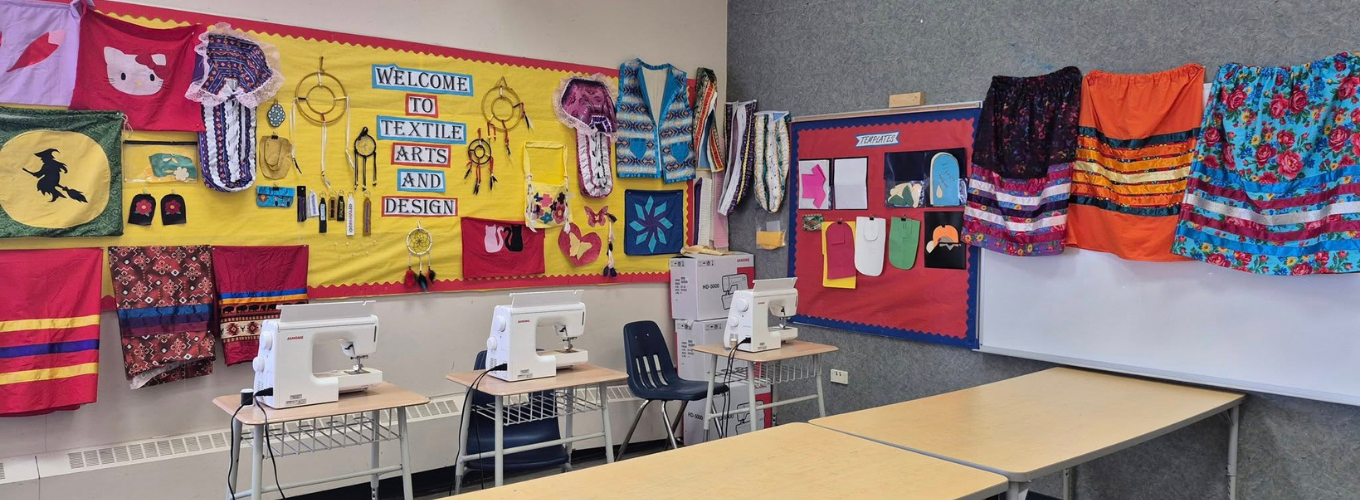
As the Textile Arts and Design teacher at St. Theresa Point High School, Gwen Harper has shaped her classroom into a space where learning is creative and cultural. Through hands-on projects and community teachings, students engage with materials and practices that reflect their identities. For Gwen, the work is not only about developing technical skills — it is about creating meaningful opportunities for students to connect with culture, land, and one another.
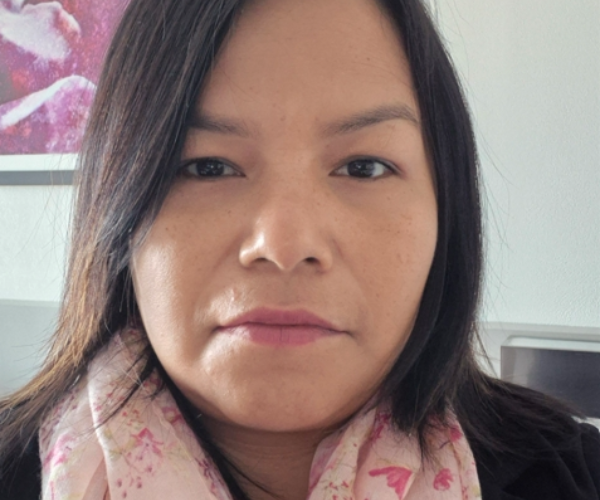
Gwen Harper teaches Textile Arts and Design at St. Theresa Point High School, creating a space where students build technical skills while strengthening their connection to culture and identity.
For Gwen Harper, teaching Textile Arts and Design at is not simply about delivering course content. It is about creating space for students to engage with their culture through materials, teachings, and traditions rooted in community.
Gwen has intentionally adapted the course to reflect those priorities. Alongside cotton and polyester, students work with beads, feathers, bones, jingles, hide, and fur.
“In all the courses I teach, I do my best to integrate First Nations perspectives,” Gwen explains. “Students create medicine bags, dream catchers, and drums, alongside ribbon skirts, vests, and full regalia.”
Students often arrive early to spend time in the Textile Arts classroom. Music plays quietly in the background. During lunch, the door stays open for anyone who wants to create. In the pace of a busy school day, access to a safe, creative space lets students slow down, focus, and engage in work that supports their well-being and learning.
The impact of this work extends well beyond the classroom. One of the proudest moments for Gwen was helping her students prepare for Red Dress Day. Students worked together to sew red dresses so the school community could march together in honour of Missing and Murdered Indigenous Women.
“We marched to all three schools and then to the soccer field to say a prayer,” Gwen recalls. “Those moments of connection and ceremony stay with the students.”
Gwen has also supported students in sharing their designs beyond the community, including accompanying two students to a fashion show in Saskatoon where they showcased original pieces they created themselves.
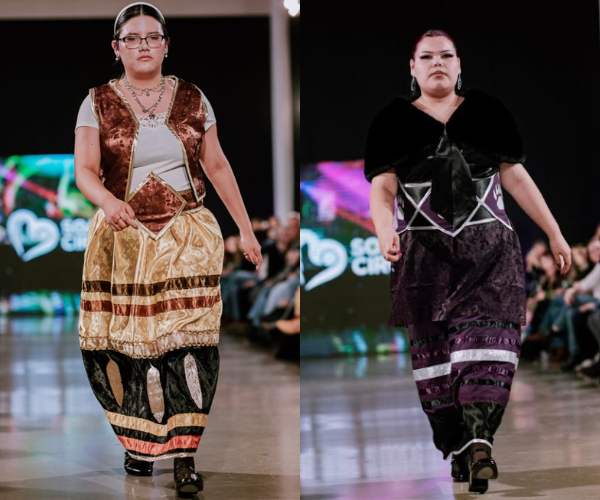
After being invited to a fashion show in Saskatoon, two of Gwen’s students designed and created their own attire, proudly presenting their work on the runway.
By grounding the lessons in tradition, Gwen ensures the learning is holistic and connected to community. When students finish making drums, an Elder joins the class to speak about their sacred meaning. When birchbark is needed for moose calls or baskets, the class goes onto the land with a Land-Based instructor to gather it themselves. This approach does more than teach a skill. It creates space for students to learn from Knowledge Keepers, work with the land, and deepen their understanding of the cultural practices that shape who they are.
“I use the medicine wheel to teach about living a good life and self-sustainability,” Gwen says. “I want students to leave my classroom feeling alert, capable, and proud of who they are.”
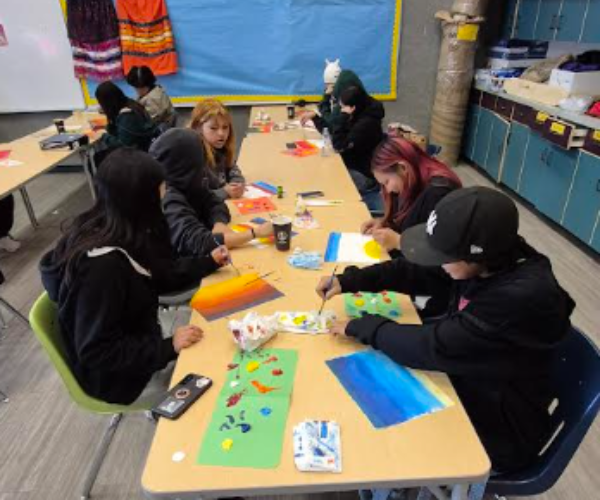
Students painting designs as part of their work in the Textile Arts classroom.
That impact is visible beyond the school. Parents share that their children are asking for sewing machines at home, mending their own clothes, and designing items for their families. Through textile arts, students are not only developing technical skill—they are learning patience, responsibility, and the value of generosity by gifting what they create.
Throughout her career—from Early Years to High School—Gwen has centred hands-on learning grounded in First Nations perspectives. Her classroom reflects what is possible when students are given meaningful opportunities to explore their gifts through materials, teachings, and practices rooted in their own cultures.
At Gakino’amaage, we recognize and uplift this work. As a First Nations-led organization, we are committed to supporting educators who centre community knowledge, welcome Elders and Knowledge Keepers into their classrooms, and strengthen cultural foundations within their schools.
Stories like Gwen’s demonstrate the importance of educators continuing to lead this work — ensuring that learning remains connected to land, language, and identity.
Explore how Gakino’amaage supports educators in centring community knowledge and cultural practice in their classrooms.
