




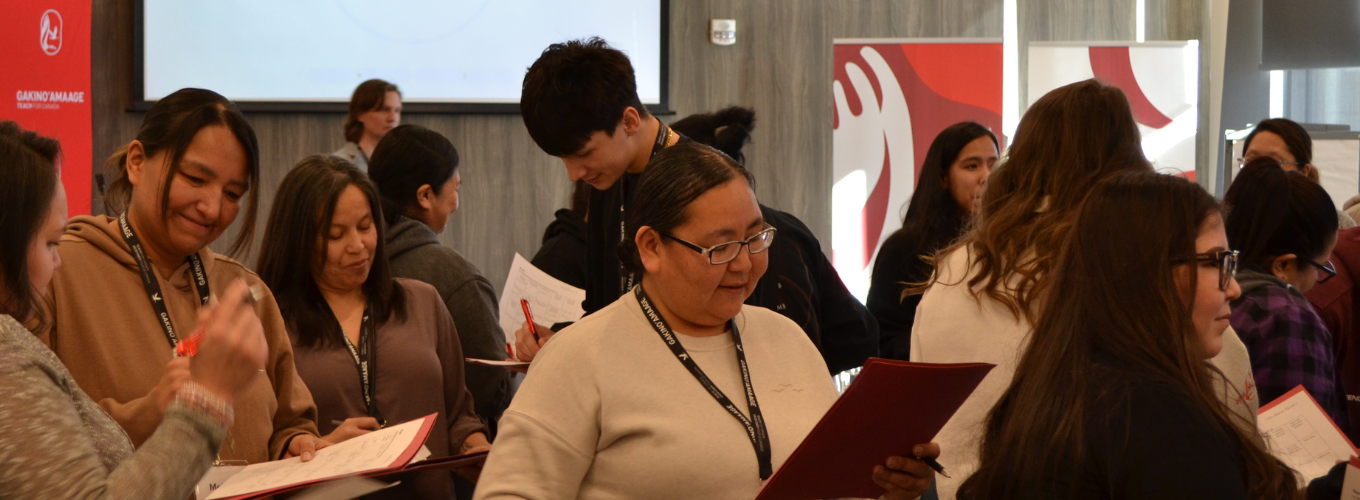
Last week, 39 Education Assistants from 18 First Nations Community Partners gathered for Gakino’amaage’s three-day Education Assistant Learning Summit. Led by Community Partner representatives, educators, and Gakino’amaage staff, the gathering reflects a commitment to First Nations leadership in education.
Participants engaged in learning across four core areas: teaching strategies, individual student needs, classroom community, and professional connections. These focus areas strengthen culturally grounded learning environments and build skills EAs can apply immediately — while contributing to long-term community teaching capacity.
The Summit is part of Gakino’amaage’s Education Assistant Program. The Program strengthens EAs in their current roles while also sharing information about pathways into teacher certification.
One of the Education Assistants in this year’s Program is Priscilla Francois from Treaty 5 Territory, Nisichawayasihk Cree Nation, Nelson House, Manitoba. We spoke with Priscilla about her journey toward teacher certification and how her experiences have shaped the way she supports students today.
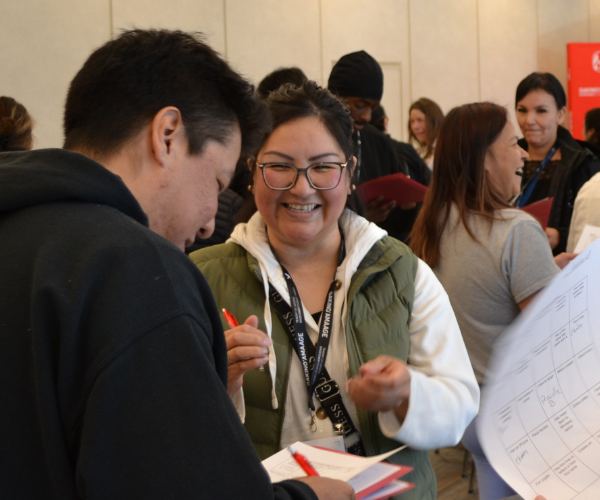
Priscilla Francois from Nelson House, Manitoba, connecting with fellow Education Assistants at the Education Assistant Summit in Winnipeg. Through peer learning and relationship-building, EAs strengthen their practice and deepen their impact in First Nations classrooms.
I’ve been an Education Assistant for about 10 years, supporting students across grade levels. Right now, I’m working in a Cree language classroom alongside another Education Assistant who has stepped into the role of teacher. In many First Nations schools across the North, it’s common for EAs to take on additional responsibilities when teaching roles need to be filled. We work closely together to make sure students continue learning and feel supported.
What I appreciate most is learning Cree alongside the students. I don’t always feel confident speaking it, and I’m still building my understanding. Learning with them reminds me that education doesn’t stop once you’re an adult.
In 2019, after several years as an EA, I decided to pursue becoming a teacher. I left Nelson House and moved with my children to North Bay to attend Nipissing University. It was a big step. We relocated as a family and had to navigate housing and settling into a new city. Eventually, we secured low-income housing so I could focus on my studies.
During that time, I was diagnosed with dyslexia, which helped me understand why learning had felt more difficult in certain ways. Accessing consistent supports took time, and I was balancing parenting, work, and school. I kept going because becoming a teacher mattered to me.
My children were also adjusting to a new education system. While they had strong foundations from their schooling at home, the curriculum and expectations in North Bay were different and more demanding. The transition meant adapting to a new environment and pace of learning. My sons adjusted well to their new school. My daughter is naturally quiet and thoughtful, and like many students entering a new high school, she needed time to settle in.
Eventually, I stepped away from the program. After a period living in Thompson, we returned home to Nisichawayasihk Cree Nation in 2022. I went back to working as an Education Assistant, this time at the high school.
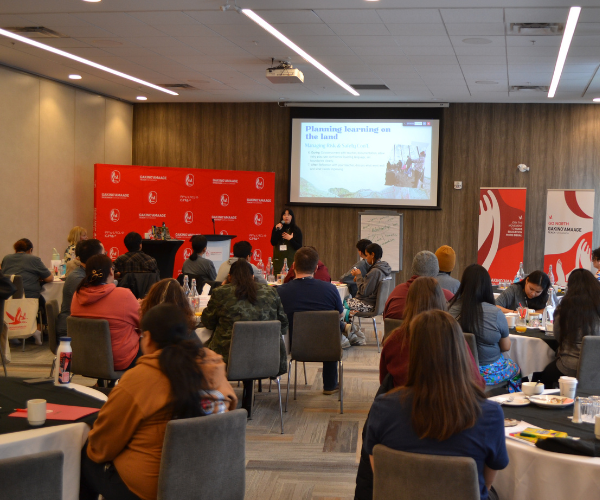
At the Education Assistant Summit in Winnipeg, 39 Education Assistants representing 18 First Nations gathered to strengthen their skills, share strategies, and build a network rooted in community-driven education.
When a Bachelor of Education program was later offered in Nelson House, I enrolled again. Through that experience, I began reflecting on my own education. I realized I hadn’t always been given opportunities to develop strong critical thinking and independent learning skills. I was often shown what to do rather than taught how to work through problems independently, which made further education more difficult for me. Combined with my dyslexia and gaps in support, I recognized I needed an environment where I could build skills independently and feel confident in my understanding.
That reflection shapes how I work with students today. I encourage them to think through challenges themselves while still being there to guide them. I want them to build confidence in their own abilities.
Across northern First Nations schools, Education Assistants often navigate complex classroom realities while balancing responsibilities at home and in community. Professional development can be difficult to access, especially when it requires leaving work or relocating. Gakino’amaage’s Education Assistant Program is designed with those realities in mind — strengthening practice while allowing EAs to remain rooted in their schools.
When our EA Supervisor shared information about the Program, I was interested right away. The structure felt realistic. The workload was manageable, and the Program length felt achievable. I applied, and two of us were selected.
Now, I’m attending the Education Assistant Learning Summit alongside EAs from First Nations across the North. I want to be a better educator — to help the kids in a proper way so that they can learn, and to really understand them. I understand where many of our students are coming from, but there are always those quiet ones. I want to connect with them. I want them to feel seen and supported.
Becoming a certified teacher is still something I want to do. I don’t care how long it takes me. I’ve wanted to be a teacher since I was young.
To me, a good teacher is a good role model. Someone who teaches students what they need to know in life, not just in school. I want to help students become better people, not just better students.
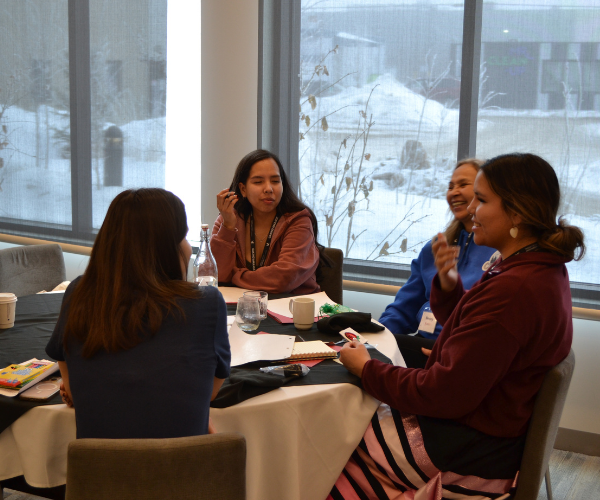
Education Assistants and Gakino’amaage staff connecting at the Summit — sharing experiences, exchanging strategies, and strengthening their collective commitment to First Nations education.
Cree language is important to me. There are fewer Cree-speaking people now, and we’ve slowly lost parts of our language. When I hear young people speaking Cree, I admire it. It sounds strong. I want students to feel proud of speaking Cree — not shy about it. Our Elders carry teachings in the language, and we need to understand them to learn from them.
If you have the opportunity to go for something, do it. Don’t be scared to try, even if it feels hard. It’s okay to take your time. It’s okay to find your own way.
The 2026 Education Assistant Learning Summit brought together 39 Education Assistants from 18 First Nations Community Partners to strengthen practical skills, deepen professional connections, and build long-term teaching capacity.
Through Gakino’amaage’s Education Assistant Program, locally hired EAs are supported in their current roles while also exploring pathways into teacher certification — strengthening classrooms today while contributing to long-term, community-led solutions to educator shortages.
Learn more about the Education Assistant Program and how it supports First Nations student success.
