
adfafda

Beading with Students in St. Theresa Point First Nation

Posted by Skylar Wesley

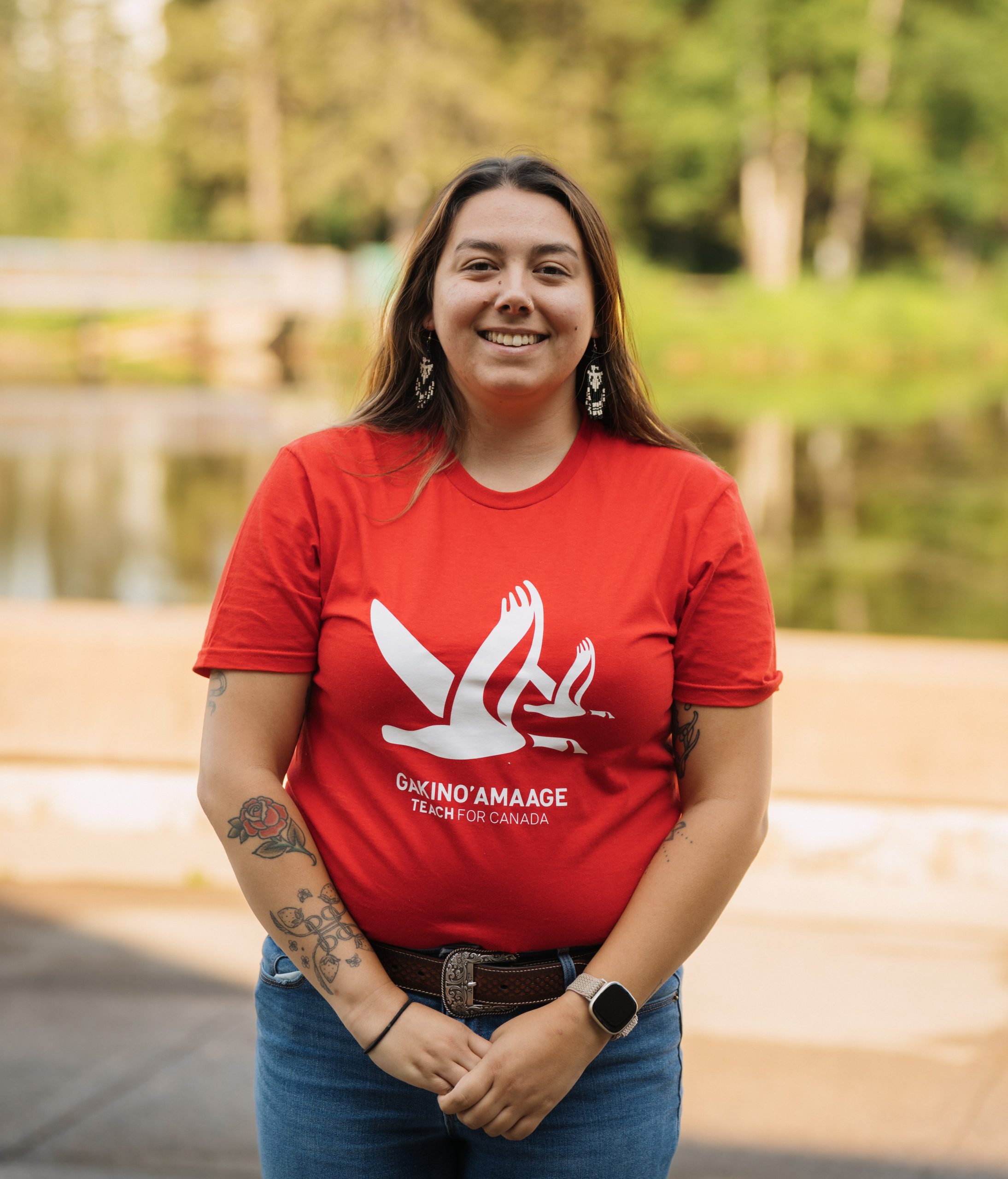
In St. Theresa Point First Nation, Florina Scott is creating space for students to slow down, focus, and learn through beading. As an educator in the resource program, she helped start the Early Years Beading Club for students in Grades 2 and 3—an after-school program grounded in hands-on learning, language, and connection.
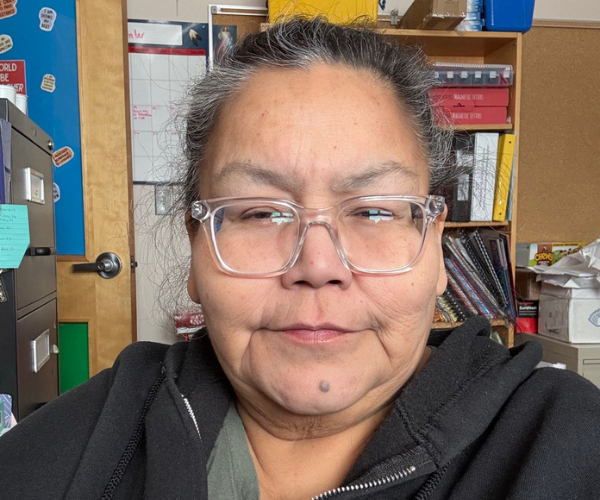
 

Florina Scott of St. Theresa Point First Nation teaches students in Grades 2 and 3 how to bead.


The club began in the 2023–2024 school year. Florina and her colleague, Rena Monias, wanted to create something students could look forward to after school—and to share something that had supported them in their own lives.

“When we started the club, we weren’t just looking for something to fill time,” Florina says. “We wanted to share what beading gave us.”

For Florina, beading has always been close to home. She learned by watching her grandmother, who made everything from moccasins to guitar straps, and by listening to the stories shared while they worked.

“I wasn’t always interested in beading when I was younger,” she says. “But I loved watching and listening.”
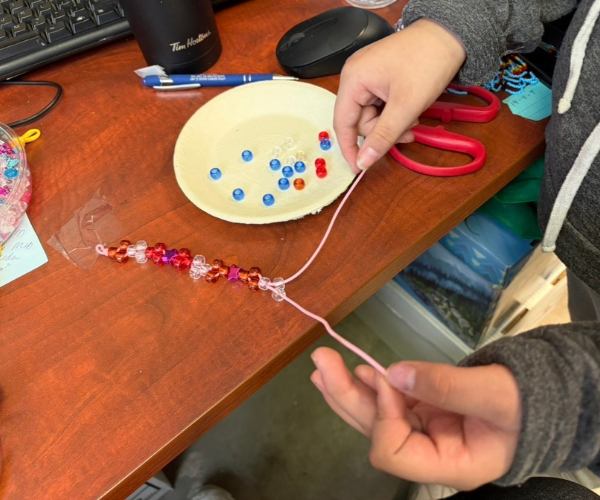
 

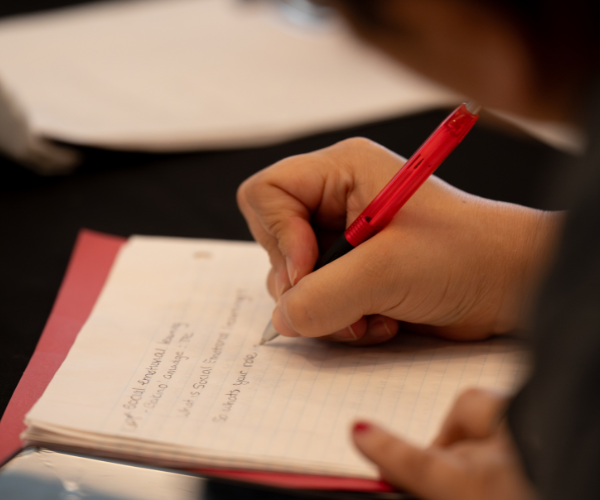
A student learning to bead while building math and problem-solving skills.


Over time, beading became more than something she grew up around. During difficult periods in her life, including the loss of her mother and sister in an airplane accident, it became a steady way to cope.

“If I felt sad, I’d bead. If I felt anxious, I’d bead,” she says. “It was my go-to for support.”

That experience shapes how she approaches the club today.
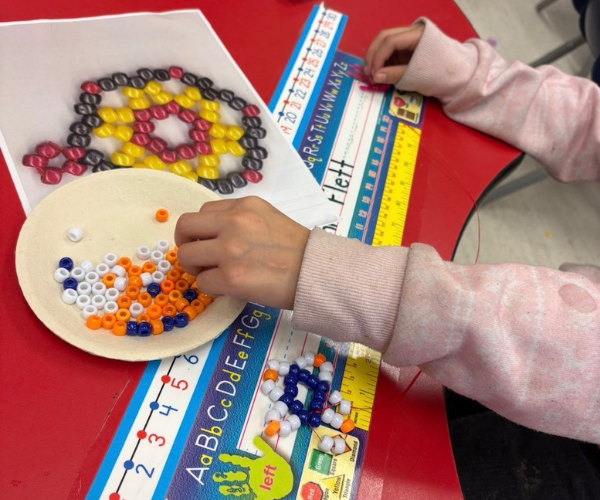
 

At St. Theresa Point First Nation, Florina Scott’s beading club is a space where students build focus, learn Cree, and connect to culture.


Many of the students who attend have difficulty focusing in a traditional classroom setting. Some struggle to sit still, follow directions, or stay engaged. But during beading, Florina sees something shift.

“You see them wanting to learn,” she says. “They choose their patterns and colours. They count, they group, and they settle down.”

Sessions are structured but flexible. Students start with simple projects and gradually build their skills. They work in small groups, share materials, and help one another as they go.

In the process, they are also picking up language. Florina weaves in Cree words for colours, numbers, and animals, so students learn as they bead.

For Florina, this is an important part of the work. Beading is not just an activity—it is a way for students to connect with language, history, and identity in a setting that feels natural to them.

“We were told if we lose our language and traditions, we lose our identity,” she says. “I try to use words with them so they can learn as we go.”
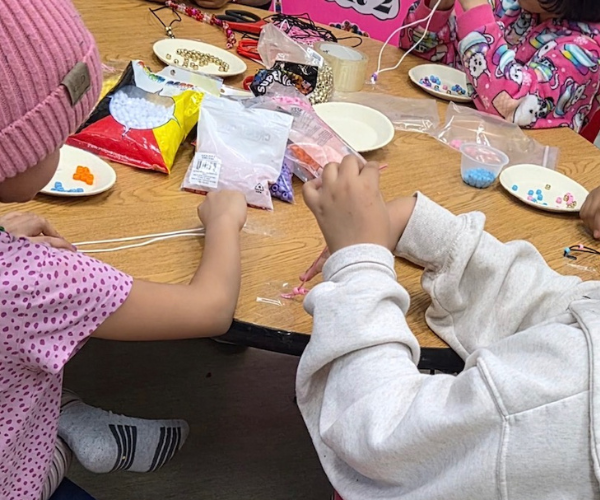
 

Students learning to bead together and support one another.


The impact shows in small, everyday moments. When students finish a piece, they often know who they want to give it to—a parent, a grandparent, a sibling.

“I love the way they look when they complete something,” Florina says. “You can see the pride on their faces.”

Some students have even started asking for beads to take home so they can continue their work outside of the club.

This year, continuing the club was not easy. After the loss of a close colleague who helped run it, Florina wasn’t sure she could start again. But students kept asking when the club would return.

“I had to do it for the kids,” she says. “I knew she would have wanted it to go on.”

Now, alongside her teaching, Florina is exploring these experiences through her Master’s research. She wants to better understand how beading supports students, particularly those with learning disabilities and anxiety.

She also thinks about what students will carry forward.

“If they don’t use it right away, they’ll remember how they started,” she says. “Later on, they can come back to it.”

For Florina, teaching beading is about making sure the practice continues.

“I teach beading hoping to catch future beaders that will carry on our tradition,” she says. “I already know some that will carry it on.”


Culturally grounded learning is essential to how students see themselves, their communities, and their futures. At Gakino’amaage, we work alongside First Nations to support education that reflects local knowledge, language, and ways of learning. Learn more about how you can be part of this work.
adfafda

From Education Assistant to Certified Teacher: Celine’s Journey

Posted by Skylar Wesley

At Gakino’amaage‘s recent Education Assistant Learning Summit in Winnipeg, we spoke with Celine Tamarack about her experience as an Education Assistant in Woodland Cree First Nation and her pathway toward teacher certification. 

As a participant in Gakino’amaage’s Education Assistant Program, Celine is strengthening her classroom practice while working toward her Bachelor of Education at Portage College.


Celine’s path into education began in the Cree Language classroom alongside her mother. Now, she is pursuing her Bachelor of Education and building toward becoming a certified teacher in her community.


Celine grew up speaking Cree at home. She remembers hearing the English words “grandma” and “grandpa” and not understanding them. Those weren’t the words she used—she knew kokum and mosom.

When her mom needed support designing posters, preparing materials, and navigating digital tools, Celine stepped in.

“I went into her classroom, and I stayed there,” she says.

Three years later, Celine is an Education Assistant supporting students from Grades 1 through 9. She works alongside her mother in the Cree Language classroom and helps develop resources in the Y-dialect of Cree.

In many English-language classrooms, ready-made materials are widely available. For Indigenous language educators, resources aligned to specific dialects and community contexts are limited. Materials often need to be developed from the ground up.


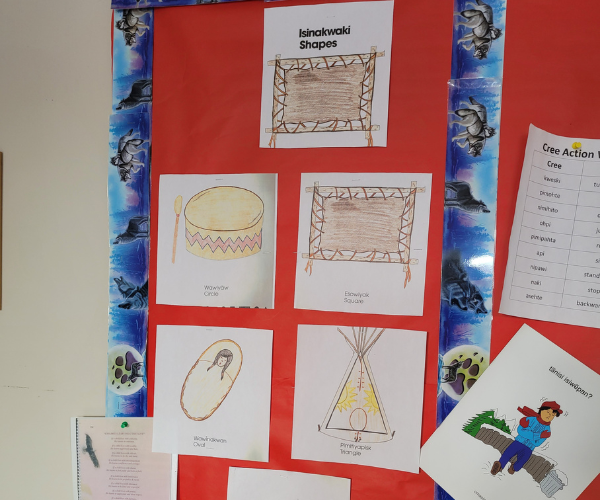
A hand-made Cree language resource created in a classroom in Beaver Lake Cree Nation. Across First Nations, educators and Education Assistants are developing culturally grounded learning materials that reflect language, identity, and community knowledge.


Digital tools can help streamline design, but Indigenous language educators carry the responsibility of ensuring materials are accurate, culturally grounded, and reflective of their community. It is detailed and time-intensive work.

Celine describes herself as fluent in Cree, though she is still building confidence speaking in full sentences.

“My mom is fluent, and I’m slowly learning,” she says.

Working alongside her mother has strengthened both her language and her confidence in the classroom.

Before beginning her Bachelor of Education at Portage College, Celine completed her Early Learning and Child Care diploma and earned her Level Three certification. She also completed an Artisan and Entrepreneur diploma at Portage College – a program she says she would take again in a heartbeat.


The Education Assistant Program is grounded in four core areas of learning: teaching strategies, individual student needs, classroom community, and professional connections. Together, these focus areas strengthen Education Assistants in their critical role of contributing to strong, culturally grounded learning environments for students in First Nations classrooms.


Applying to the B.Ed. program felt intimidating. When she received her acceptance letter, she thought it might not be real.

“I couldn’t believe it,” she says. It is a competitive program, and she had been accepted.

Now in her third year, Celine is navigating the demands of university coursework. Still, she continues forward. Her Education Director encouraged her to apply to Gakino’amaage’s Education Assistant Program as additional support along her pathway.

At the Learning Summit, Celine connected with Education Assistants from First Nations across the country.

“I love it over here,” she says. “It’s really empowering.”

During the opening circle, Elder Victoria McIntosh shared reflections on Residential School Survivors that stayed with her.

“It made me self-reflect and think about how we are still here,” Celine says. “We’re resilient.”

Growing up, Celine says she did not always feel fully grounded in her identity beyond the language she spoke.

“I didn’t know who I was, what my culture was, where I came from,” she shares.

Today, working in the Cree Language classroom while pursuing her B.Ed. feels like strengthening that foundation.

“I want to give my students my cultural practices and language,” she says. “I want to give them confidence in being who they are and where they come from. I want to be that person who encourages them.”


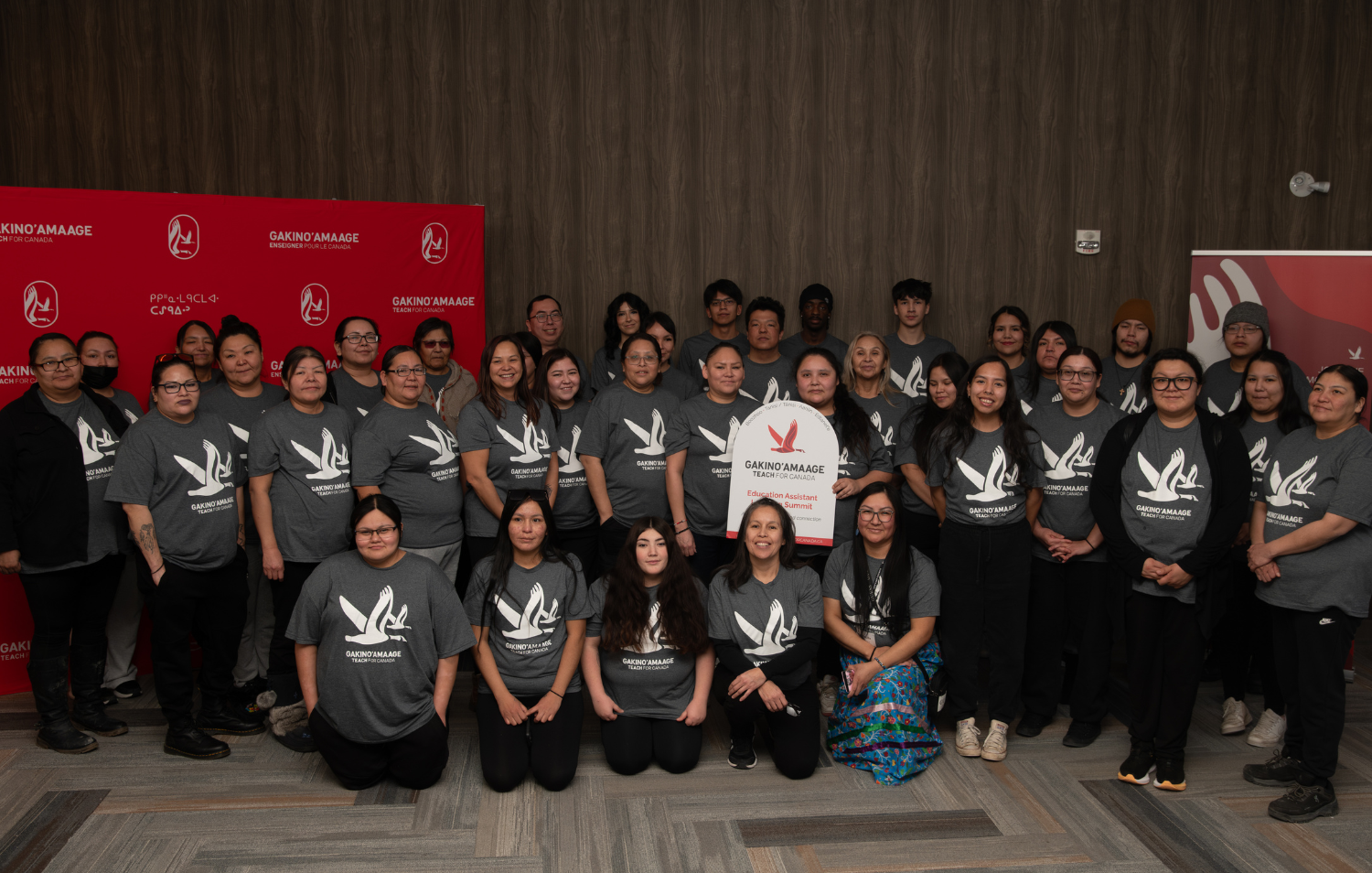
Celine is a participant in Gakino’amaage’s 2026 Education Assistant Program and one of 39 Education Assistants from 18 First Nations who gathered in Winnipeg, MB for this year’s Learning Summit.


Gakino’amaage’s Education Assistant Program supports pathways like Celine’s – recognizing that Education Assistants are often deeply rooted in their communities, languages, and cultural knowledge. Through professional development, mentorship, and gatherings like the Learning Summit, the Program supports both immediate classroom impact and long-term aspirations toward teacher certification.

For Celine, the journey began by helping her mom prepare classroom materials.

Today, it is leading her toward becoming a certified teacher – someone her students can look to and see their language and culture reflected in the classroom.

“I’m thankful for this opportunity,” she says. “Thankful for the funding and the people who allow the EA Program to happen.”


If you are an Education Assistant interested in strengthening your skills and exploring a pathway to teacher certification, learn more about the Education Assistant Program.

If you believe in strengthening Indigenous language education and community-driven pathways into teaching, we invite you to support this work.
adfafda

Pride in Every Stitch: Inside Gwen Harper’s Textile Arts Classroom

Posted by Skylar Wesley

As the Textile Arts and Design teacher at St. Theresa Point High School, Gwen Harper has shaped her classroom into a space where learning is creative and cultural. Through hands-on projects and community teachings, students engage with materials and practices that reflect their identities. For Gwen, the work is not only about developing technical skills — it is about creating meaningful opportunities for students to connect with culture, land, and one another.


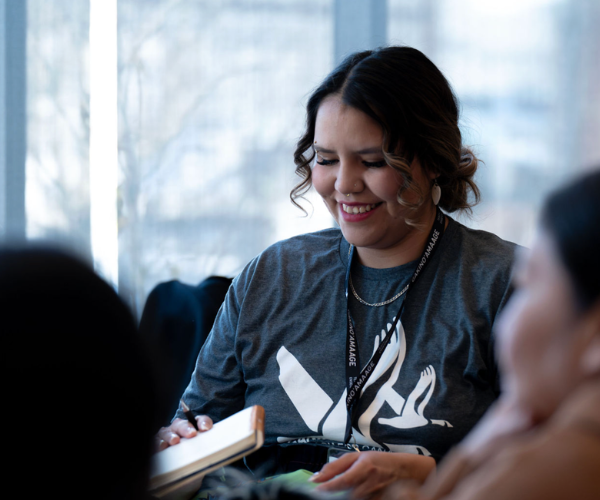
Gwen Harper teaches Textile Arts and Design at St. Theresa Point High School, creating a space where students build technical skills while strengthening their connection to culture and identity.


For Gwen Harper, teaching Textile Arts and Design at  is not simply about delivering course content. It is about creating space for students to engage with their culture through materials, teachings, and traditions rooted in community.

Gwen has intentionally adapted the course to reflect those priorities. Alongside cotton and polyester, students work with beads, feathers, bones, jingles, hide, and fur.

“In all the courses I teach, I do my best to integrate First Nations perspectives,” Gwen explains. “Students create medicine bags, dream catchers, and drums, alongside ribbon skirts, vests, and full regalia.”

Students often arrive early to spend time in the Textile Arts classroom. Music plays quietly in the background. During lunch, the door stays open for anyone who wants to create. In the pace of a busy school day, access to a safe, creative space lets students slow down, focus, and engage in work that supports their well-being and learning.

The impact of this work extends well beyond the classroom. One of the proudest moments for Gwen was helping her students prepare for Red Dress Day. Students worked together to sew red dresses so the school community could march together in honour of Missing and Murdered Indigenous Women.

“We marched to all three schools and then to the soccer field to say a prayer,” Gwen recalls. “Those moments of connection and ceremony stay with the students.”

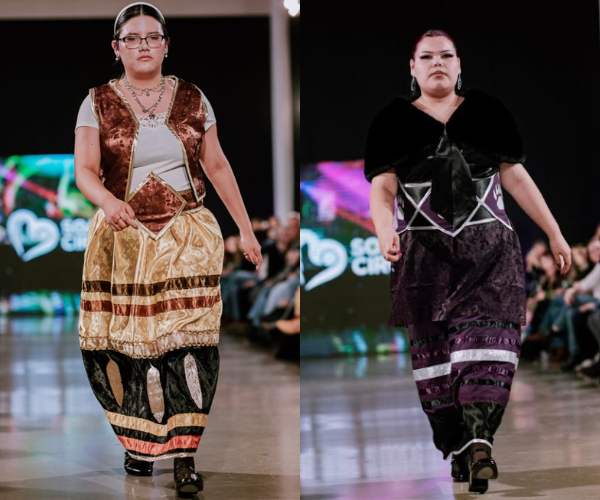
Gwen has also supported students in sharing their designs beyond the community, including accompanying two students to a fashion show in Saskatoon where they showcased original pieces they created themselves.


After being invited to a fashion show in Saskatoon, two of Gwen’s students designed and created their own attire, proudly presenting their work on the runway.


By grounding the lessons in tradition, Gwen ensures the learning is holistic and connected to community. When students finish making drums, an Elder joins the class to speak about their sacred meaning. When birchbark is needed for moose calls or baskets, the class goes onto the land with a Land-Based instructor to gather it themselves. This approach does more than teach a skill. It creates space for students to learn from Knowledge Keepers, work with the land, and deepen their understanding of the cultural practices that shape who they are.

“I use the medicine wheel to teach about living a good life and self-sustainability,” Gwen says. “I want students to leave my classroom feeling alert, capable, and proud of who they are.”


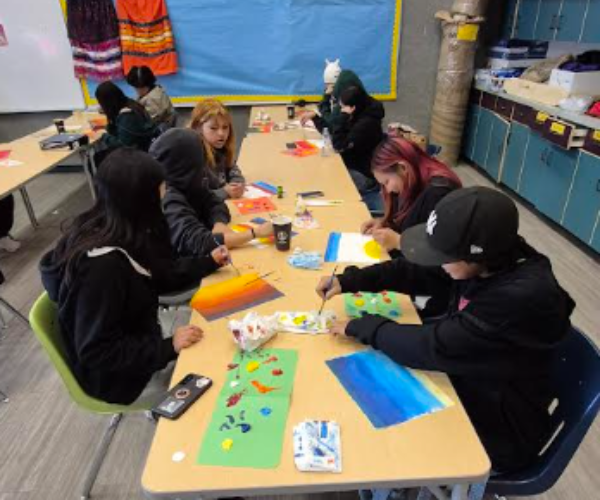
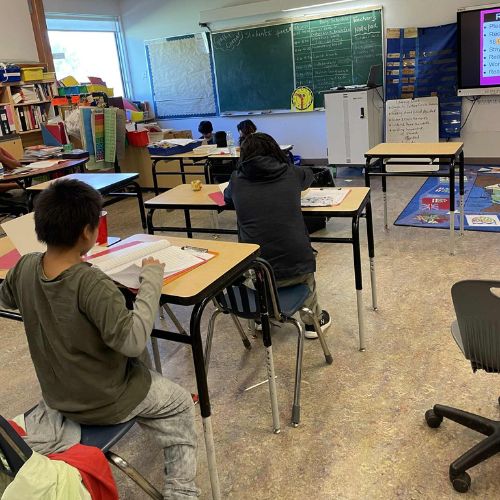
Students painting designs as part of their work in the Textile Arts classroom.


That impact is visible beyond the school. Parents share that their children are asking for sewing machines at home, mending their own clothes, and designing items for their families. Through textile arts, students are not only developing technical skill—they are learning patience, responsibility, and the value of generosity by gifting what they create.

Throughout her career—from Early Years to High School—Gwen has centred hands-on learning grounded in First Nations perspectives. Her classroom reflects what is possible when students are given meaningful opportunities to explore their gifts through materials, teachings, and practices rooted in their own cultures.


At Gakino’amaage, we recognize and uplift this work. As a First Nations-led organization, we are committed to supporting educators who centre community knowledge, welcome Elders and Knowledge Keepers into their classrooms, and strengthen cultural foundations within their schools.
Stories like Gwen’s demonstrate the importance of educators continuing to lead this work — ensuring that learning remains connected to land, language, and identity.

Explore how Gakino’amaage supports educators in centring community knowledge and cultural practice in their classrooms.

adfafda

Learning Together: Priscilla Francois on Growing as an Education Assistant

Posted by Skylar Wesley

Last week, 39 Education Assistants from 18 First Nations Community Partners gathered for Gakino’amaage’s three-day Education Assistant Learning Summit. Led by Community Partner representatives, educators, and Gakino’amaage staff, the gathering reflects a commitment to First Nations leadership in education.

Participants engaged in learning across four core areas: teaching strategies, individual student needs, classroom community, and professional connections. These focus areas strengthen culturally grounded learning environments and build skills EAs can apply immediately — while contributing to long-term community teaching capacity.

The Summit is part of Gakino’amaage’s Education Assistant Program. The Program strengthens EAs in their current roles while also sharing information about pathways into teacher certification.

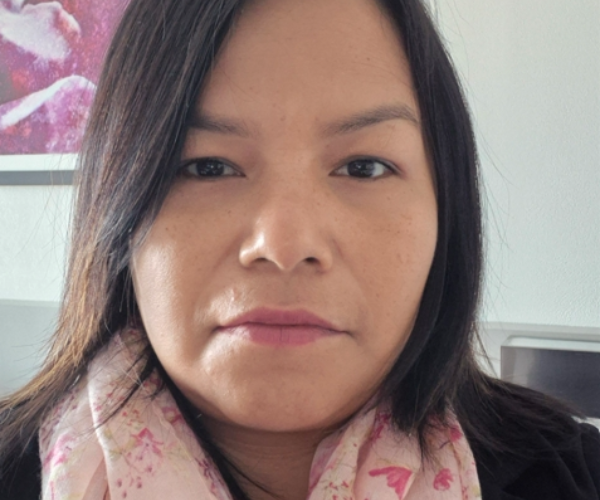
One of the Education Assistants in this year’s Program is Priscilla Francois from Treaty 5 Territory, Nisichawayasihk Cree Nation, Nelson House, Manitoba. We spoke with Priscilla about her journey toward teacher certification and how her experiences have shaped the way she supports students today.


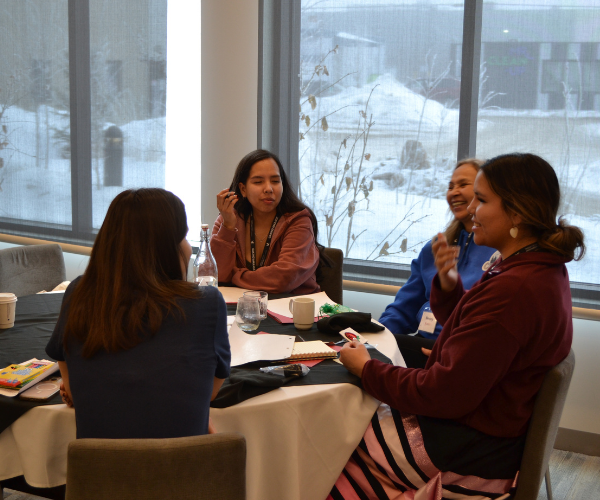
Priscilla Francois from Nelson House, Manitoba, connecting with fellow Education Assistants at the Education Assistant Summit in Winnipeg. Through peer learning and relationship-building, EAs strengthen their practice and deepen their impact in First Nations classrooms.


I’ve been an Education Assistant for about 10 years, supporting students across grade levels. Right now, I’m working in a Cree language classroom alongside another Education Assistant who has stepped into the role of teacher. In many First Nations schools across the North, it’s common for EAs to take on additional responsibilities when teaching roles need to be filled. We work closely together to make sure students continue learning and feel supported.

What I appreciate most is learning Cree alongside the students. I don’t always feel confident speaking it, and I’m still building my understanding. Learning with them reminds me that education doesn’t stop once you’re an adult.

In 2019, after several years as an EA, I decided to pursue becoming a teacher. I left Nelson House and moved with my children to North Bay to attend Nipissing University. It was a big step. We relocated as a family and had to navigate housing and settling into a new city. Eventually, we secured low-income housing so I could focus on my studies.

During that time, I was diagnosed with dyslexia, which helped me understand why learning had felt more difficult in certain ways. Accessing consistent supports took time, and I was balancing parenting, work, and school. I kept going because becoming a teacher mattered to me.

My children were also adjusting to a new education system. While they had strong foundations from their schooling at home, the curriculum and expectations in North Bay were different and more demanding. The transition meant adapting to a new environment and pace of learning. My sons adjusted well to their new school. My daughter is naturally quiet and thoughtful, and like many students entering a new high school, she needed time to settle in.

Eventually, I stepped away from the program. After a period living in Thompson, we returned home to Nisichawayasihk Cree Nation in 2022. I went back to working as an Education Assistant, this time at the high school.


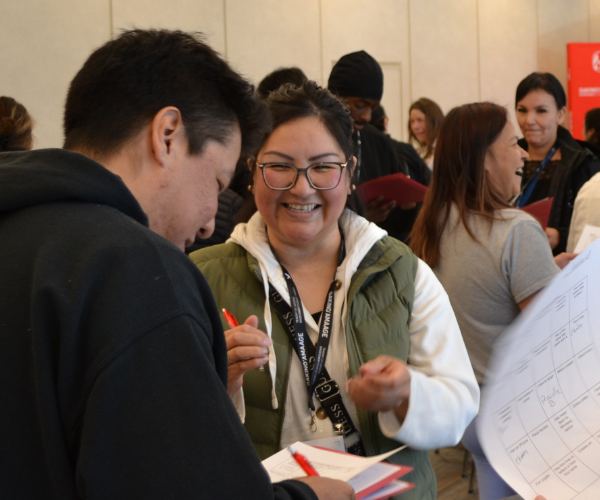
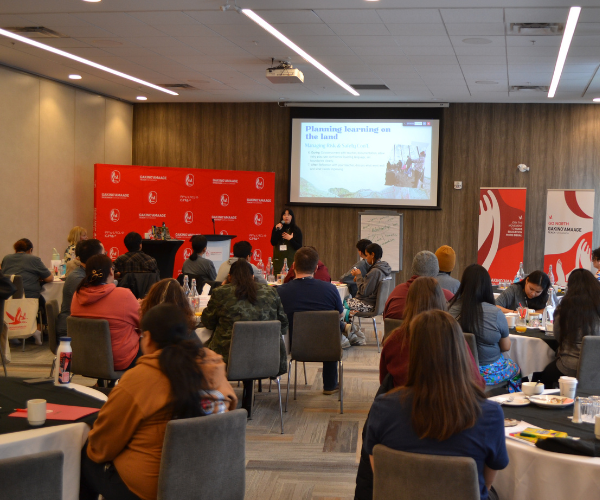
At the Education Assistant Summit in Winnipeg, 39 Education Assistants representing 18 First Nations gathered to strengthen their skills, share strategies, and build a network rooted in community-driven education.


When a Bachelor of Education program was later offered in Nelson House, I enrolled again. Through that experience, I began reflecting on my own education. I realized I hadn’t always been given opportunities to develop strong critical thinking and independent learning skills. I was often shown what to do rather than taught how to work through problems independently, which made further education more difficult for me. Combined with my dyslexia and gaps in support, I recognized I needed an environment where I could build skills independently and feel confident in my understanding.

That reflection shapes how I work with students today. I encourage them to think through challenges themselves while still being there to guide them. I want them to build confidence in their own abilities.

Across northern First Nations schools, Education Assistants often navigate complex classroom realities while balancing responsibilities at home and in community. Professional development can be difficult to access, especially when it requires leaving work or relocating. Gakino’amaage’s Education Assistant Program is designed with those realities in mind — strengthening practice while allowing EAs to remain rooted in their schools.

When our EA Supervisor shared information about the Program, I was interested right away. The structure felt realistic. The workload was manageable, and the Program length felt achievable. I applied, and two of us were selected.

Now, I’m attending the Education Assistant Learning Summit alongside EAs from First Nations across the North. I want to be a better educator — to help the kids in a proper way so that they can learn, and to really understand them. I understand where many of our students are coming from, but there are always those quiet ones. I want to connect with them. I want them to feel seen and supported.


Becoming a certified teacher is still something I want to do. I don’t care how long it takes me. I’ve wanted to be a teacher since I was young.


To me, a good teacher is a good role model. Someone who teaches students what they need to know in life, not just in school. I want to help students become better people, not just better students.


Education Assistants and Gakino’amaage staff connecting at the Summit — sharing experiences, exchanging strategies, and strengthening their collective commitment to First Nations education.


Cree language is important to me. There are fewer Cree-speaking people now, and we’ve slowly lost parts of our language. When I hear young people speaking Cree, I admire it. It sounds strong. I want students to feel proud of speaking Cree — not shy about it. Our Elders carry teachings in the language, and we need to understand them to learn from them.

If you have the opportunity to go for something, do it. Don’t be scared to try, even if it feels hard. It’s okay to take your time. It’s okay to find your own way.


The 2026 Education Assistant Learning Summit brought together 39 Education Assistants from 18 First Nations Community Partners to strengthen practical skills, deepen professional connections, and build long-term teaching capacity.

Through Gakino’amaage’s Education Assistant Program, locally hired EAs are supported in their current roles while also exploring pathways into teacher certification — strengthening classrooms today while contributing to long-term, community-led solutions to educator shortages.

Learn more about the Education Assistant Program and how it supports First Nations student success.

adfafda

Walking Beside Northern Educators: Gakino’amaage’s Approach to Teacher Development

Posted by Skylar Wesley

Mahid Yasin is a Teacher Development Manager at Gakino’amaage, where he provides ongoing, one-on-one support to educators teaching in northern and remote First Nations during their first two years in the classroom. Through regular check-ins by email, text, and phone—alongside in-classroom visits—Mahid works alongside educators to build relationships, share resources, support ongoing professional learning, and problem-solve as challenges arise.

Drawing on his previous experience in northern education, Mahid’s story explores how relationship-based, sustained support strengthens educators’ practice and reflects Gakino’amaage’s First Nations-led approach to teacher development.


During an in-community visit, Mahid Yasin, Teacher Development Manager at Gakino’amaage, stands with Desreen Dyer, a Grade 7 teacher in Nisichawayasihk Cree Nation and member of the 2023 Cohort. In-classroom support is one form of ongoing support available to Gakino’amaage teachers.


Before joining Gakino’amaage, Mahid Yasin spent years working in northern education as a Vice Principal in the James Bay Cree Nation, which includes nine Cree First Nations across a vast region of northern Treaty 9 territory, with a combined population of roughly 30,000.

“I have seen what happens when teachers who are committed to their practice are left unsupported in the classroom,” Mahid says. “Without dedicated, ongoing support like what Gakino’amaage offers, it can be difficult for teachers coming from outside of the North to navigate cultural differences, build meaningful connections within the community, and truly practise a trauma-informed approach. Having to figure all of this out on your own can be demanding and complex.”

Seeing this firsthand shaped how Mahid understands both the challenges facing northern education and what effective support for educators actually looks like.

Now a Teacher Development Manager at Gakino’amaage, Mahid sees his role as ensuring teachers are not navigating those challenges alone.

“School administrators are often juggling multiple hats; providing long-term, individualized support to teachers coming outside of the North, which can create growing gaps and overburden school teams as a whole. This is exactly the challenge Gakino’amaage helps address through the work we do.”

Unlike many recruitment-focused models, Gakino’amaage does not stop once a teacher is hired and placed. Educators are recruited, prepared, and supported before they arrive in community, and that support continues throughout their first two years.

“We don’t just send teachers North and hope for the best,” Mahid says. “We stay connected. We problem-solve alongside them. That consistency matters.”


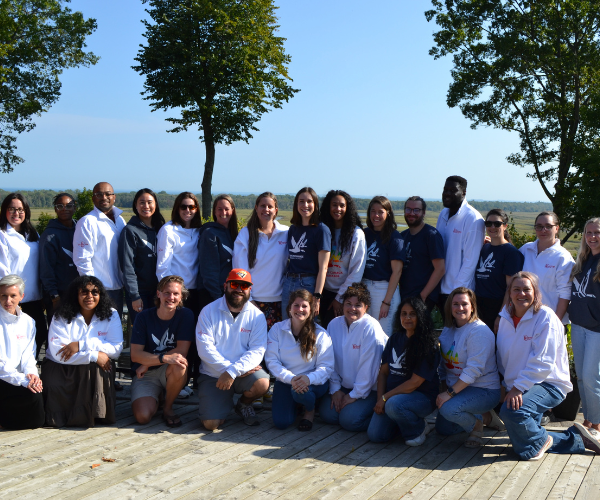
Mahid Yasin alongside the Gakino’amaage team. Our work is strengthened by a culture of collaboration, reflection, and support—for educators, First Nations Community Partners, and one another.


For teachers working in northern and remote First Nations, the need for sustained support becomes clearer over time. “The first month or two can feel manageable,” Mahid explains. “But once you’re fully teaching, building relationships, and understanding the realities of the classroom and community, that’s when having someone walking beside you makes a real difference.”

That approach is shaped not only by Mahid’s experience in schools, but also by the internal culture at Gakino’amaage. “I feel genuinely supported by my director,” he says. “That kind of leadership allows us to do this work well, because the support we provide teachers starts with how we work as a team.”

For Mahid, what truly distinguishes Gakino’amaage is its First Nations-led approach. The organization works in partnership with First Nations, centring community priorities, leadership, and Indigenous knowledge rather than applying external solutions.

“This work isn’t about bringing in outside answers,” Mahid says. “It’s about listening, learning, and responding to what communities have identified as important.”

Mahid points to examples where educators are supported to move beyond surface-level curriculum delivery and engage meaningfully with Indigenous ways of knowing.

“In one Grade 8 class, a teacher expanded an English Language Arts lesson into land-based learning,” he explains. “Students explored Indigenous-sourced materials that conduct electricity, discussed renewable energy, and examined how natural systems—like leaves—can inspire solar technology.”


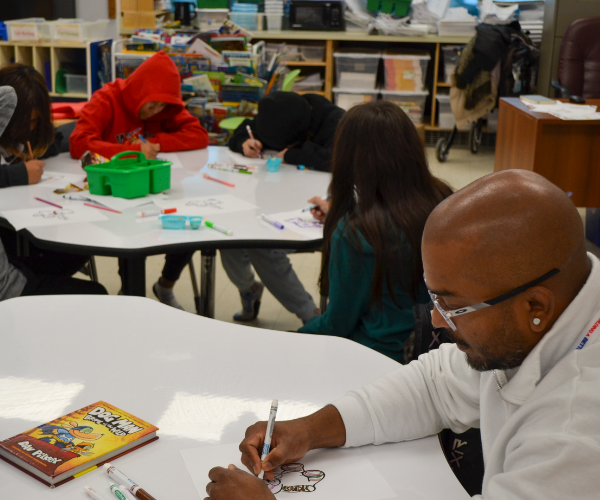
Mahid Yasin, Teacher Development Manager at Gakino’amaage, colouring alongside students during an in-classroom visit. These visits support relationship-building and allow for hands-on, responsive support for educators.


For Mahid, this kind of teaching reflects what is possible when educators are supported to learn from community, adapt their practice, and connect curriculum to lived experience.

“There’s a lot to learn from education in northern and remote First Nations,” he says. “Being invited into that learning is a responsibility—and one that requires support.”

For educators considering teaching in northern or remote First Nations, Mahid believes clarity and honesty matter most.

“This work isn’t for people looking for a short-term experience,” he says. “It’s for educators who want to build relationships, learn from community, and grow in their practice—while knowing they won’t be doing it alone.”

Gakino’amaage is designed for teachers who are committed to learning, who value guidance and accountability, and who understand that strong teaching in the North is built through partnership, preparation, and ongoing support.

“If you’re willing to show up, listen, and stay engaged,” Mahid says, “we’ll be there to support you every step of the way.”


Educators interested in teaching in northern and remote First Nations can learn more about Gakino’amaage’s teacher recruitment, preparation, and ongoing support here.
Ready to take the next step? Apply at teachforcanada.ca/apply.

Those interested in working alongside educators and First Nations in roles across recruitment, teacher development, and operations can explore current opportunities on our Careers Page.

adfafda

Why Local Pathways Matter: Tony’s Story as an Education Assistant in NCN

Posted by Skylar Wesley

For Tony Nozicka-Spence, working as an Education Assistant in the Sensory Room at Otayitiskiwin Kiskinwahamakikamik, an elementary school in Nisichawayasihk Cree Nation, is a way to give back to the community that raised him.

Tony grew up in Nisichawayasihk Cree Nation (NCN), attended the same elementary school where he now works, and went on to graduate from NNOC, the local high school. Today, he spends his days supporting students from Grades 1 to 6, helping them learn, express themselves, and build confidence.


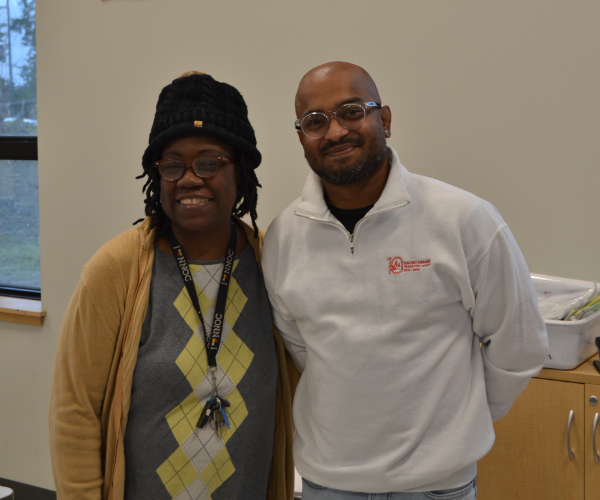
Meet Tony! Standing proudly next to the soft blocks in the Sensory Room at Otayitiskiwin Kiskinwahamakikamik (OK) School in Nisichawayasihk Cree Nation, a space dedicated to supportive and engaging learning experiences.


“In the Sensory Room we work with kids on the spectrum — both verbal and non-verbal, with differing abilities,” Tony explains. “We’ve got bicycles, trampolines, crash mats, swings, and building blocks so they can get their energy out or build houses and forts. And if they just need a quiet space, we’ve got weighted blankets, chairs, and slides where they can relax.”

The Sensory Room is a vibrant, welcoming space where every child belongs.


A growing place of learning: Otayitiskiwin Kiskinwahamakikamik is one of two schools in Nisichawayasihk Cree Nation, serving more than 500 students from Nursery to Grade 9 and helping shape the next generation alongside the community’s new high school.


Tony’s focus is simple: help students leave the room feeling good about themselves. “When I was in school, we didn’t have as much of a need for this kind of room,” he says. “Now, it’s such a great resource for our students. We make sure they leave feeling positive — that’s what matters.”

Having lived in NCN his whole life, Tony understands the power of connection. “I love being here — being with my family, seeing the kids, watching them grow. The best part is when they come up to me, hug me, tell me they love me. It makes my heart warm.”

Those small moments are what make the work meaningful — and what keep Tony committed to helping students succeed.

Over his five years working in education, Tony has witnessed the impact of teacher turnover firsthand. “Sometimes teachers leave without any reason — just up and go. It really affects the kids,” he says. “They try to have the EAs step up and teach, but we don’t have the proper structure or training to run a class. We need that support and experience.”

That’s part of why community-based education pathways matter so deeply. Programs like Endaayan: A First Nations-Led Pathway to Teacher Education — a Bachelor of Education program developed by Gakino’amaage in partnership with First Nations — are designed to support people like Tony: local educators who want to keep learning without leaving home.

“A lot of Indigenous people don’t like to leave home — they like to stay close,” Tony shares. “When I graduated high school, I was forced to go to university during peak COVID. Being so close with my family, I felt discouraged and disconnected without them. I ended up finishing my studies from home.”


Rooted in community, Tony is building the kind of learning environment every child deserves, and showing why local pathways in education matter.


For Tony, and many others like him, the idea of training to become a certified teacher in their own community isn’t just convenient — it’s transformational. It keeps education grounded in place, language, and connection.

Just as Endaayan opens doors for aspiring teachers, Gakino’amaage’s Education Assistant Program strengthens the foundation that educators like Tony are already building in their communities. This First Nations–led program supports education assistants, tutor-escorts, and paraprofessionals in the First Nations Gakino’amaage serves by offering culturally grounded professional development, mentorship, and ongoing support. 

Through in-person learning, skills training, and community-based coaching, the program helps EAs grow in confidence and capacity while remaining rooted at home. By investing in local talent and expanding pathways in education, the Education Assistant Program contributes to a stronger, more sustainable supply of educators — reinforcing the continuity, relationships, and local expertise that are so essential in supporting student success.


Stories like Tony’s remind us what becomes possible when education is rooted in community. If you’re interested in supporting or learning more about First Nations-led pathways for local educators, Gakino’amaage welcomes you to reach out, connect, and walk alongside this work.


adfafda

Building Futures Through Tech: Mr. Mango’s Classroom in Nisichawayasihk Cree Nation

Posted by Skylar Wesley

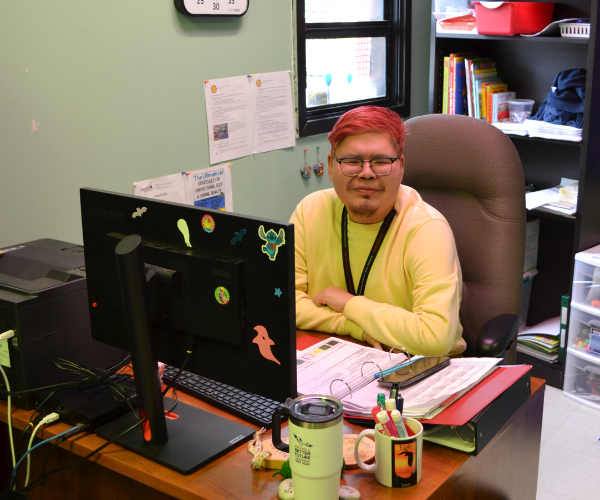
Meet Jonah Monoghan, a member of Gakino’amaage’s 2024 Cohort and a computer science teacher at Nisichawayasihk Neyo Ohtinwak Collegiate in Nisichawayasihk Cree Nation (NCN). Known affectionately by his students as Mr. Mango, Jonah has built a classroom where curiosity, humour, and hands-on learning come together—and where technology opens doors to new possibilities for students in the North.


Jonah Monoghan, a member of Gakino’amaage’s 2024 Cohort and a computer science teacher at Nisichawayasihk Neyo Ohtinwak Collegiate in Nisichawayasihk Cree Nation (NCN).


When I first arrived in Nisichawayasihk Cree Nation two years ago, I didn’t expect to be called Mr. Mango. It started as a small joke in class, and before long, the name just stuck with my students. It’s a reminder of the lighthearted energy they bring into my classroom each day.

Humour is a big part of learning here—and it’s a big part of how relationships are built. You can’t walk into a northern classroom expecting to be an authority figure in the traditional sense. You’re not above your students—you’re with them. Once I understood that, everything changed.


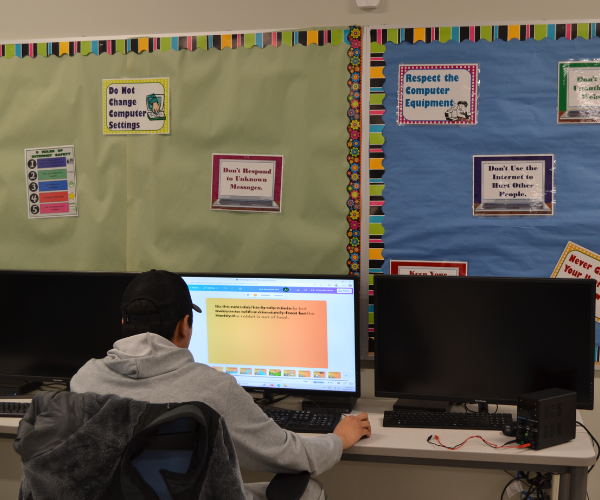
One of Jonah’s students working hard on a storybook project.


Now in my second year teaching computer science, my classroom is filled with movement, laughter, and ideas. Between coding projects and chess club, my students are learning how creativity and technology can shape what’s possible. Right now, we’re working on a project to build our own weather station. The students are learning how to collect and analyze data using an anemometer they’ll operate themselves. It’s exciting because it connects science, math, and technology—but it also connects them to the world around them.

Outside the classroom, I’m the school’s unofficial beekeeper. We’ve harvested honey three times—before the forest fires, after, and again this spring—and each batch tells its own story. Students helped with the process, from maintaining the hives to bottling the jars. We even started planning a beekeeping club, and one of my students took care of the hives through the Youth Employment Program this summer.

In the classroom, my focus is on giving students the chance to work with technology—to touch it, use it, and see what they can create. We work with Raspberry Pis, 3D printers, and other tools that make abstract ideas real. Exposure is everything. Once students start exploring, their confidence grows. The way I see it, technology is about access. Whether it’s coding, 3D printing, or writing prompts for AI, these are skills that can help students feel more comfortable in future learning or work environments. For some, it might even spark a lifelong interest.


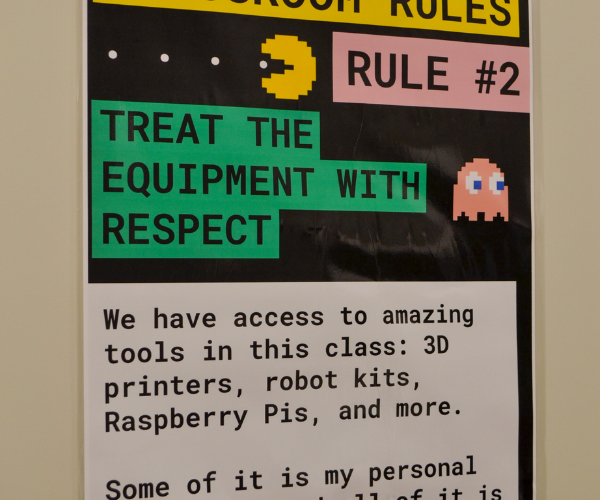
A great poster printed through the school’s in-house program, reminding students to protect their valuable learning tools.


My students have printed everything from hockey stick extenders to custom parts for their own projects. But the real value isn’t in what they make—it’s in the curiosity and independence they gain along the way. I want them to leave here comfortable with technology, not intimidated by it. Those small skills—sending an email, troubleshooting a device, understanding how software works—are building blocks for opportunity.

My partner, Leah, works in Human Resources at the school, and together we’ve found a sense of home here. The community welcomed us with open arms. When we arrived, the administration told us, “There’s a place for everyone here,” and they meant it. Outside of school, I serve as union president of the Nisichawayasihk Cree Nation Teachers Association. We’re working to bring back community-focused events that used to bring people together—like union-supported fishing derbies. It’s a way to strengthen relationships beyond the classroom and celebrate what makes this place so special.


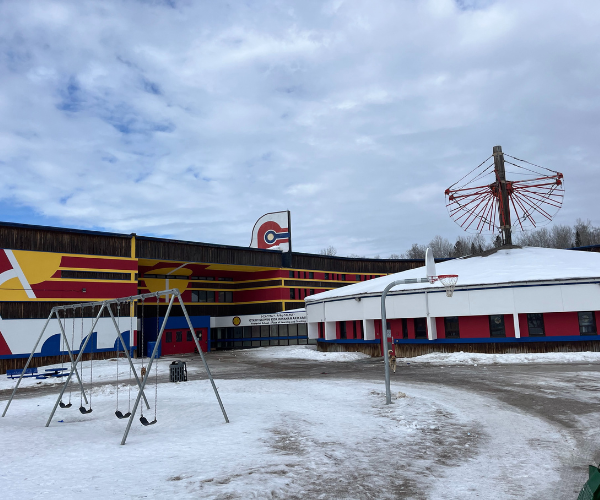
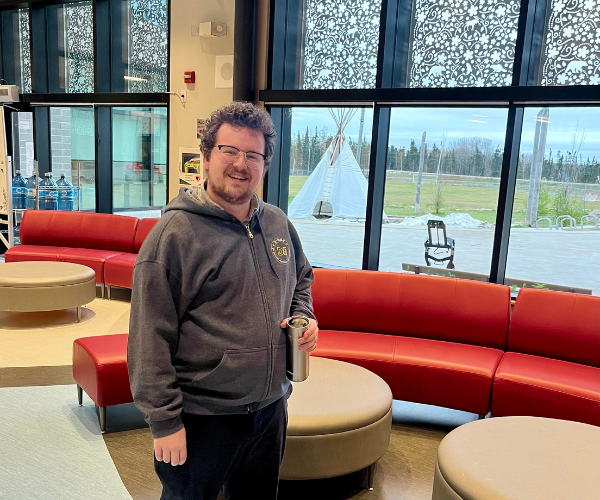
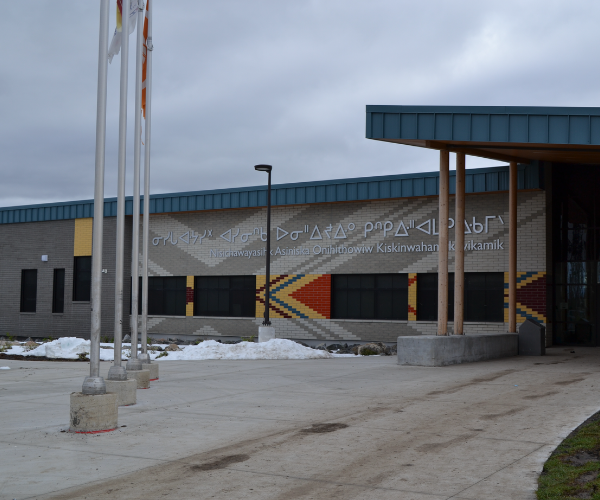
Here is the school where Jonah teaches and feels such a strong connection


I’m in my second year now, and I don’t see myself going back to Ontario anytime soon. I want to stay and see this group of Grade 10 students graduate. Watching them grow—and knowing I had a small part in their journey—is incredibly rewarding.

I wouldn’t be here without Gakino’amaage. It gave me the tools, the support, and the confidence to take this step North. Teaching here has changed me as a teacher and as a person—and I can’t imagine being anywhere else right now.


Technology has the power to open doors—and so does teaching in the North.
If you’re an educator who wants to inspire curiosity and confidence in the next generation of learners, learn more and apply to teach with Gakino’amaage.

adfafda

Finding Purpose in Pikangikum: Shivanie’s Journey as a Northern Educator

Posted by Skylar Wesley

Meet Shivanie Jones, a member of Gakino’amaage’s 2023 Cohort and a Grade 4 teacher at Eenchokay Birchstick School in Pikangikum First Nation. Her experience teaching in the North has been one of growth and connection—both inside and outside the classroom.

From finding new ways to engage her students to joining a local sewing club with Elders, Shivanie’s story highlights the meaningful relationships and experiences that come with teaching in a northern First Nation.


Shivanie Jones, a member of Gakino’amaage’s 2023 Cohort is a teacher at Eenchokay Birchstick School in Pikangikum First Nation.


Hi, my name is Shivanie Jones. I am a member of Gakino’amaage’s 2023 Cohort, and I’m proud to teach Grade 4 at Eenchokay Birchstick School in Pikangikum First Nation.

Each school year begins with a mix of excitement and anticipation. My students’ quiet nature reflects their deep thoughtfulness and the kindness that defines their spirits. Being in the classroom with them has taught me patience and the importance of finding new ways to connect. I love teaching my students and watching them grow—not just in their studies, but in how they care for one another. Life here moves at a slower pace, and that rhythm gives me time to reflect and grow as an educator.


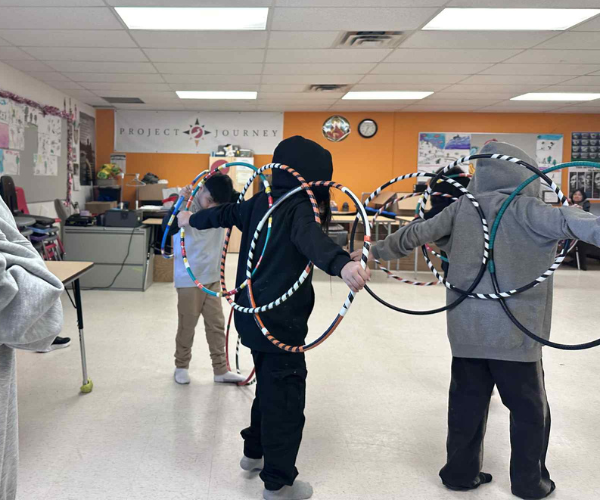
Shivanie’s students hoop dancing — a traditional form of storytelling through movement.


Two lessons really stand out from my time in the North: be flexible and get involved. Living here means things can change quickly, and it helps to keep an open mind and a willingness to learn. Professionally, I’ve learned that my classroom should always feel like a place where students are safe, welcomed, and valued. When they feel that, school becomes something they look forward to.

Outside of the classroom, I’ve learned to make space for myself too. I go for walks or bike rides, spend time outdoors, and join in local activities like fishing or going for drives with colleagues and friends. Those moments keep me grounded and connected—they remind me to slow down and appreciate where I am.


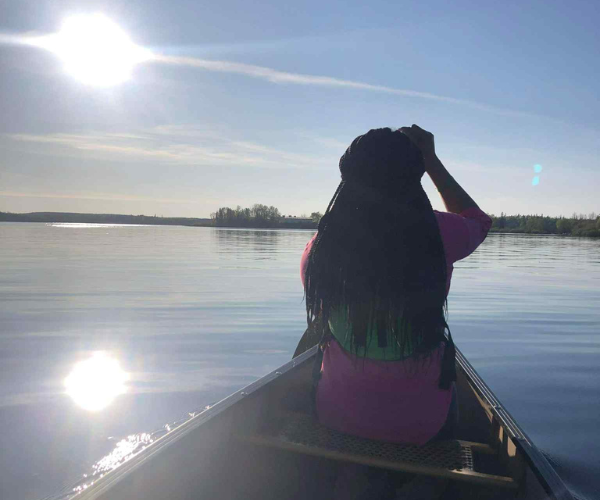
Taking a moment to enjoy the beautiful waters of Pikangikum First Nation.


One of my favourite parts of living in Pikangikum has been joining the sewing club with local Elders. We meet on Mondays and Thursdays, and it’s something I look forward to each week. I’ve learned skills I never expected to, but more importantly, I’ve built relationships that make me feel a deeper sense of belonging here.

Teaching here has reminded me that connection is at the heart of everything. Whether it’s laughing with my students, learning from Elders, or spending time with colleagues, these relationships have made my experience in Pikangikum deeply meaningful.

I’m grateful to have spent two years in the North with Gakino’amaage. Reaching this milestone fills me with pride and appreciation for everything I’ve learned and experienced. Pikangikum feels like exactly where I’m meant to be—to keep growing, learning, and contributing.

If you’re thinking about teaching in the North, I encourage you to take the leap. The experience will shape you in ways you can’t predict, and remind you every day why teaching matters.


Applications are now open for teachers who want to grow, connect, and make a difference in northern First Nations. Learn more and apply now.

adfafda

Teaching, Adapting, and Growing in the North: Fiona McKenna’s Story

Posted by Skylar Wesley

Fiona McKenna is an Anishinaabe educator and member of Gakino’amaage’s 2025 Cohort. This September, she began her first year of teaching in Big Grassy River First Nation, returning to her own Treaty Territory after graduating from Trent University’s Indigenous Bachelor of Education program.

In just her first weeks, Fiona has already embraced the challenges and rewards of northern education—adapting to shifting roles with optimism while finding meaningful moments that reaffirm her decision to Go North.


Fiona McKenna, a member of Gakino’amaage’s 2025 Cohort is a teacher at Pegamigaabo School in Big Grassy River First Nation.


Like many teachers in the North, Fiona quickly discovered that adaptability is essential — roles often shift to meet the needs of the school, whether because of empty positions and high turnover or to respond to barriers students face, like inconsistent attendance, limited access to supports, and resource constraints in remote settings.

Originally hired as a health and gym teacher, Fiona was asked just before the start of the school year to take on the grade 3/4 homeroom and teach math for grades 3–8. Fiona kept a positive outlook, seeing the change as an opportunity rather than an obstacle.


“It’s been an amazing experience already! I get to interact with different subjects I never thought I could teach.”


Fiona has been enjoying connecting with students and teaching in her own Treaty Territory.


In her first month, Fiona has already experienced moments that remind her why she chose to teach. One highlight came when a shy student told her that her class was their favourite. “Being a first-year teacher, I’d been worrying if students enjoyed my class,” she reflected. “To hear that lifted my whole energy and reassured me that I’m doing right by the students.”

Teaching in Big Grassy First Nation has also deepened Fiona’s connection to her Indigeneity. She has harvested wild rice, spent time with family she doesn’t often see, and shared land-based experiences with her students. One of her favourite memories so far has been fishing with her class. “Watching students reel in fish and laugh at how slimy they were—with the biggest grins on their faces—was such a heartwarming experience,” she said.


Fiona has been enjoying spending time fishing and experiencing land-based activities.


Outside the classroom, she’s embraced the rhythms of community life—fishing, spending time outdoors, and handing out treats to the neighbourhood dogs. “Life in the community is exactly what I’ve always wanted. It’s slow, but still filled with excitement.”

The shift in her teaching role could have been overwhelming, but Fiona credits her Teacher Development Manager and the fall teaching resources provided by Gakino’amaage for helping her make a smooth transition. “They made preparing for my own classroom so much easier when I had that last-minute switch,” she said.

Looking ahead, Fiona is eager to participate in professional development sessions, witness more northern lights, and continue learning from her fellow teachers and educational assistants.

As Gakino’amaage prepares to open its recruitment window this October, Fiona has a clear message for other teachers considering the leap: “The North is so welcoming, and the support of other teachers at the school is something I never dreamed of! Taking the leap to apply to Gakino’amaage is a decision that I will never EVER regret.”


Applications for Gakino’amaage’s 2026 Cohort are open as of October 1st. Like Fiona, you’ll find opportunities to grow as an educator, connect deeply with community, and experience the rewards of teaching in the North.

Learn more and apply.
Have questions? Reach out to us—we’d love to connect with you.

adfafda

Every Day Matters: Janak’s Commitment to Welcoming Students in North Spirit Lake First Nation

Posted by Skylar Wesley

Meet Janak Chemjong, a member of Gakino’amaage’s 2021 Cohort and a Grade 3/4 teacher at Victoria Linklater Memorial School in North Spirit Lake First Nation. His focus on welcoming students each day and encouraging consistent attendance highlights the meaningful relationships that teaching in the North makes possible.


Janak Chemjong, a member of Gakino’amaage’s 2021 Cohort, teaches Grade 3/4 at Victoria Linklater Memorial School in  North Spirit Lake First Nation.

Janak, a Grade 3/4 teacher at Victoria Linklater Memorial School in North Spirit Lake First Nation, has had a meaningful start to his school year. Like many educators, he entered September with a mix of excitement and uncertainty about what the months ahead would bring. Together with his colleagues, he prepared to welcome students back into the classroom, creating a smooth and positive transition into the new year.

In northern schools, smaller class sizes and multi-grade groupings are common. Many educators see this as an opportunity—it allows them to form stronger connections with students while tailoring support to individual needs. Janak’s Grade 3/4 class of nine students is one example—small enough to make individualized learning a daily practice, while also challenging him to teach across a range of levels. These experiences help educators grow their skills quickly in ways that larger southern classrooms often don’t allow.


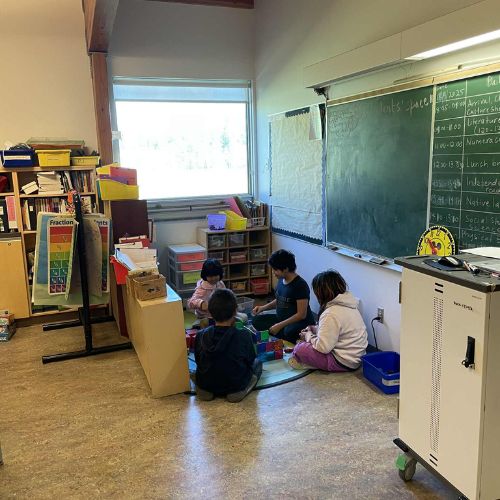
Students learning together in a corner of Janak’s classroom.

Still, consistent attendance can be a hurdle in many northern classrooms. The lasting impacts of the Residential School system have shaped family relationships with education, and rebuilding trust takes time. For educators, building strong, reciprocal relationships with students and families is essential.

Janak embraced this responsibility with intention. Each evening, he reached out to parents and caregivers to remind them about the next day of school, then followed up again in the morning to confirm and encourage attendance. If a student missed the bus, Janak quickly let the school office know so they could coordinate a pick-up and ensure the child still made it to class. His consistent communication—often through Facebook Messenger—helped families feel supported and reassured that their child’s presence mattered.

The impact was remarkable. For the first two weeks of school, every student in Janak’s class had 100% attendance. Each morning, watching his students arrive eager and ready to learn was a clear sign that his efforts were making a difference.


Focused and engaged: Janak’s students reached 100% attendance during their first two weeks together.

During the very first week of school, North Spirit Lake First Nation came together for a community moose harvest—a special way to begin the year. Students were able to take part in the process, learning firsthand and sharing in the harvest. For Janak, it felt like a gift: a highlight of back-to-school and a reminder of how cultural practices can be woven into education. The year began with living lessons grounded in tradition and community.

Looking ahead, Janak hopes to integrate more Anishininiimowin language into his classroom. Through Gakino’amaage, teachers like Janak can access support to help realize these goals—whether it’s subsidies for Additional Qualification or professional development courses, Indigenous-led webinars such as the Indigenous Education Speaker Series, or a growing bank of culturally-responsive resources to enrich their lesson planning.

For Janak, the first weeks of the year have already been full of growth, connection, and learning—for both himself and his students. Teaching in the North means navigating unique challenges, but it also opens the door to meaningful relationships with students and families, and to experiences that shape both your teaching and your role within the community.


If you’re a teacher looking for a career that is both challenging and deeply rewarding, Janak’s story is just one glimpse of what’s possible in the North. Learn more about Going North with Gakino’amaage. 

Celebrating 10 Years of Gakino’amaage | Strengthening education for generations to come. Explore Our Impact Goose Icon
This is default text for notification bar