
adfafda

More Than Support: Beverly Chalifoux on the Power of Education Assistants in the North

Posted by Olanrewaju Adeyanju

Beverly Chalifoux is a dedicated Kindergarten educator at Cadotte Lake Learning Centre and a participant in Gakino’amaage’s Education Assistant Program. In summer 2025, she took on a new role as a presenter at the Summer Enrichment Program, where she shared her knowledge and experience with teachers preparing to move North to work in First Nations schools.


Her presentation focused on the importance of collaborating with Education Assistants in the classroom and offered practical tips for building strong, respectful working relationships.
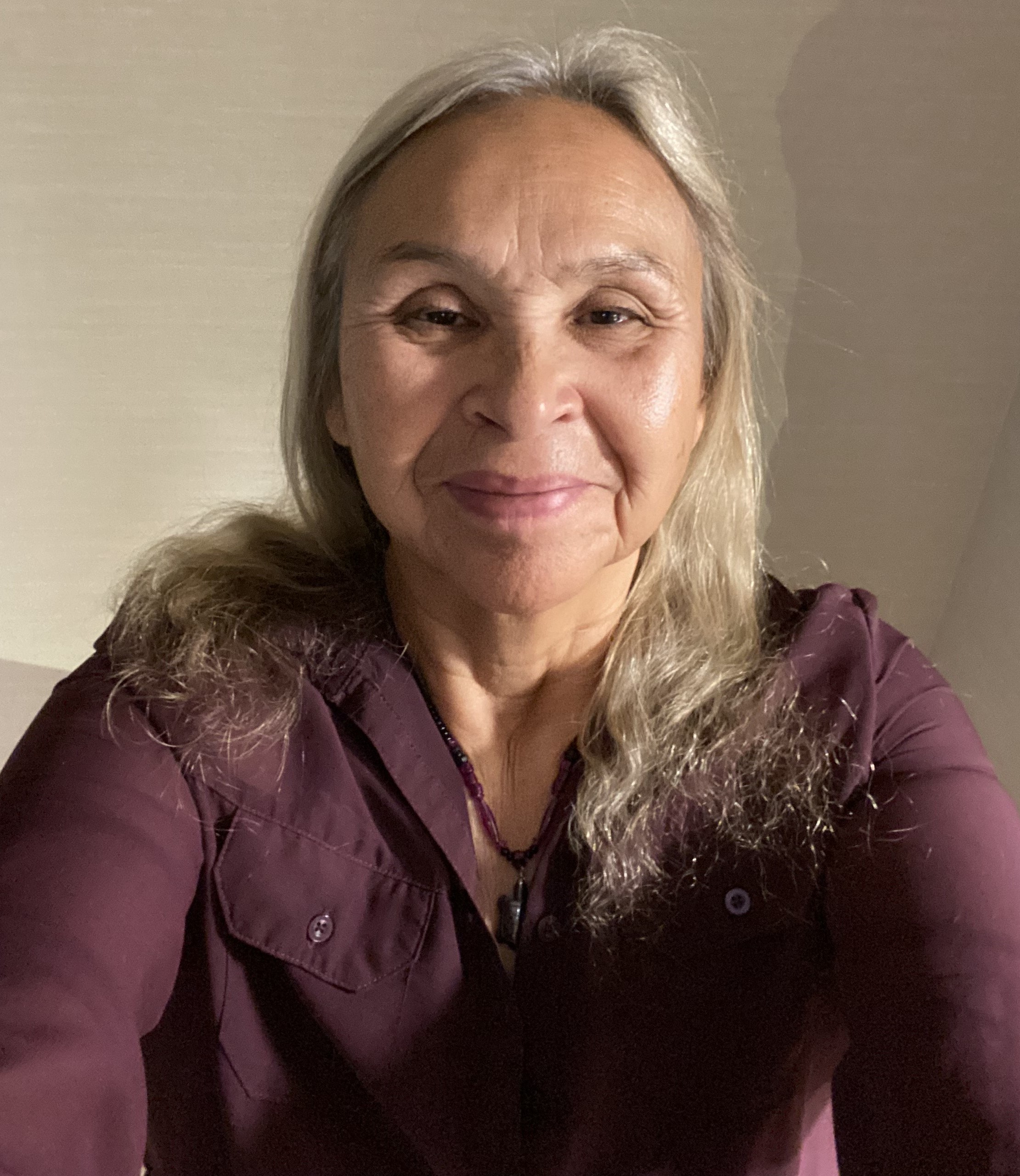
 

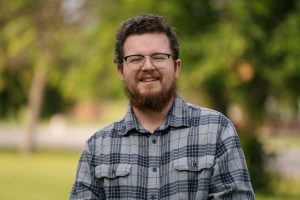
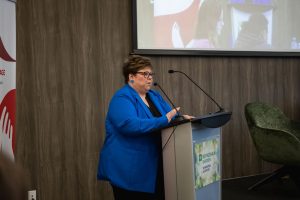
Beverly, Kindergarten educator at Cadotte Lake Learning Centre, Education Assistant Program participant, and presenter at the 2025 Summer Enrichment Program.


At the 2025 Summer Enrichment Program, certified teachers preparing to Go North gathered to learn about classroom culture, community relationships, and culturally-grounded education. Among the voices they heard was Beverly Chalifoux; a long-time educator, passionate learner, and participant in Gakino’amaage’s Education Assistant Professional Development Program.

Beverly led a session called “Working With Education Assistants as Collaborators”. Her message was clear: Education Assistants (EAs) are not just helpers in the classroom, they’re essential partners in First Nations education.

Beverly has been working in education since 2004 and teaches kindergarten in Cadotte Lake First Nation, one of four First Nations situated within the Woodland Cree First Nation in Treaty 8 territory of Northern Alberta. She’s not a certified teacher, but has been teaching children for decades. “I enjoy being there for the little people,” she shared. “I think I was meant to be a teacher. Having my son shifted my career aspirations for a while, but I’ve stuck with teaching, and I’ve kept learning and growing along the way.”

She first heard about the EA Program during a school visit from a Gakino’amaage Teacher Development Manager. “I was intrigued,” Beverly said. “I’m always up for learning. We can always learn something. Every day is a new day.” Though she was initially placed on a waitlist, a few months later she was accepted, and joined the program.
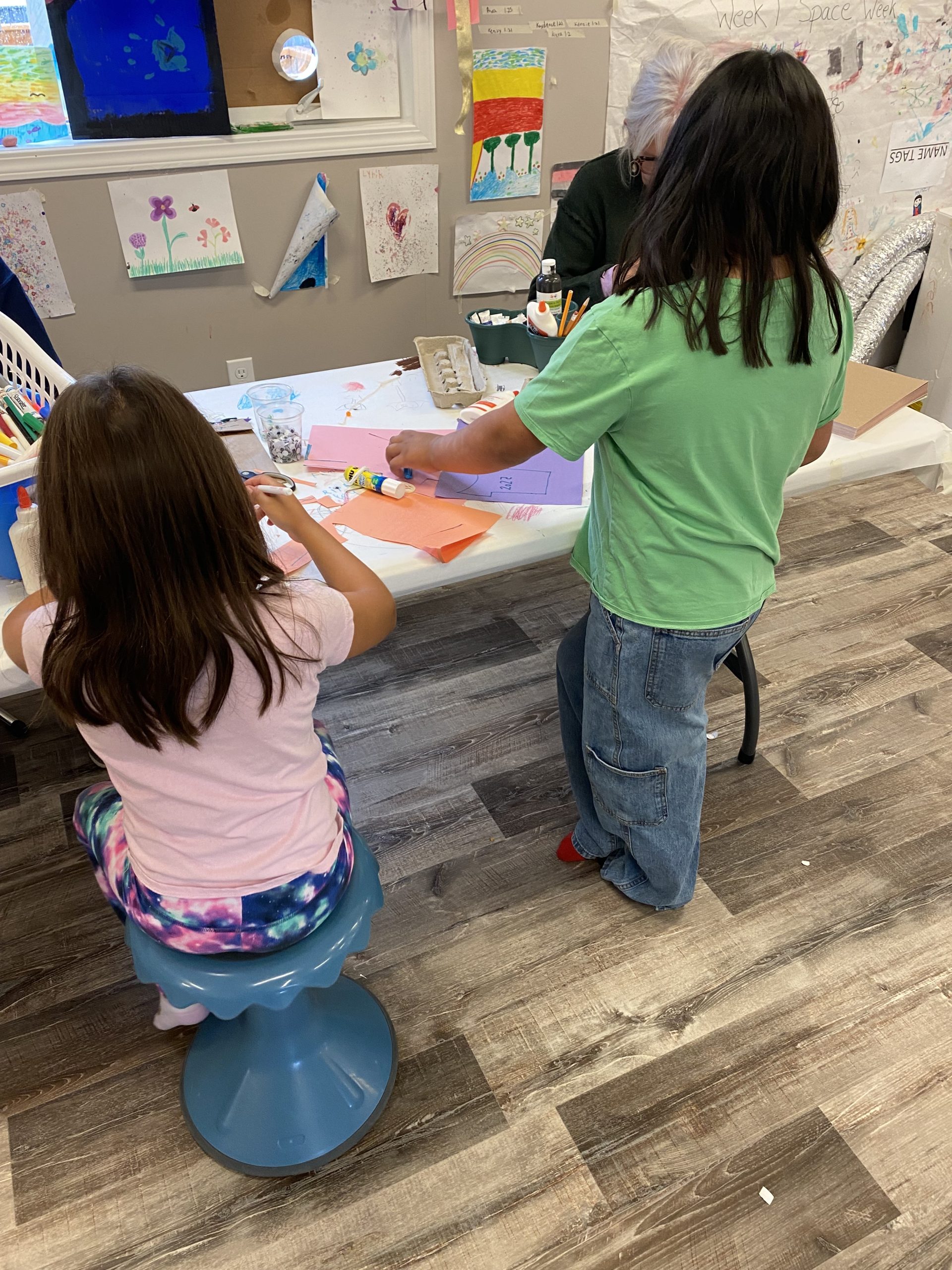
 

Beverly’s kindergarten students working on a project.


Throughout the school year, Beverly participated in virtual sessions and one-on-one coaching. The material helped validate and expand on tools she had already used, like creating quiet areas for students to collect themselves, and gave her fresh perspectives for her classroom practice.

Now, Beverly is not just learning from the program, she’s teaching others. Her session at the Summer Enrichment Program created space for teachers to reflect on the importance of collaborating with EAs in the classroom.

“Be respectful to your EA,” she told the room. “Talk to them. Learn about them. Ask them their likes and dislikes. Get to know them as people. They are there to teach your children, and they learn how to teach from you.”

More than once, Beverly emphasized the importance of kindness and compassion. “You don’t know what kind of life your students are coming from. School should always be a safe space.”
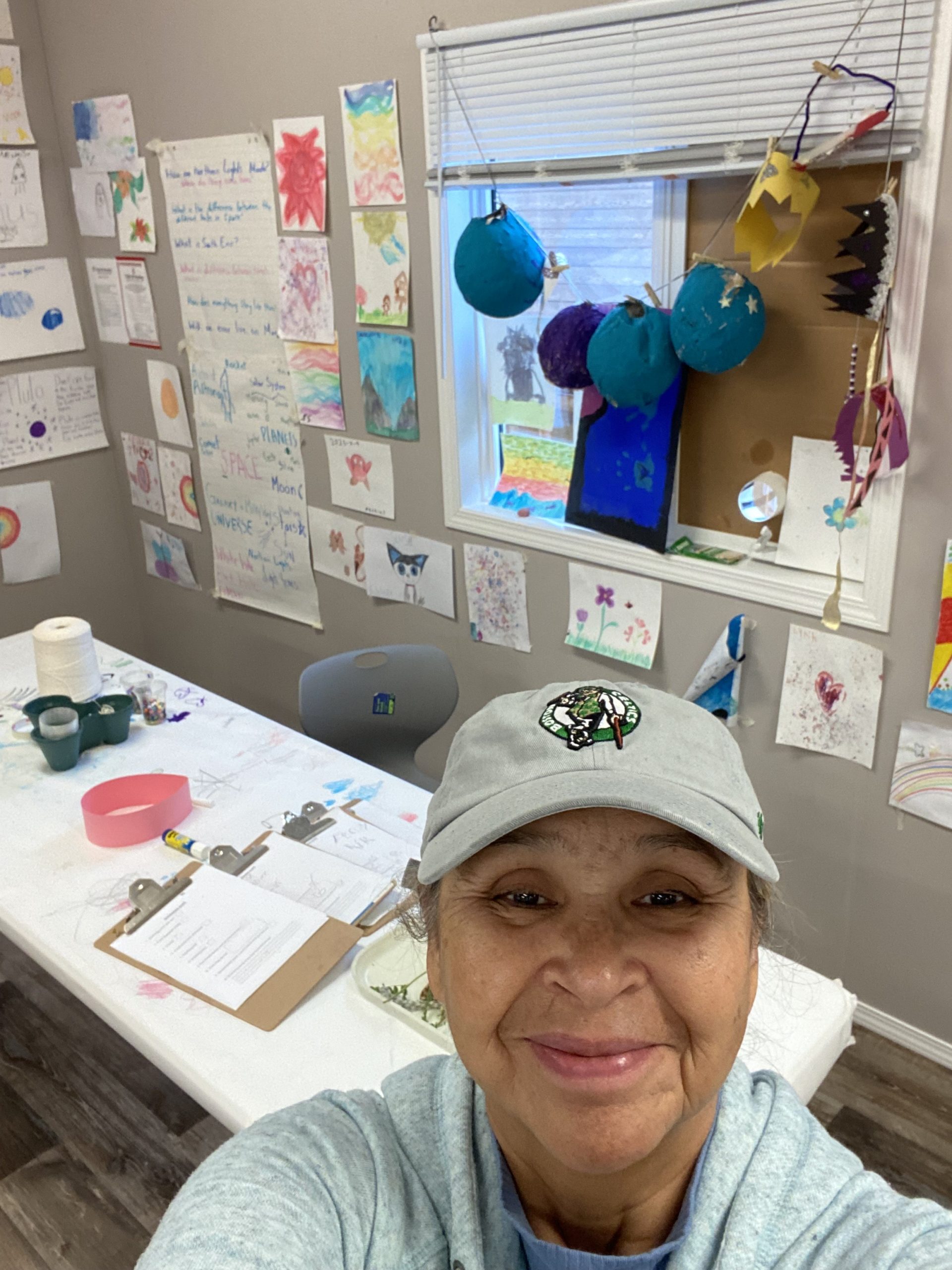
 

Beverly smiles in front of an activity set up for students at Cadotte Lake Learning Centre.


Beverly’s experience speaks to the broader story of northern education—its challenges, its triumphs, and the deep relationality at its core. She’s witnessed firsthand the toll of chronic teacher turnover in her community: students hesitant to build bonds with teachers they’re not sure will stay, classrooms left without structure, and Education Assistants stretched thin, stepping into roles they weren’t hired for just to keep things afloat.

“A teacher needs to make sure they’re there for the children,” she said. “Hang in there. These kids are important.”

Through it all, Beverly has remained rooted. Her presence at Cadotte Lake Learning Centre is a source of stability. She’s a trusted voice for families, a steady role model for students, and proof of the importance of showing up with heart and consistency.

Her story also challenges the way we define who gets to be called a teacher—and what kinds of experience are truly valued.”If I wanted to become certified, I’d have to leave my community,” she explained. “But I’ve been teaching in First Nations schools for years. Isn’t my experience valid?”

It’s stories like Beverly’s—and direct feedback from First Nations Community Partners about the need to return teacher education to community—that are shaping Endaayan: A First Nations-Led Pathway to Teacher Education. Still in development, Endaayan is being built to create community-based pathways to certification that honour Indigenous knowledge and lived experience, and that keep future teachers rooted in place. Educators like Beverly shouldn’t have to leave their home to be recognized as certified teachers.


Looking Forward


This January, Beverly will attend the 2026 EA Summit in Winnipeg, and she’s beginning to think about what might come next.

“Through Gakino’amaage, I’m thinking about furthering my education. I might take steps toward becoming a certified teacher.”

For now, she’s reflecting on her session at the Summer Enrichment Program, where she stood before teachers new to the North and shared not just her knowledge—but her heart.


Interested in supporting First Nations students and learning alongside passionate educators like Beverly?

Learn more about Gakino’amaage’s Education Assistant Program and how you can apply to teach in a northern First Nation. Whether you’re starting your journey in education or looking to grow in community, there’s a path for you. Learn more and get involved today.
adfafda

Movement, Story, and Listening: Terrance’s Path North

Posted by Olanrewaju Adeyanju

When Terrance Saunders joined the 2025 Gakino’amaage Teacher Cohort, he brought with him years of experience as an educator and artist, along with a strong belief in the power of the arts to build connection. As he prepares for his first year teaching in a northern First Nation, Terrance is thinking about what it means to build trust, support students, and learn in community.


A Teaching Journey Rooted in the Arts


Terrance at the opening circle

One of Terrance’s favourite parts of the Program was participating in the Opening Circle, led by Elders-in-Residence Tammy and Bernard Nelson.


Terrance moved to Canada from the Bahamas as an international student in the 1980s and has lived in Toronto ever since. Over the last thirty-five years, he’s worked in Toronto’s public school system, where his teaching practice has focused on dance, theatre, and movement as tools for learning and self-expression.

“I noticed that when I incorporated movement into the classroom, students started showing up in different ways—especially African Canadian boys who weren’t always as engaged,” he said. “It gave them something to connect with.”

For Terrance, the arts aren’t just about performance. They’re about building confidence, making space for identity, and helping students reflect on their own experiences. “I’ve used drama and dance to explore social justice issues. But it’s not about the issues themselves—it’s about helping students find their voice and use it.”

After years of learning about Indigenous histories and experiences from afar, Terrance felt ready to take the next step and contribute in a more meaningful way.

“I’ve done a lot of reading. I’ve listened to people speak. But I wanted to do more than listen. I wanted to show up and support young people to tell their own stories,” he said. “That’s why I applied to Gakino’amaage.”

Terrance will be teaching in a First Nation in Manitoba this fall. He isn’t going with a fixed agenda, but with a mindset of openness and respect.

Before beginning his new role, Terrance joined other educators to prepare for the realities and responsibilities of teaching in the North.


Terrance’s Experience at the Summer Enrichment Program


Before heading North, all teachers in the Gakino’amaage cohort participate in the Summer Enrichment Program. The program includes 15 hours of self-led online learning followed by a week of in-person programming at Lakehead University in Thunder Bay. Led by Indigenous leaders, northern educators, and Gakino’amaage staff, the program focuses on preparing teachers to succeed and stay in the North.

One moment stood out for Terrance: participating in the Blanket Exercise.

“I’m moved by Indigenous stories,” he said. “Connecting them to my own history helps me understand it more deeply.” He shared that the Blanket Exercise—with its movement, rhythm, and emotional impact—helped him form a stronger connection to his own story.

He appreciated the openness of his fellow cohort members and the space created for conversation and reflection.


Looking Ahead


Terrance is looking forward to creating spaces for students to express themselves, whether through movement, writing, or performance. He’s already imagining after-school workshops where youth can choreograph dances, create spoken-word pieces, or write short plays.

He hopes to help students rediscover what they already carry and use the arts as a way to shine. When asked what he’d say to others considering teaching in a northern First Nation, he paused.

“Anyone going North needs to apply to Gakino’amaage. It’s truly been a blessing since I arrived.”


Terrance being greeted by Gakino’amaage staff at the Thunder Bay International Airport.


Thinking about teaching in a northern First Nation?
Learn more about how Gakino’amaage prepares and supports educators through the Summer Enrichment Program and beyond.

adfafda

A Strong Start: Fiona and Rachel Begin the Summer Enrichment Program

Posted by Meredith Stapon

The Summer Enrichment Program is the first step in the journey for new teachers joining the Gakino’amaage Teacher Cohort. It’s a chance to meet others, learn from Indigenous leaders and experienced northern educators, and begin preparing for life and work in a northern and remote First Nation. For Fiona McKenna and Rachel Iserhoff, both members of the 2025 Cohort, the Program has also been an opportunity to reconnect—both with each other and with their own reasons for becoming teachers.


From Trent to Teaching


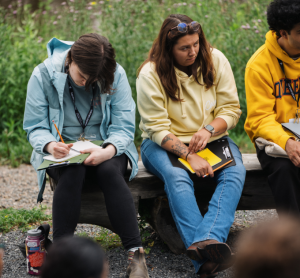
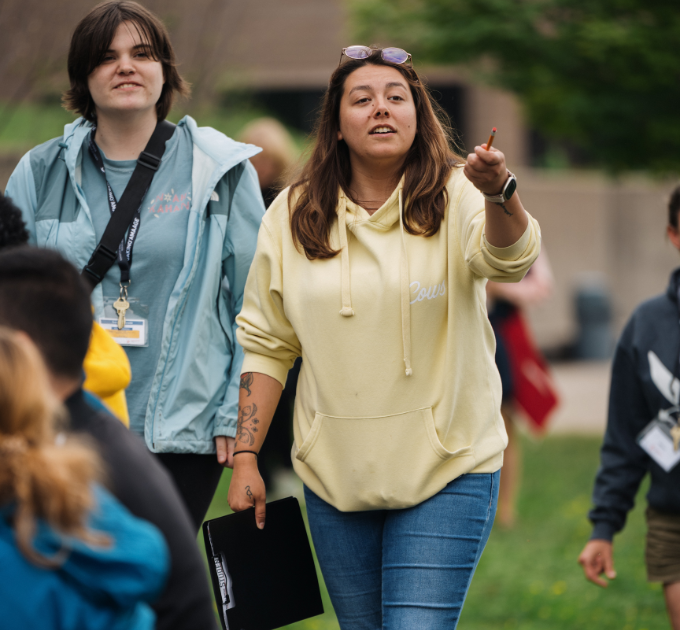
Rachel and Fiona take part in a Land-Based Learning session at the 2025 Summer Enrichment Program.


Fiona and Rachel first met while studying education at Trent University. Fiona has family ties to Shoal Lake #39, also known as Iskatewizaagegan #39 Independent First Nation, an Anishinaabe community located on the northwestern shores of Shoal Lake in Ontario. She has lived in both Red Lake and the Greater Toronto Area, and completed her degree through the Indigenous Bachelor of Education program. Rachel, originally from Fort Albany First Nation, was enrolled in the conventional B.Ed. stream during the same period.

Rachel’s first connection to Gakino’amaage came through the Northern Practicum Program, which she joined after an interview with Dr. Nicole Bell at Trent. “On my fourth day, we had a bush day out on a skidoo,” Rachel recalled. “That was awesome.” That early experience helped her decide to apply to Go North full-time with Gakino’amaage. Fiona had first heard of Gakino’amaage after high school but decided to apply later, while finishing teachers’ college. “It was always in the back of my mind,” she said. “The timing felt right this year.”


What the Program Looks Like


The Summer Enrichment Program is a key part of Gakino’amaage’s approach to preparing teachers. In 2025, it includes 15 hours of online learning followed by a week of in-person sessions at Lakehead University in Thunder Bay. The in-person component is led by Indigenous leaders, northern teachers, and education experts, and focuses on three main areas:

Culture – First Nations histories, traditions, languages, and current realities

Community – Local governance, values, and time with Community Partners

Classroom – Land-based learning, trauma-informed strategies, and self-care

Rachel shared that she’s especially excited to learn how to bead at the Summer Enrichment Program. “Fiona’s a big beader, but I haven’t had that experience yet,” she said. “That’s something I’m looking forward to.”


Getting Ready for the Year Ahead


Fiona and Rachel are both preparing to teach in northern
First Nations Community Partners this fall. Fiona has accepted a role as a health and gym teacher in Big Grassy River First Nation, and she’s already thinking about how she’ll support students to connect with the land. “A lot of students lost that connection during COVID,” she said. “They don’t have to hunt or fish if they don’t want to—but they can know the plants, recognize the animals, and build that knowledge.”

Fiona is also exploring what land-based learning means for her. With dietary restrictions, she’s chosen to work in a road-access community to better manage food options, but she also hopes to learn more about hunting and harvesting. “I want to get my hunting license—and maybe a moose. That would be great.”

Rachel, who will be teaching in Eabametoong First Nation, says the Summer Enrichment Program has helped her think more about the classroom experience. “Having spent time in the North through the practicum, there are some things I already know—but having the academic background and support from the Program will help me have a deeper understanding.”

She’s also looking forward to building relationships in the community. “When I was teaching in the south, I didn’t feel as close to my students,” Rachel said. “During my practicum, the connection I had with my kindergarten class was totally different. I’m excited to have that again.”


Learning Together


Rachel and Fiona heading to a Summer Enrichment Program session at Lakehead University.


For both teachers, one of the best parts of the Summer Enrichment Program has been meeting others in the cohort. “It’s refreshing to hear about other people’s experiences,” Fiona said. “Some people had never seen a deer before—we saw one on campus, and it was so fun to share that moment.”

The Summer Enrichment Program is about preparation, but it’s also about getting to know each other and feeling more confident for the year ahead. With support from Gakino’amaage staff, education experts, and northern leaders, the 2025 cohort is starting strong—and building a foundation that will support them in and out of the classroom.


About the Summer Enrichment Program

All new Gakino’amaage teachers begin their journey with the Summer Enrichment Program. The 2025 program takes place July 14–18 at Lakehead University following 15 hours of online learning. Sessions are led by Indigenous leaders, northern teachers, and education experts, and focus on building understanding of culture, community, and classroom strategies for the North.

adfafda

It Starts with Listening: Laura Maracle on Building Relationships through the Summer Enrichment Program

Posted by Meredith Stapon

As the 2025 Summer Enrichment Program kicked off in Thunder Bay this week, the newest Gakino’amaage Teacher Cohort gathered at Lakehead University for a session titled Indigenous Histories of Turtle Island. At the centre of the room stood Laura Maracle, a Haudenosaunee woman from Kenhtè:ke, Tyendinaga Mohawk Territory—and a long-time presenter in the Program.

Rather than using slides or lecture notes, Laura led the group through the Blanket Exercise: a powerful, interactive experience that explores the history of relationships between Indigenous and non-Indigenous peoples on the land now known as Canada.


A tapestry of blankets used during the Blanket Exercise with Gakino’amaage’s 2025 Cohort.


“I like doing it this way because it reaches different learning styles,” Laura explained. “People go through the motions and feel it. When they feel it, they remember it.”

The Summer Enrichment Program is a cornerstone of Gakino’amaage’s community-focused approach to preparing teachers to live and work in northern and remote First Nations. The Program begins with 15 hours of online learning and continues with a week of in-person sessions facilitated by Indigenous leaders, northern teachers, and education experts. Guided by input from Gakino’amaage’s Advisory Council of First Nations Community Partners, it is grounded in three core pillars:

Culture – Learning about First Nations histories, cultures, languages, and current realities
Community – Building relationships with local leaders and understanding community values and governance
Classroom – Developing trauma-informed, culturally-responsive teaching strategies, along with personal and professional self-care practices

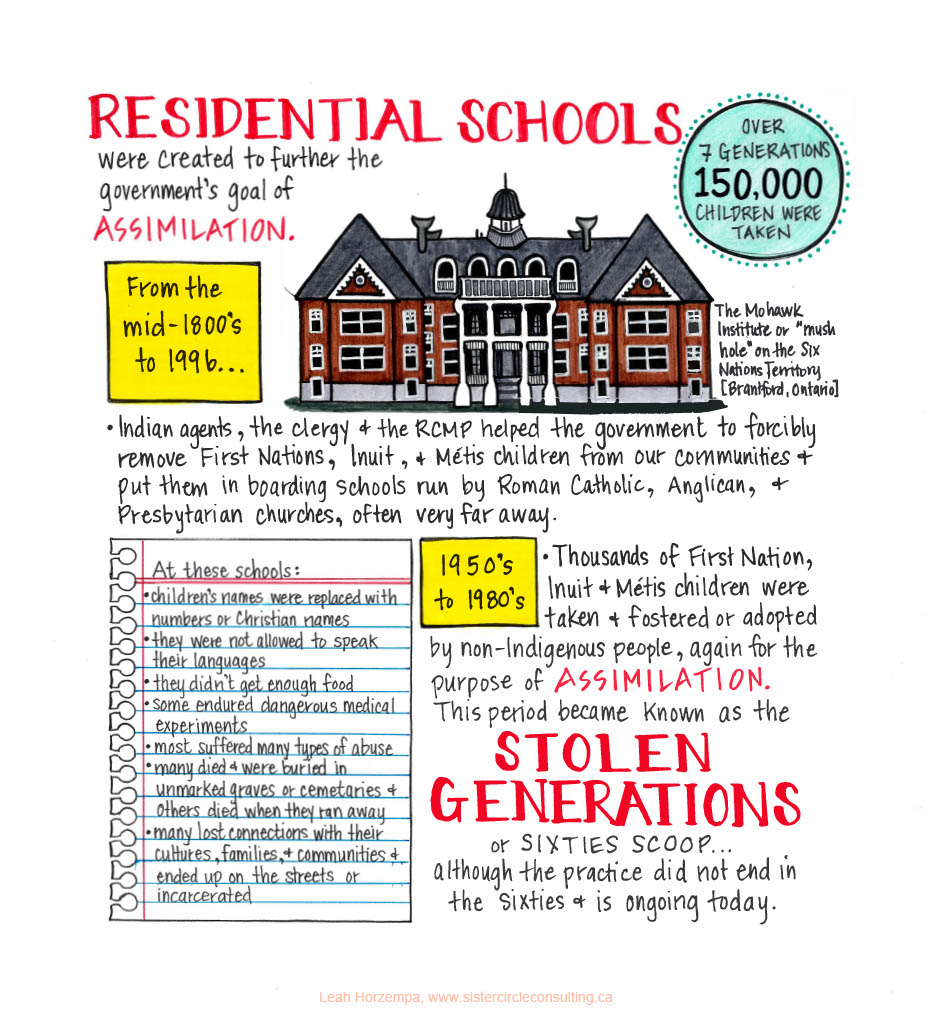
Laura’s session focused on the first two—Culture and Community—while also helping educators reflect on how history continues to shape the classroom. The experience prompted meaningful conversations about the legacies of Residential Schools, the Sixties Scoop, and what some now refer to as the Millennial Scoop: the continued overrepresentation of Indigenous children in Canada’s child welfare system today.

“We have more children in care now than we ever did in the Residential School system,” Laura shared. “If teachers don’t know these things, it’s hard to understand the full impact on the families and communities they’re going to work with.”

Gakino’amaage commissioned illustrative note taker, Leah Horzempa, to record Laura’s session in 2020.


A Decade of Learning and Commitment


This year marks the 10th anniversary of the
Summer Enrichment Program. Since its launch in 2015, the Program has prepared nearly 300 educators—including many who have remained in community for multiple years. The 2025 Program reflects a deeper evolution: a land-based learning model shaped by community voices and rooted in First Nations resurgence.

“In community work, it’s rare to see this kind of long-term commitment,” Laura reflected. “But Gakino’amaage continues to show up—and the First Nations they partner with continue to trust them. That speaks volumes.”

For Laura, the impact is clear. “I know the organization is doing the work because I see it in the actions they take. I see it in how they invest in these teachers. And I see it in how the teachers are already talking about incorporating land-based learning, listening, and showing up in community in a good way.”

She shared how meaningful it felt to be part of this moment:
“I’m honoured to be here again—to spend time with this group, to kick off my summer and birthday week, and to contribute to a Program that’s been going strong for ten years and still growing.”


A Two-Way Relationship


The Gakino’amaage Teacher Cohort comes from many backgrounds and teaching journeys, but Laura said she could sense a shared openness during the session.

“Their responses felt genuine,” she said. “They were listening and asking thoughtful questions, and that made my heart happier.”

That human connection is what keeps Laura returning to the Program each year. “I have apprehensions when people go into Indigenous communities with preconceived notions,” she said. “But with Gakino’amaage, it’s different. There’s a relationship of mutual commitment. They’ve made space for Indigenous voices. That’s why I continue to show up.”

Laura sees her role not just as an educator, but as someone modelling how to build real, respectful relationships—something that starts in the classroom but extends into everyday interactions in community.

“My favourite part of working with the cohort is sitting down and getting to know these teachers as people. Hearing their stories, sharing mine—it’s how we begin to build trust.”


Preparing Teachers for What’s Ahead


The goal of the Summer Enrichment Program is not to provide all the answers, but to prepare teachers to enter First Nations with the humility, context, and tools to build relationships and learn in partnership with their students, families, and colleagues.

“It’s about helping people understand where we are today and why,” Laura said. “So they can move forward with awareness and care in how they think, act, teach, and relate to others.”

That approach reflects the aspiration behind the Summer Enrichment Program: that teachers will not only bring strong classroom skills, but also a deep respect for the land, people, and knowledge systems they’re joining. The Program helps lay that foundation—and for many, it becomes a meaningful step in their teaching journey.


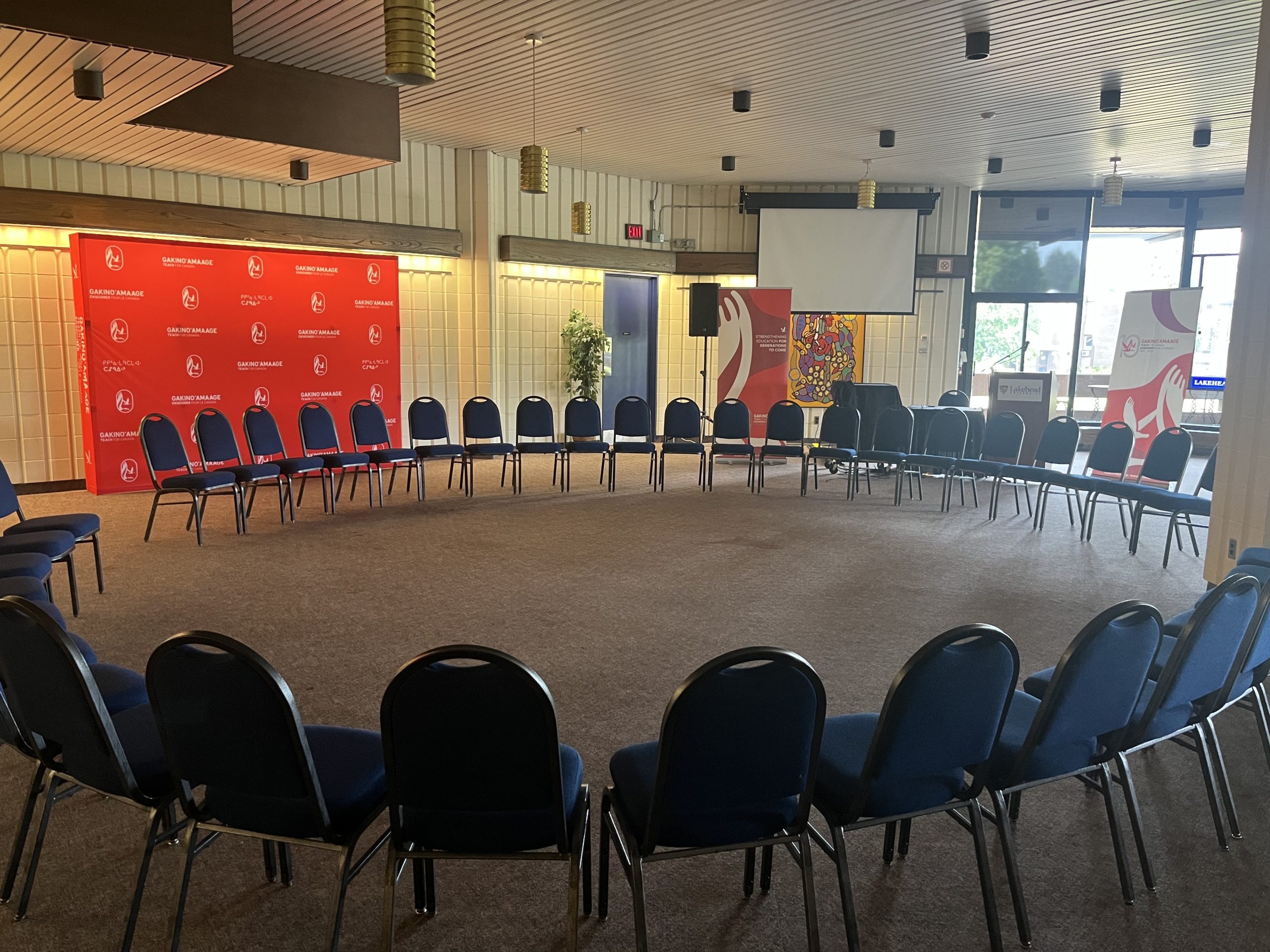
Lakehead University is the home of Gakino’amaage’s Summer Enrichment Program.


Learn more about the Summer Enrichment Program and how it supports educators in preparing for life and work in a northern First Nation.


Interested in going north to teach? Explore how Gakino’amaage supports you every step of the way.


adfafda

My Journey as a Teacher: From Game Design to Nisichawayasihk Cree Nation

Posted by Meredith Stapon

Meet Jonah Monaghan, a member of Gakino’amaage’s 2024 Cohort and a computer science teacher in Nisichawayasihk Cree Nation (NCN). With a background in game design and a passion for play-based learning, Jonah brings a unique perspective to his classroom. 


Since arriving in September, Jonah has embraced the challenges and opportunities of teaching in the North, fostering creativity and technical skills among his students while learning from the traditions and cultures of Nisichawayasihk Cree Nation. Read on to learn more about Jonah’s journey and the impact he’s making in his first year teaching in NCN.


Jonah Monaghan is completing the first year of his two-year teaching commitment in NCN, where he supports students and contributes to the school community.


My name is Jonah Monaghan, and I’m a computer science teacher in the Nisichawayasihk Cree Nation (NCN) in northern Manitoba. It’s been a transformative journey since I first set foot here in early September, and my experiences have been both challenging and rewarding in ways I could have never anticipated.


Diving into Teaching


I teach a variety of computer science and technology courses ranging from Grade 9 to post-secondary students. These include everything from basic keyboarding and communication skills to advanced computer science classes where students are programming with Scratch, Python, and even building robots. My curriculum also integrates media literacy, teaching students essential skills like how to avoid online scams and best practices for digital security.


Jonah joined Gakino’amaage’s Indigenous-led Summer Enrichment Program to prepare for his teaching experience in the North.


One particularly exciting project we’re working on is creating interactive web-based stories using tools like Twine. It’s inspiring to see students engage in storytelling while learning valuable technical and creative skills. Throughout the winter, students integrated multimedia elements into their stories and proudly presented their final projects in February.


Adapting to the North


Teaching in NCN has pushed me to rethink my approach. One unexpected challenge has been the prevalence of absenteeism, often due to students being out on the land, hunting, or participating in cultural activities. While this can disrupt the flow of lessons, it’s also a reminder of the vital role these traditions play in my students’ lives. I’ve adapted my teaching methods to be more flexible, scaffolding lessons so students can catch up without falling behind.


This school year, Gakino’amaage Teacher Development Manager Brittany visited NCN to support educators in their classrooms. During her visit, she joined students for time on the land—something Jonah highlights as deeply meaningful for his students’ learning and connection to their culture.


In some ways, I’ve come to appreciate these absences. I’d much rather my students be out connecting with the land than sitting in a computer lab all day. This connection to culture and nature is a cornerstone of their education, and it’s been a privilege to witness it firsthand.


Building Connections and Community


My first days in NCN this year were filled with excitement and a bit of nervousness. Some students were reserved at first, but as the the school year went on, they’ve opened up. I’ve been working on incorporating play-based learning into my lessons, a concept I’ve always valued. For example, I’ve introduced game-based activities like keyboarding challenges and tools like Gartic Phone, which combines creativity and communication in a fun and engaging way.


Outside the classroom, my life in NCN has been equally fulfilling. My family has been up to visit, and we shared some nice meals together. We’ve also welcomed a new addition to our household—a puppy named Rosie. She’s been a source of joy and companionship as I settle into the North. Adjusting to the climate has been an adventure, too. The first snowfall came in mid-November, and while the dry cold was different from what I’m used to, I found it invigorating.


Jonah’s dog, Rosie, has been stealing hearts (and maybe a few socks) in NCN.


Looking Ahead


One of the highlights of my time here has been the opportunity to participate in a culture camp as part of my orientation. We spent time on the land, learning from Elders and immersing ourselves in the traditions of the community. These experiences have deepened my understanding of NCN and enriched my teaching.


As I continue my teaching, I’m excited to see how my students’ skills and confidence will grow. With projects in storytelling, programming, and robotics on the horizon, there’s so much potential to unlock. My goal is to continue creating lessons that are both educational and empowering, helping my students discover their talents and passions.


For those considering a teaching journey in the North, I’ll say this: it’s not easy, but it’s incredibly rewarding. The challenges are real, but so are the connections, growth, and sense of purpose. If you’re ready for an adventure, it’s worth every step.


Jonah’s story is just one example of the rewarding and transformative experiences waiting in the North. If you’re a certified teacher seeking an opportunity to make a meaningful impact while growing both personally and professionally, consider joining Gakino’amaage. Learn more and apply today.

adfafda

Teaching, Learning, and Growing in the North: Maya’s Northern Practicum Experience

Posted by Meredith Stapon

For as long as she can remember, Maya, a teacher candidate from Queen’s University, dreamed of teaching in the North. But when it came to making that dream a reality, she wasn’t sure how to get there—until she discovered Gakino’amaage’s Northern Practicum Program.

“I had always wanted to go North but wasn’t sure what the best way to do this was,” Maya shares. “When I found the Northern Practicum Program, it seemed like a dream come true—a way to pursue this goal with the support of Gakino’amaage.”

Maya joined the program as part of her Alternative Practicum and saw it as more than just a placement—it was a way to live out her personal and professional values, particularly her belief in the role of education in reconciliation.

“As a new teacher, I want to understand the unique challenges faced by students in the North and the impact educators can have. I believe this is an essential experience for Canadian teachers, especially if we are committed to advancing reconciliation through education.”


Answering the Call to Teach in the North


Once she was accepted into the program and learned she would be traveling to God’s Lake Narrows First Nation in Northern Manitoba, excitement quickly set in.

“I had never been to a fly-in community or even to Manitoba before,” Maya says. “I wondered what this experience would be like.”

Though a little nervous about flying, Maya found that her trip North quickly became one of the most memorable parts of her experience.

“Flying over the land, seeing the Red River and Lake Winnipeg from above—it was breathtaking. As a naturalist, I was thrilled to see different tree and bird species during my first week there.”

She also picked up some practical tips from fellow educators along the way—like packing groceries in advance to bring on the plane, a small action that made settling in a lot easier.


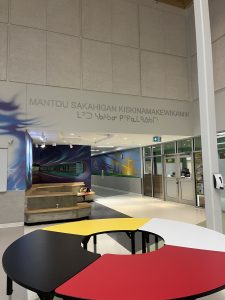
The entrance to Mantou Sakahikan Kiskinamakewikamik in God’s Lake Narrows First Nation.


First Impressions: A Warm Welcome and Learning on the Land


Arriving at Mantou Sakahigan Kiskinamakewikamik (the local school), Maya was struck by the warmth and generosity of the community.

“The school was filled with beautiful murals and a wealth of resources for students and staff. The teachers and principal were incredibly welcoming, and I was even provided with groceries to get me started. My teacher housing (known as a teacherage) is lovely—I feel very fortunate.”

In her first week, Maya dove into learning—not only about teaching but also about the unique culture, history, and environment of God’s Lake Narrows First Nation.

She’s been discovering the curriculum, reflecting on the similarities and differences between northern and southern schools, and learning how to incorporate culturally relevant teaching strategies.

“One of the highlights was participating in a Land-Based class, where I watched students pull up a gill net from under the ice. Later, I had the chance to share and enjoy the catch, which had been prepared by a community member. It was an incredible and humbling experience.”

Maya also learned how to skin and prepare snowshoe hare—another unforgettable moment from the class.


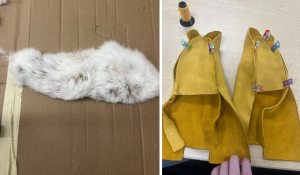
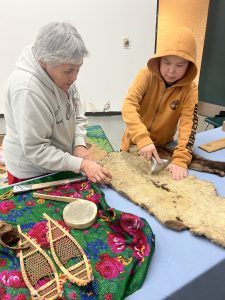
Snowshoe hare fur and hide prepared and used during a moccasin-making workshop.


New Experiences, New Perspectives


Beyond the classroom, Maya has embraced opportunities to explore and connect with nature.

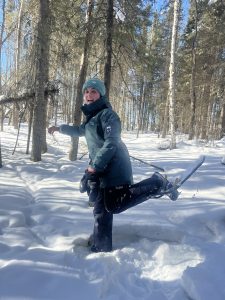
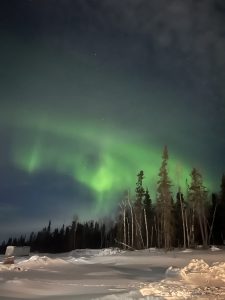
“I went snowshoeing with other teachers and even saw the Northern Lights for the first time. It was magical—I’m hoping to see them again before I leave.”

She’s also learning more about Cree culture and language, the geography of Northern Manitoba, and hearing from students about their perspectives on reconciliation—experiences she believes will shape her as an educator for years to come.


Maya snowshoeing out on the land with other teachers.


Looking Ahead: Lessons for Life and Teaching


As Maya continues her
Northern Practicum, she is excited to deepen her relationships with students and learn from the experienced educators around her.

“I’m looking forward to getting to know my students better and seeing how I can incorporate what I’m learning about Cree culture into my teaching. I hope more teacher candidates consider this program—it’s an amazing opportunity to learn, grow, and support students in the North.”

Maya’s story is a reminder that teaching in the North is not only an opportunity to grow as an educator but also a chance to build reciprocal relationships and learn from the knowledge and experiences shared by students, educators, and community members.


Interested in the Northern Practicum Program?


The
Northern Practicum Program is a fully funded opportunity for teacher candidates to complete a placement in a First Nation that Gakino’amaage serves, with travel and accommodations covered. Through this unique program, participants gain valuable classroom experience, explore what it’s like to live and teach in the North, and build relationships with students, educators, and community members.

While Queen’s University is not a formal partner in the program, they worked closely with Gakino’amaage to help make Maya’s experience possible—and we encourage other teacher candidates and institutions to do the same. The program includes travel and housing support, and cultural learning opportunities, offering teacher candidates a chance to grow both professionally and personally through immersive, community-based experiences.

If you’re a teacher candidate looking to make a difference and learn in a truly unique environment, Gakino’amaage’s Northern Practicum Program may be for you. Learn more and apply.


adfafda

Gathered in Circle: Reflections from the 2025 Advisory Council Gathering

Posted by Meredith Stapon

Today, more than 25 representatives from the First Nations that Gakino’amaage serves are gathering in circle on Long Plain Madison Reserve, Treaty 1 Territory, for the Advisory Council Meeting—a space for connection, collaboration, and community direction.

Formed in 2015, the Advisory Council has played a vital role in guiding the organization’s work and ensuring that it reflects the priorities, values, and strengths of the First Nations we partner with.

This year’s gathering holds special meaning. As conversations unfold throughout the day, Council members are also reflecting on 10 years of Gakino’amaage—recognizing the relationships, teachings, and commitments that continue to guide the path forward.


Reflecting on 10 Years of Partnership


A panel discussion during the gathering offered a chance to reflect on the past decade of connection and community leadership. The discussion was moderated by Deanna Matthews, Vice President of Policy and Research, and featured Gakino’amaage Board Members Gail Gossfeld McDonald and Lyn Blackburde.

“It’s hard to believe it’s been 10 years of Gakino’amaage,” Deanna shared. “From the beginning, the work started with listening… and it continues today, as we sit in circle, listening to and learning from Advisory Council members.”

Gail, a member of Nisichawayasihk Cree Nation, reflected on the moment her community joined as a partner—and the values that made the decision feel right.

“Back in 2019, Lyn was the Director of Education at the Assembly of First Nations and had invited speakers from Gakino’amaage to present. I was really impressed with what I heard from them. I thought, ‘This partnership has got to happen for our community,’” Gail recalled.

“We still have a lot of work to do, but we each play our part in a good way. Hopefully in 10 years, we’ll be here again, hearing the visions of different First Nations communities—and seeing those visions come true.”


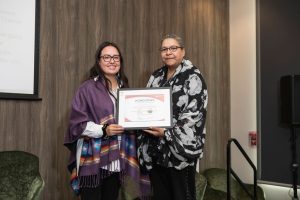
Andrea Mera, Executive Vice President at Gakino’amaage, presents Doreen Rae, Acting Education Director from Deer Lake First Nation, with an award recognizing 10 years of dedicated partnership. Doreen is one of seven inaugural Community Partner representatives honoured at the Advisory Council Meeting during Gakino’amaage’s 10th anniversary, in recognition of their vital contributions since 2015 in shaping the future of First Nations education.


Rooted in Local Leadership


Lyn Blackburde, an educator from Treaty 3 Manitou Rapids Rainy River First Nation and former principal in Big Grassy River First Nation, shared her story of what it took for her to stay in the community—and the power of meeting community-defined needs.

“I asked for ‘five teachers from Teach For Canada, five education assistants—one in each classroom—and teacherages so the teachers could live in the community.’ They made it all happen, and I became Principal.”

Her words served as a reminder that recruitment alone isn’t enough. Relationships—and responsive, community-led supports—make the difference.


Voices Guiding the Path Forward


The panel discussion also touched on the need for long-term solutions that address inequity and build toward self-determination in education. For many Council members, that means more consistent support, stronger staffing, and investments in First Nations students as future leaders and educators.

“Our children are smart. They have so much potential and ability,” Gail shared. “First Nations students must see themselves as future teachers, too.”

“There are so many stereotypes and negative perceptions around First Nations,” Lyn added, “but it was important for me to share the beauty of our culture, our people, and the love we have for our children with our teachers.”

The panel closed with an invitation to continue guiding the work ahead.

“Like Lyn said, we need to hear from everybody here,” Gail emphasized. “Speak out. Let us know what more can be done to meet your communities’ needs so we can help our children.”


Billie Cross, NDP MLA for Seine River, speaks at the Advisory Council Meeting. A lifelong teacher and proud Métis woman, Billie shared her perspective on the importance of Gakino’amaage’s work.


A Circle That Continues


As the 2025 Advisory Council Meeting continues, the conversation is not just about looking back—it’s about continuing to shape the way forward.

The direction ahead includes a deepened focus on supporting First Nations teacher certification and expanding program streams in direct response to the needs and guidance of Community Partners. This commitment reflects the path that has always led our work—one grounded in respect, humility, and reciprocity, and shaped by listening to community priorities.

The most meaningful direction always comes from the voices around the circle. And today, the voices of First Nations Community Partners lead the way.


Are you a certified teacher ready for a meaningful teaching experience?

Join a growing network of educators making a lasting impact in First Nations education. Gakino’amaage provides certified teachers with meaningful preparation and ongoing support rooted in community guidance. Learn more and apply to Go North with Gakino’amaage.

Is your First Nation looking to build long-term education capacity and strengthen recruitment?

Gakino’amaage partners with First Nations across Northern Ontario, Manitoba, Alberta, and Saskatchewan to co-develop solutions that respond to each community’s needs. From teacher recruitment to program development, partnerships are grounded in respect, humility, and community direction. Explore the benefits of partnering with Gakino’amaage.

adfafda

The Unexpected Calling – Realizing a Gift for Education

Posted by Meredith Stapon

Trevor Thompson had never imagined himself working in a school, but when an education assistant (EA) position opened up in North Spirit Lake, he took it for one simple reason—his daughter.

“She wasn’t attending school enough, and I thought if I started going, she would come with me,” he explains. “And it worked. Her attendance has been better.”

Five months into his role as an EA for Grade 3/4 students, Trevor has found joy in connecting with his students—some of whom are his own nieces and nephews. “They listen to me,” he says, smiling. “And I like working with the kids.”

At first, he was unsure about attending the Learning Summit, but when his daughter encouraged him, saying she would be proud if he went, he decided to take the leap.

“I’m happy I did,” he reflects. “It’s been really fun.”


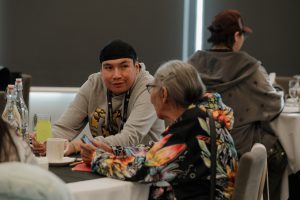
Education Assistant Program participants Trevor Thompson from North Spirit Lake and Rubina Moise from Sayisi Dene First Nation connect at the EA Summit—an opportunity for EAs from different First Nations to build peer connections, share knowledge, and learn from one another.


Trevor was especially drawn to a session led by Lyle Wood, a principal in St. Theresa Point First Nation, one of Gakino’amaage’s Community Partners. In this session on building classroom community, participants wrote their names on paper and reflected on the gifts they brought to the classroom.

This, along with Social-Emotional Learning and Land-Based Learning, helped Trevor realize that his work goes beyond academics—he is part of a support system that uplifts students every day.

The Learning Summit, which brought together 30 Education Assistants representing 13 First Nations, reinforced Trevor’s growing confidence in his role and the impact he could have in his community. This event is a key component of Gakino’amaage’s Education Assistant Program, designed in collaboration with First Nations to enhance professional skills, strengthen local teaching capacity, and support student success. Currently, 34 Education Assistants are part of this year’s program, benefiting from in-person learning opportunities, ongoing mentorship, and career advancement pathways.


Trevor Thompson, Gakino’amaage Teacher Development Manager Meena Prabhakar, and Rubina Moise discuss what student success looks like in their classrooms. Centered on the theme ‘How Do We Measure First Nations Student Success?‘, the EA Summit creates space for meaningful conversations about supporting students in ways that reflect their communities’ strengths and priorities.


A key component of the Education Assistant Program is its online Communities of Practice, intentionally designed to foster connection among EAs while deepening their skills. These sessions provide practical teaching strategies and dedicated space for EAs to share challenges, successes, and insights from their classrooms. A session led by Susannah Walker will focus on actively engaging learners through a trauma-informed and Indigenous lens, reinforcing approaches that are relevant and responsive to First Nations students. Additionally, each EA will have at least two one-on-one check-ins with a Gakino’amaage team member to receive personalized support, strategies, and resources tailored to their needs, students, and community.

Programs like the EA Program are part of a broader vision at Gakino’amaage, where First Nations voices guide the design and evolution of our initiatives. The next step? Identifying ways to strengthen Indigenous teacher certification pathways, ensuring more Indigenous educators are leading classrooms, and working to reduce the systemic barriers that have historically limited these opportunities.


Are you an EA looking to gain new skills, connect with fellow educators, and make a lasting impact in your school? Explore the Education Assistant Program and see how you can get involved.

adfafda

A Family Commitment to Supporting Students

Posted by Meredith Stapon

For Denise Yassie and Brenda Duck, being an Education Assistant (EA) isn’t just a job—it’s a commitment to their families, their students, and their community in Sayisi Dene.


Denise, who has been an EA for almost two years at Peter Yassie Memorial School, originally took on the role to stay busy. But when her daughter started school, she saw an opportunity to be close to her while also helping other children learn and grow. Her cousin, Brenda, was already an EA and encouraged her to take part in Gakino’amaage’s Education Assistant Program. Their principal supported them both in the decision, knowing that strengthening their skills would have a direct impact on the students.


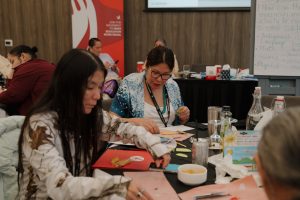
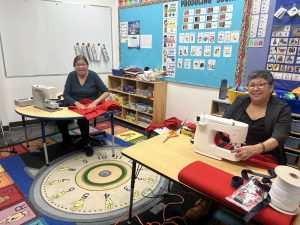
Denise Yassie and Brenda Duck focus on beading during a moccasin-making activity at the Education Assistant Program Learning Summit.


Brenda, an EA for three years, was drawn to the work out of a deep need to support students in her school—particularly those struggling with literacy. Having previously worked in the Health Department for six years, she pivoted to education when she realized her own child was being bullied at school. That experience pushed her to advocate for students and work on addressing behavioural challenges.


“Most times, me, Denise, and Rubina are the ones teachers go to when they need support with discipline,” Brenda says. Elder Rubina Moise, another EA at their school, was also present at the Learning Summit. At age 70, she was the oldest in attendance, bringing a wealth of experience and wisdom to the group. Brenda’s role as an EA is about more than structure—it’s about connection. She believes in celebrating students at every opportunity, including recognizing their birthdays and small successes in the classroom.


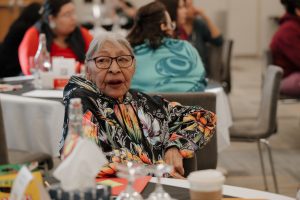
Elder Rubina Moise brings years of experience and wisdom to her role as an Education Assistant. At the Learning Summit, she shared her deep commitment to supporting students and strengthening classroom communities, inspiring fellow EAs along the way.


Denise and Brenda deeply valued the hands-on cultural components of the Learning Summit in Winnipeg. Held from January 28 to 30 on Treaty 1 territory, the Summit is part of Gakino’amaage’s Education Assistant Program, which provides specialized training for EAs working in northern and remote First Nations. The three-day event included sessions on Land-Based Learning, Social-Emotional Learning, and strategies for strengthening classroom communities. Denise especially enjoyed moccasin making and learning about sacred medicines. Brenda, on the other hand, discovered a new passion for beading—a skill she had never tried before.


Following the Summit, the learning continues through the EA Program’s Communities of Practice sessions, where EAs meet virtually to build on key topics. One upcoming session will feature Oshki-Wenjack, presenting on the Indigenous Classroom Assistant Diploma Program, alongside resources on EA certification and Bachelor of Education (BEd) programs across Ontario, Alberta, Manitoba, and Saskatchewan. These sessions help EAs like Brenda and Denise explore pathways to further their careers in education while staying connected to a supportive network.


For Denise, the experience strengthened her motivation to keep going: “I really enjoyed the Summit. I learned a lot, laughed, and got to know so many people. But now it’s time to get back home to my daughter.”


For Brenda, it reaffirmed her sense of purpose: “I didn’t think I would like being an EA, but after this training, I realize I do enjoy it. I see now that I have the skills and the natural gifts. I’m good at this.”


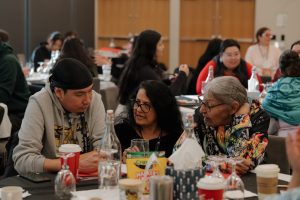
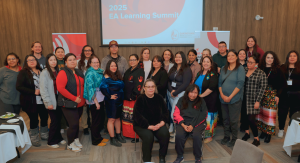
Education Assistants, Summit presenters, and Gakino’amaage staff came together at the Learning Summit, a three-day gathering dedicated to strengthening skills, sharing knowledge, and building connections to support student success in First Nations schools.


As Gakino’amaage continues to grow in response to feedback from First Nations Community Partners, new opportunities are emerging. We are exploring ways to support Indigenous teacher certification, recognizing it as a key step toward addressing systemic barriers that have contributed to the education gap and impacted student success in First Nations schools. Though still in its early stages, this work builds on the foundation of programs like the Education Assistant Program, which supports Indigenous education assistants in their roles and provides resources for those interested in becoming certified teachers.


Are you an education assistant working in a First Nations school and want to grow your skills while strengthening student success?  Learn more about the Education Assistant Program at Gakino’amaage.

adfafda

Honouring Tradition: Culture Week in Northlands Denesuline First Nation

Posted by Meredith Stapon

Earlier this year, at our Education Assistant Professional Development Program Learning Summit, we had the opportunity to speak with Janice Denechezhe and Linda Inglis about the significance of Culture Week at Petit Casimir Memorial School in Northlands Denesuline First Nation. 

Janice, an Education Assistant (EA) participating in the EA Program, and Linda, Vice Principal of Petit Casimir Memorial School, shared their insights on how this celebration strengthens language, tradition, and connection within their school and community. Their stories offer a glimpse into the meaningful work happening in Northlands Dene and the important role educators play in passing down traditions.


This week, the halls and grounds of Petit Casimir Memorial School are filled with the sounds of drumming, the scent of bannock baking, and the shared knowledge of Elders and Knowledge Keepers. Culture Week is a time for the students and community members of Northlands Dene to gather, learn, and celebrate the traditions that shape their identity. Happening four times throughout the year, this week-long event strengthens their connection to the land, their language, and to one another.


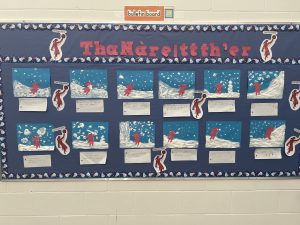
A bulletin board filled with TthaNárɛltth’ɛr artwork created by students.


For Janice Denechezhe, an Education Assistant at the school, Culture Week is more than an event—it is a continuation of the teachings that have been passed down through generations. Originally stepping into the role of EA temporarily in 2021, she found herself drawn to the work through the encouragement of family and the inspiration of her cousin, whose dedication to earning her teaching certification deeply motivated her. “Everyone is pushing me to be a teacher. They see how hardworking I am. That gives me confidence,” she shares.

This week, Janice is eager to bring land-based learning into her classroom. “Beadwork is a big part of our culture,” she explains. “Some of our younger boys hunt with their dads and uncles. They know how to cut caribou and scale fish.” By incorporating these experiences into the classroom, the school helps students grow up with the knowledge and skills that have sustained Northlands Dene for generations.

Vice Principal Linda Inglis speaks to the importance of Culture Week in upholding the school’s vision of strengthening language and tradition. The week begins with an assembly honouring TthaNárɛltth’ɛr, a revered Dene hero. “We’ve invited guest speakers, traditional drummers, and Elders to share stories about how they remember her,” Linda explains. In the Dene language classroom, Elders will tell stories and share legends, ensuring that our oral traditions remain strong.


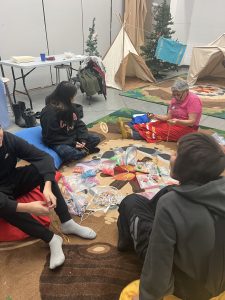
An Elder shares a story with students gathered around, keeping them engaged with her words.


Students are also taking part in home economics activities, preparing caribou meat and baking bannock. Thanks to a recent community-led caribou hunt, the school has a generous supply of meat that will last through the spring. Cranberries and blueberries, harvested during the summer, will be used to make traditional jams. Local artists will guide students in beading and crafting red felt dresses in honour of TthaNárɛltth’ɛr, known for her iconic red coat.


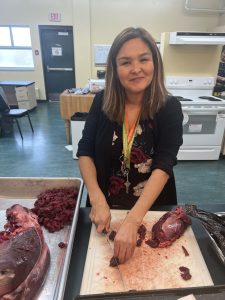
Education Assistant Lisa O’tennedzhe cuts caribou meat, preparing it for smoking so students can take some home during Culture Week.


Staff sew red felt dresses, a tribute to TthaNárɛltth’ɛr, the revered Dene hero known for her iconic red coat.


Throughout the week, students of all ages will engage in activities that highlight Dene culture and identity. High school students are writing poems inspired by traditional stories, and the week will close with a grand feast featuring traditional foods, drumming, hand games, and a dance giveaway. “It’s a way for our whole community to come together,” Linda says. “Parents, Elders, leadership—everyone is welcome.”


An Elder sits with students, guiding them through a craft project.


Perhaps the most powerful aspect of Culture Week is the way it strengthens connections to each other and traditions. “It’s important that our students know and learn this,” Linda says. “It’s in their blood, and it’s in our school vision. Culture and language are our top priorities.”

As the week concludes, students will take home not only dried meat and crafts but also a deeper understanding of who they are and where they come from. For educators like Janice, the experience is a reminder of the power of teaching—and the pull of tradition. “Passing down our traditions and language is very important to me,” she says. “I speak Dene to my son and hope that he learns it fluently.”


An Elder helps a student prepare hides.


Culture Week is a reflection of the deep cultural roots and enduring traditions of Northlands Dene. As students, educators, and community members gather, listen to the stories of Elders, and take part in traditional activities, they strengthen the cultural fabric that connects past, present, and future.


Interested in growing your skills as a First Nations Education Assistant? The Education Assistant Program offers professional development and peer support for EAs in the First Nations we serve. Learn more and get involved.

Celebrating 10 Years of Gakino’amaage | Strengthening education for generations to come. Explore Our Impact Goose Icon
This is default text for notification bar