
adfafda

Learning Dene at Petit Casimir Memorial School

Posted by Meredith Stapon

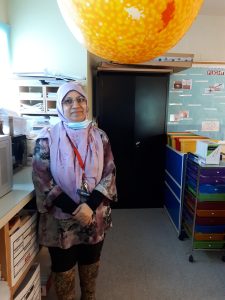
Gabriella Richardson is an Impact and Learning Manager at Gakino’amaage. Passionate about educational equity and community-led initiatives, Gabby works closely with First Nations schools to support meaningful Indigenous-led programs and research. Her recent trip to Petit Casimir Memorial School in Northlands Denesuline First Nation provided an opportunity to connect with educators, learn about the community’s rich Dene language program, and explore how cultural revitalization and language learning are being integrated into the classroom.
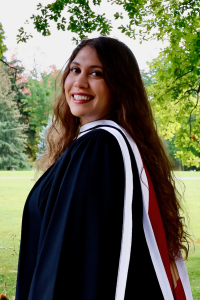
 

Gabriella Richardson is the Impact and Learning Manager at Gakino’amaage.


In April 2024, I had the privilege of visiting Petit Casimir Memorial School in Northlands Denesuline First Nation. My original purpose was to discuss a potential parental engagement research project, but during my time there, I was introduced to something truly inspiring—the school’s Dene language program, which embodies the heart and soul of Denesuline culture.


Since the school’s opening in 1995, the Dene language program has been a pillar of pride, nurturing the language that carries the knowledge, stories, and traditions of the Denesuline people. The dedicated Native Language Teacher, Fred, has been a part of this journey since Vice Principal Linda Inglis herself was a student. With deep roots in the language, Fred’s expertise extends beyond the classroom, having once assisted the government with Dene translation work. His deep commitment to preserving and promoting the language shines through.
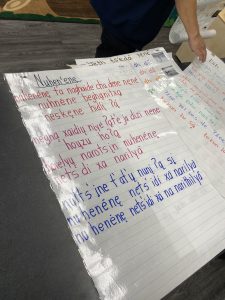
 

An example of the Dene language resources carefully crafted by Fred and his team.


It quickly became clear during my visit that Dene is not just a subject taught in school—it is a living, breathing part of the students’ daily lives. The language flows through conversations in the halls, between staff and students alike. Each morning, Fred leads the school in a prayer spoken in Dene over the intercom, setting a tone of respect for the language and culture.


It quickly became clear during my visit that Dene is not just a subject taught in school—it is a living, breathing part of the students’ daily lives.


Fred’s approach to teaching is creative and adaptive, recognizing the importance of making language learning enjoyable and accessible. For the younger students, from kindergarten to grade 3, he emphasizes oral language acquisition through songs and repetition. One morning, I had the joy of witnessing the kindergarten class enthusiastically singing songs that Fred had translated into Dene for an upcoming school concert. The children’s excitement was infectious, and Fred’s method of weaving the language into music ensured the children were learning, perhaps without even realizing it. As Fred shared later, these songs often remind parents of their own childhoods, creating intergenerational connections that are key to revitalizing the language.


For students in grades 4 to 8, the focus shifts to writing Dene in Roman orthography, and by high school, students begin tackling the challenge of learning Dene syllabics. When I arrived, high school students were working on writing a story about the legendary Dene hero Thanadelthur, blending traditional storytelling with their growing language skills—a beautiful example of how the language continues to evolve while honoring the past.


Stepping into the Dene language classroom felt like entering a sanctuary of cultural pride. The smell of sage filled the air, as teachers popped in and out, consulting Fred for guidance on how to express something in Dene. It was clear that this space was much more than a classroom—it was a hub of knowledge-sharing and community.
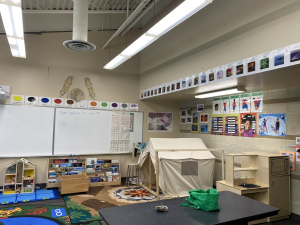


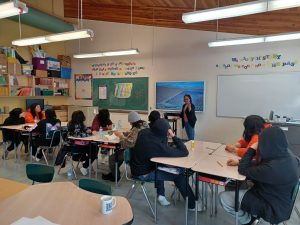
The Dene Language Classroom at Petit Casimir Memorial School in Northlands Denesuline First Nation.


Fred and Linda walked me through the rich array of resources they’ve built over the years. The walls were filled with chart papers displaying Dene songs, numbers, colors, and everyday objects, all meticulously labeled in Dene. There was even a scrabble board with Dene words and a display board featuring plant species with their traditional Dene names—tangible ways for students to connect with the language and land.
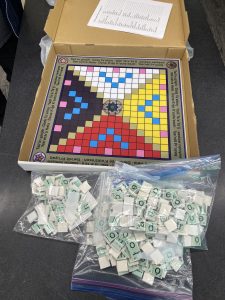
 

A unique Dene Scrabble board offers a fun and interactive way for students to build their vocabulary and deepen their connection to the language.


Of course, like all efforts in language revitalization, challenges persist. Fred and Linda explained that finding suitable teaching resources can be difficult, and much of what they receive requires significant adaptation to reflect the specific dialect of their community. Regardless of these challenges, they persevere.
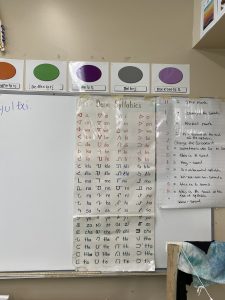
 

A list of Dene syllables, one of the many resources Fred and Linda have developed over the years, displayed proudly in the classroom to support students in learning to read and write in Dene.


Fred is excited about the future—plans are in place to integrate more technology into his lessons, showing videos of Elders speaking Dene and even encouraging students to record interviews with family members in Dene, collecting oral histories that will be preserved for future generations. In the fall of 2024, Fred will also receive the invaluable support of an Education Assistant, which will further enrich the program and help him design a curriculum tailored to the students’ needs.


When I asked Fred how he felt about his role in this movement, his response was hopeful: “I really enjoy teaching the language because I want the students to know it. The language has been decreasing, but it’s heartening to see it become more popular again.” His words encapsulate the spirit of revitalization, reminding us that every step forward is a victory for the language and the culture it carries.


The Dene language program at Petit Casimir Memorial School is a testament to the power of education as a tool for cultural preservation and renewal. The dedication of Fred, Linda, and the entire school community reminds us that with passion, dedication, and creativity, Indigenous languages can continue to connect generations and shape the future.


adfafda

Embracing the North: My Journey to Ojibways of Onigaming First Nation

Posted by Meredith Stapon

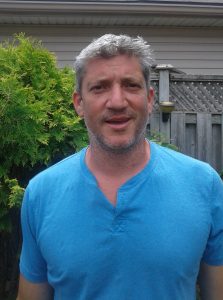
John Hamilton is an enthusiastic educator and proud member of the Gakino’amaage 2024 Cohort. He has been matched with the Ojibways of Onigaming First Nation, where he will be teaching Physical Education and English, with additional Special Education responsibilities.

Read on as John shares his journey to Gakino’amaage, his experiences in the Summer Enrichment Program, and his excitement about returning to the classroom and embracing the North.


John Hamilton, a proud member of the Gakino’amaage 2024 Cohort, is set to teach at Ojibways of Onigaming First Nation, focusing on Physical Education, English, and Special Education.


My name is John Hamilton, and I’m about to embark on an exciting new journey, teaching in the Ojibways of Onigaming First Nation, formerly known as Sabaskong First Nation. I will be stepping into the roles of Physical Education and English Teacher, along with additional responsibilities in Special Education. This opportunity represents a major milestone in my career, and I’m thrilled to begin this next chapter.


As I write this, I’m participating in Gakino’amaage’s Summer Enrichment Program, designed to prepare us for what we can expect as we move into a different part of the world. For me, most of my teaching experience has been in southern Ontario, particularly with the Durham District School Board, where I’ve spent many years. One focus of the Summer Enrichment Program is on Indigenizing the curriculum so that I can provide culturally relevant programming for the students and the community I’ll be serving.


There’s always been a pull towards the North for me. Growing up in northwestern Ontario—or what some might call midwestern Ontario—I was always close to nature. The outdoors has always held a special place in my heart, even as my career took me to the Greater Toronto Area. Despite raising a family and growing as an adult in the city, the idea of returning to the North has always lingered in the back of my mind.


Now, after 17 years as an elementary school principal, I find myself at a crossroads. This new role offers me the chance to not only give back but also to grow and learn alongside the community and the students I’ll be serving. I haven’t been in the classroom for quite some time, and this return to teaching feels like a homecoming of sorts. My hope is to learn as much as I’ll be able to give in terms of teaching.


Preparing for a new chapter, John embraces the learning and connections fostered during the Summer Enrichment Program.


During the Summer Enrichment Program, one session that particularly resonated with me was Cultural Adjustment with Randy Weekes, who spoke about the importance of sensitivity when entering a new or different culture. While I may have some intellectual understanding of what I’m stepping into, I realize the emotional and spiritual aspects are just as crucial. I’m committed to keeping an open mind and embracing this opportunity as fully as possible.


I’m also looking forward to reconnecting with nature in a way that I haven’t done in years. I haven’t fished properly since I was a boy, and the idea of getting back to that, along with other traditional practices like smoking fish or cleaning game, excites me. I’m eager to work with the community, learn these skills, and internalize the gifts that the land offers. As someone who enjoys cooking, the thought of preparing smoked fish is particularly appealing.


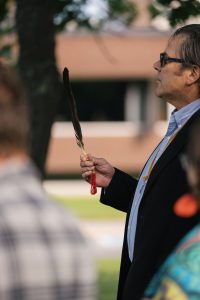
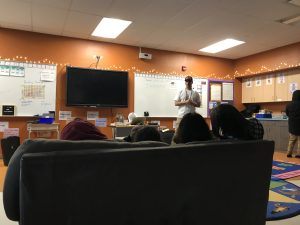
John Hamilton speaks during the Summer Enrichment Program closing ceremony, marking the next step of his journey North with the Gakino’amaage 2024 Cohort.


Incorporating the culture into the classroom is something I’ve thought a lot about. The Ontario curriculum, which I know well, is quite flexible. It’s about finding ways to creatively satisfy the demands of the curriculum while also reflecting the culture in which I’ll be teaching. For example, the creation story we discussed in this morning’s Land-based learning session with Nicole Bell can be integrated into a language arts program, with extensions into science and mathematics. The possibilities are boundless if you keep an open mind and work with the resources available, including the wisdom of Elders and the experience of other teachers.


A key element of the Summer Enrichment Program has been building connections, whether with staff, Teacher Development Managers, or fellow educators. I’ve made a point to extend myself to as many people as possible, knowing that these connections will be invaluable as we move forward. Even though some of us might be three hours apart, technology and our shared experiences will keep us connected and supported.


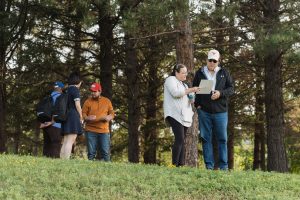
During a Land-Based Learning session led by Nicole Bell, John reads the Ojibway Creation Story.


For anyone considering going North, I would advise doing your research and preparing as much as possible. Reflect on what you want out of life and be honest with yourself about the challenges ahead. The preparatory coursework provided by Gakino’amaage has been excellent, and as someone who has done a lot of professional development over the years, I can say it’s top-notch. If you keep your eyes and ears open and develop trust in those who know the way, you’ll feel much more confident in your preparations.


As I prepare for this next step, I’m aware that this journey will be transformative. It will come with its ups and downs—there will be great days, and there will be days when I feel unsure or lonely. But I’m ready for it. Life isn’t just about the good times; it’s about learning from the challenges and building resilience. That’s what makes this adventure worthwhile.


I look forward to what lies ahead and the many lessons that the North will teach me.


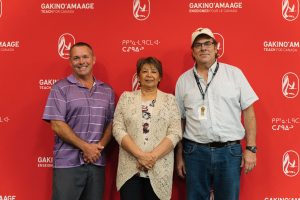
John meets representatives from Ojibways of Onigaming First Nation on Meet the Teacher Day, building essential connections for the year ahead.

adfafda

The Classroom is Where I Need to Be: Mira’s Journey North with Gakino’amaage

Posted by Meredith Stapon

Mira Chow is a passionate teacher and member of the Gakino’amaage 2024 Cohort. She has been matched with Lac Seul First Nation where she will be teaching Grades six and seven this September.

Read on as Mira shares about her journey that led her to Gakino’amaage, her experience in the Summer Enrichment Program, and her excitement about bringing her love for teaching and the performing arts to the North.


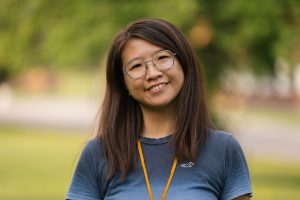
Mira Chow is a member of the Gakino’amaage 2024 Cohort who will be teaching Grades 6-7 in Lac Seul First Nation this September.


My name is Mira. I am matched with Lac Seul First Nation, where I’ll be teaching Grades 6-7 at Obishikokaang Elementary School.

I first learned about Gakino’amaage four or five years ago when I started teachers’ college. I attended a webinar where a teacher from God’s Lake Narrows shared her experience teaching up North with her family. That’s when I first heard about the program, and this year I decided to apply.

My teaching journey is a bit different from most. When I started my teacher education, I was unsure. It was during COVID-19, so my first exposure to teaching was in a hybrid setting. One of the first schools I worked in experienced community violence, which led me to take a break from my teacher education.

I switched to a different line of work and worked from home as an interpreter, but I didn’t enjoy it. That’s when I realized the classroom is where I needed to be. The classroom is where I feel the most energized. So, I decided to complete my teacher education and Go North with Gakino’amaage.


That’s when I realized the classroom is where I needed to be. The classroom is where I feel the most energized.


I love that the Summer Enrichment Program includes diverse Indigenous perspectives and voices. There are myths that Indigenous voices are monolithic, but Indigeneity encompasses many different practices and cultures. The program brings in Elders-in-Residence, Dr. Nicole Bell, and Laura Maracle, people from different nations, to give us a breadth of perspectives. This is important because the nations where we’ll teach will not be identical.

Understanding that multiplicity exists is crucial, and the programming reinforces this, especially in the Language Lessons. Elders from our matched communities teach us the language, recognizing that each community has variations. These lessons give us a head start in understanding key words that might help us connect.

The program also emphasizes teacher self-care, embedding breaks and reminders about the importance of disengaging and engaging as needed.


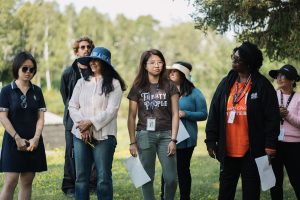
Mira and other members of the 2024 Cohort taking part in Gakino’amaage’s annual Summer Enrichment Program at Lakehead University in Thunder Bay, Ontario.


As I’m in the early stages of my career, having access to personal, professional, and peer supports from Gakino’amaage is beneficial. In public school systems, we often don’t get enough professional support in locating culturally responsive resources and long-range planning. I especially appreciate the one-on-one conversations with my Teacher Development Manager at Gakino’amaage, who continues to share her experience and support me as I prepare to go North.

During the Summer Enrichment Program, we’ve had the opportunity to connect with other teachers going North. Some will be teaching similar grades, and some are going to geographically close communities. For instance, I’ve met a teacher going to Big Grassy River, which is a fairly close drive to my school. Just like moving anywhere else, there will be a range of emotions during the transition. A great point of connection for me is understanding that I’m not alone in the transition process.


Gakino’amaage Teachers Jonah Monaghan and Mira Chow stand side by side at the Summer Enrichment Program Opening Ceremony led by Elders-in-Residence Tammy and Bernard Nelson.


One thing I’m excited to bring to Lac Seul is improv and theatre. Our school has Explore Learning everyday, where students can sign up for various teacher-led activities. In the past, this included sports, pottery, and different types of art. I’m hoping to introduce improv, because I believe theatre can encourage people to get involved in the community and create a sense of belonging. Improv also provides a safe, welcoming space for us to express ourselves in ways we might not usually explore, whether verbally or through body movements.

As I embark on this journey, I’m filled with optimism and excitement. The peer connections I’ve made, the knowledge from the Summer Enrichment Program, and the support from Gakino’amaage have prepared me well. I’m eager to bring my passion for teaching and theatre to Lac Seul, and I can’t wait to grow and learn alongside other Gakino’amaage teachers!


Are you interested in living and teaching in the North? Canadian-certified teachers interested in Going North with Gakino’amaage can apply in late Fall 2024. Learn more.

adfafda

Integrating Land-Based Education into the Curriculum: A Collaborative Effort in Lac Seul First Nation

Posted by Meredith Stapon

In Lac Seul First Nation, Assistant Director of Education Kristin Ward and her team are spearheading an initiative to integrate Land-based education into their curriculum. Under Kristin’s leadership, three Gakino’amaage educators from Frenchman’s Head’s Obishikokaang Elementary School, Waninitawingaang Memorial School in Kejick Bay, and Morris Thomas Memorial Christian School in Whitefish Bay are revolutionizing outdoor education for students throughout their communities.


Acknowledging the profound significance of outdoor education and the necessity for structured integration, Kristin and her team embarked on a collaborative journey to develop an extensive Land-based education curriculum. This initiative unites classroom teachers and outdoor education specialists, including Gakino’amaage alumni Christina Petrie, Greg Hattle, and Alysha Kooter, as they work together to create a seasonal curriculum aligned with provincial standards.


Recognizing the value of outdoor education but acknowledging the need for structured integration, Kristin and her team embarked on a journey to develop a comprehensive Land-based education curriculum to serve all three schools.


Greg Hattle (left) and Alysha Kooter (right) are two Gakino’amaage teachers helping to develop Lac Seul’s outdoor education curriculum.


Their approach involves creating strands that seamlessly integrate Land-based content with traditional curriculum subjects. For instance, in the Fall, students explore wildlife identification, hunting, and tracking, which aligns with themes of animal science and the needs and characteristics of living things. As the seasons progress, the curriculum evolves to cover topics such as wild rice harvesting, plant biology, trapping, and hunting, all while connecting to various science and geography standards. By involving both classroom teachers and outdoor education specialists, they ensure that the curriculum is comprehensive and accessible to all educators.


A key aspect of their work is to ensure consistent access to Land-based education for all students. Currently, two outdoor education teachers, Weslie Wabano and Daniel Bottle, rotate between schools to teach students. However, the goal is to make outdoor education a regularly occurring subject, complete with dedicated teachers and consistent opportunities for students to engage with the land throughout the year.


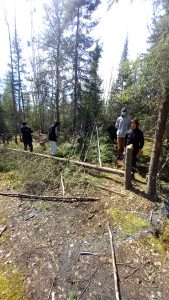
Students in Lac Seul enjoy time out on the land.


The impact of this initiative goes beyond academics. It aligns with the board’s improvement plan, emphasizing the importance of connecting students with their land and identity. By integrating Land-based education into the curriculum, Kristin and her team are providing students with academic knowledge intentionally woven into their culture, history, and relationship with the land.


Ultimately, Kristin emphasizes that she is proud of the collaborative nature of this initiative, driven by a team of dedicated educators and outdoor education specialists. With their shared expertise and passion, they are reshaping education in Lac Seul First Nation, providing students with enriching experiences that honour their heritage while equipping them for the future.
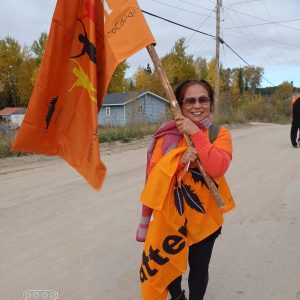
 

Kristin Ward (centre) smiles with two members of the Lac Seul Education Authority (left) and Gakino’amaage educators Greg and Ruby (right) at the 2023 Summer Enrichment Program Meet the Teacher Day in Thunder Bay, Ontario.


Gakino’amaage proudly celebrates this groundbreaking collaboration, bringing three alumni from neighbouring communities together to increase their students’ access to Land-based education. This initiative exemplifies our dedication to fostering meaningful connections and supporting First Nations student success while upholding Indigenous control of Indigenous education.


Are you a Canadian-certified teacher inspired by this story? Learn more and apply to Go North with Gakino’amaage today.

adfafda

Transforming Spaces: Teacher Leads Courtyard Revitalization in Nisichawayasihk Cree Nation

Posted by Meredith Stapon

Jocelyn Whalen is a member of the 2023 Gakino’amaage cohort and is completing the first of her second-year commitment teaching grade 5 in Nisichawayasihk Cree Nation.


Throughout the year, she has been working with her school and community to breathe new life into a once-overlooked courtyard at the centre of the school, supporting plans and grant applications to transform it into a thriving center of cultural and educational enrichment.


Meet Jocelyn Whalen, a dedicated Gakino’amaage teacher helping to transform an existing courtyard space in Nisichawayasihk Cree Nation.


In the heart of Nisichawayasihk Cree Nation, Jocelyn Whalen, a passionate Grade 5 teacher at Otayitiskiwin Kiskinwahamakikamik (Footprint House of Learning and Teaching), is leading an inspiring initiative to revitalize the school’s courtyard.


With a background in Environmental Science and a decade of experience in nurturing green spaces, Jocelyn is supporting community efforts to transform the area into a thriving hub for the students at Otayitiskiwin Kiskinwahamakikamik.


Exploring, learning, and thriving: students at Otayitiskiwin Kiskinwahamakikamik embrace the vibrant courtyard space. Future plans include a native plant garden and mural painted by a local artist.


It all began with a conversation between Jocelyn and principal Ashley Boutin, a Gakino’amaage alumni and member of the 2020 cohort. Inspired by Ashley’s vision to enhance the outdoor space, the duo collaborated with community support to secure funding for the courtyard project.


Drawing from her expertise in obtaining grants, Jocelyn successfully secured funding from two sources: Learning For A Sustainable Future and the TD Friends of the Environment Grant. With assistance from Education Director, Nic Campbell, and enthusiastic community members, the project began to take shape.


While the project is still in the planning stages, the future courtyard will feature a mural painted by a local artist, along with rain barrels, benches, and rocks to symbolize the Seven Sacred Teachings. Additionally, plans include a food sovereignty garden where food can be grown for the school food services and pantry program. There will also be the addition of a pollinator garden out front of the school.


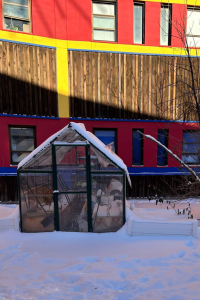
The existing greenhouse at Otayitiskiwin Kiskinwahamakikamik is set to undergo transformation, fostering a community-driven food sovereignty initiative.


The goal of the courtyard revitalization is not just to beautify the space—it’s about providing students with a meaningful opportunity to engage with their culture, the natural world and to integrate the space into their lessons. Jocelyn hopes that the courtyard will engage students in land-based learning experiences, where they can strengthen their pride and belonging.


As the project gains momentum, Jocelyn is filled with excitement about the possibilities it holds. She envisions the courtyard as a legacy project—one that will continue to evolve and inspire generations to come. From growing food for the community to creating a safe space for cultural expression, the courtyard represents a testament to the power of education to transform lives.


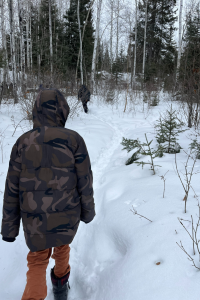
Students embark on an outdoor education walk, connecting with the land as they explore. Soon, their school courtyard will create opportunities for hands-on learning and interaction with the natural world.


In celebrating Jocelyn’s dedication to the courtyard revitalization project, we honour the resilience and ingenuity of educators everywhere. This Teacher Appreciation Week, let’s take a moment to recognize and celebrate the profound impact that dedicated teachers like Jocelyn, and her colleagues, have on their students and communities.


Are you a Canadian-certified teacher inspired by Jocelyn’s story? Learn more and apply to Go North with Gakino’amaage today!


adfafda

Cultivating Harmony: Tolkyn’s Musical Journey in the North

Posted by Meredith Stapon

Tolkyn Menkesheva, a passionate educator and proud member of the 2021 Gakino’amaage cohort, embodies the spirit of dedication with her students. As a grade 9-12 music teacher in St. Theresa Point First Nation, Tolkyn built a music program from the ground up, going as far as receiving a grant to provide instruments for her students.

Tolkyn not only imparts knowledge but also fosters a sense of pride and cultural identity among her students, enriching their educational experience through music and paving the way for a brighter future.
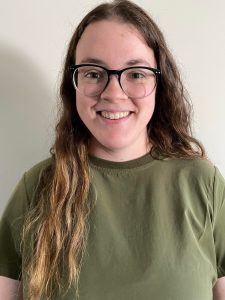


In the heart of St. Theresa Point First Nation, Tolkyn Menkesheva has been shaping a unique musical story. As the driving force behind the high school music program, she’s not just teaching notes; she’s nurturing a love for music and a connection to culture.


“When I arrived, there was no music program,” Tolkyn recalls. “I knew we had to start from scratch.”


With determination and support from a Music Education Charity Canada MusiCounts grant, Tolkyn equipped her classroom with guitars, keyboards, and violins. She began with basics, teaching music theory and guiding students through the sounds of different instruments.


“We cover everything from theory to practical skills,” Tolkyn explains. “From simple melodies to classical pieces, we’re learning together.”


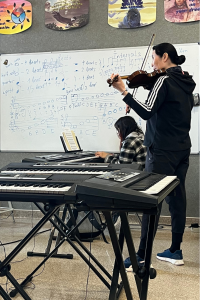
Gakino’amaage teacher, Tolkyn Menkesheva, playing violin and teaching music class in St. Theresa Point First Nation.


Beyond music, Tolkyn emphasizes respect and community. She encourages students to care for their instruments and each other, fostering an environment where everyone’s voice is heard.


Raised in a musical family in Aktobe, Kazakhstan, Tolkyn brings her own experiences to the classroom. “We had a family band when we were younger,” she shares. “Music has always been a part of my life.”


Inspired by her upbringing, Tolkyn dreams of creating a dedicated space where students can explore music freely. “We’re not just learning music; we’re building a community,” she says.


Her efforts haven’t gone unnoticed. The community eagerly anticipates an upcoming showcase, where students will share their talents with pride. “While we’re currently working on classical music, we’re planning to showcase square dancing music and Irish jigs,” Tolkyn reveals. 


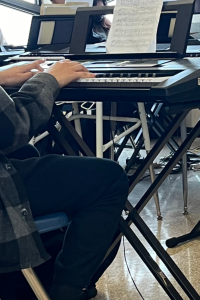
Tolkyn, empowered by a MusiCounts grant, has been introducing her students to the world of music with keyboards, guitars, and violins.


Looking ahead, Tolkyn will continue to incorporate Indigenous music into the program. “I’ve had students bring in their drums and perform,” she says. “It’s important to me to honour and incorporate traditional knowledge and culture into the music program.”


“I encourage others to explore the opportunities the North has to offer,” Tolkyn says. “It’s challenging, and incredibly rewarding.” 


Are you interested in living and teaching in the North? We’re accepting applications from Canadian-certified teachers interested in Going North with Gakino’amaage. Learn more and apply.

adfafda

Teaching in Nisichawayasihk Cree Nation: A Journey of Connection and Growth

Posted by Meredith Stapon

Jamila Butt is a Gakino’amaage: Teach For Canada alumni living and working in Nisichawayasihk Cree Nation (NCN). She joined Gakino’amaage: Teach For Canada in 2020 and has since taught Grades 7 and 6 at Otetiskiwin Kiskinwamahatowekamik Elementary School. Teaching in NCN has been a rewarding experience for Jamila, who has connected with community partners, learned about culture, traditions, and language, and gone above and beyond to make her classroom a welcoming space to connect with students. 


This Teacher Appreciation Week, Gakino’amaage: Teach For Canada is highlighting educators like Jamila, who have demonstrated outstanding and continued dedication to their students. Read on to hear about Jamila’s journey and the valuable lessons she has learned while teaching in the North. From building a sense of community to embracing hands-on learning, she shares the joys and challenges of teaching in Nisichawayasihk Cree Nation.


Jamila Butt teaches Grades 7 and 6 at Otetiskiwin Kiskinwamahatowekamik Elementary School in NCN.


Since becoming a Gakino’amaage: Teach For Canada Teacher in 2020, I have taught in Nisichawayasihk Cree Nation (NCN) in Manitoba. It has been a unique and rewarding few years–I am proud of the connections I have made with my students and community and how I have grown as an educator.


Upon my arrival in NCN, I was greeted with warm smiles and welcomes. The community members were eager to learn more about me, and I was equally excited to get to know them. As I stepped into my classroom, I knew that I had a big responsibility on my shoulders, and I was determined to do my best to succeed and support my students.


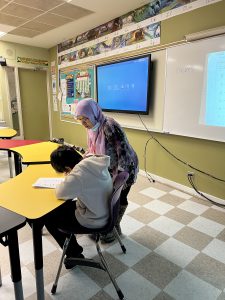
Jamila works with a student in her classroom.


As a teacher, it is my responsibility to provide a safe and nurturing environment for my students. This means creating a classroom where all students are respected and their individual needs are recognized and addressed. In my classroom, I am proud to have fostered a culture of collaboration, where each student feels comfortable expressing themselves and their ideas and where meaningful relationships are cultivated.


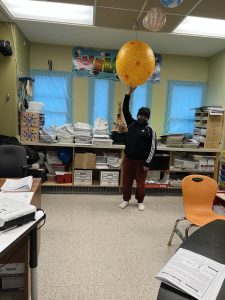
A highlight of this school year has been working with my class to create a DIY solar system to help with visual learning. I also had my students name and create their own planets, which was a great way to get them involved in hands-on learning. Seeing my students’ progress and the joy on their faces when they succeed have been some of the most rewarding experiences of my career.


Jamila’s student poses with a planet he made as part of a hands-on class activity.


One of the things I have learned since becoming a Gakino’amaage: Teach For Canada Teacher is the importance of patience and the ability to learn quickly. My time here has reminded me that it is imperative for my classroom to be a safe and comfortable space where I can connect with my students, reflect on ourselves and talk things out. Over time it has been amazing to see my students build their emotional intelligence and abilities to express themselves.


As a teacher, I play multiple roles in the lives of my students. Sometimes, my role is of a tutor or a therapist, and other times, a friend.


I believe that having patience and versatility in taking on different roles is what makes a good teacher. Over the past year, I faced challenges getting my students to speak up about what was bothering them. To address this, I encouraged them to write about their feelings instead of speaking out loud about them. 


Teaching in Nisichawayasihk Cree Nation has been a unique and rewarding experience. I’ve learned about culture, traditions, and language and have made lifelong connections with my students and their families. 


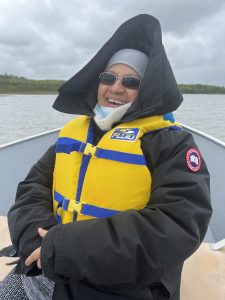
Jamila has enjoyed spending time out on the land getting to know her colleagues and community members. Here she is pictured on a camping trip.


If you’re a teacher considering a position in a First Nation, I encourage you to just do it. It may be challenging, but the rewards are immeasurable. You’ll be making a positive impact in the lives of your students and will learn and grow as a teacher and individual.


Are you a certified teacher interested in going North with Gakino’amaage: Teach For Canada? Learn more and apply.


adfafda

Teaching in Pikangikum: Embracing Nature and Fostering Community

Posted by Meredith Stapon

Kenny MacDonald is a Gakino’amaage: Teach For Canada alumni living and working in Pikangikum First Nation. He joined Gakino’amaage: Teach For Canada in 2018 and has since taught Physical and Outdoor Education there. Teaching in Pikangikum has been a rewarding experience for Kenny, who found joy in teaching outdoor education to his students while instilling a sense of community responsibility, learning lessons in flexibility and patience, and creating initiatives to keep students and community members active during school closures. 


This Teacher Appreciation Week, Gakino’amaage: Teach For Canada is highlighting educators like Kenny, who have demonstrated outstanding and continued dedication to their students. Read on to hear about Kenny’s experience teaching in the North.


Living and teaching in Pikangikum First Nation has been an incredible experience for me as a Gakino’amaage: Teach For Canada Teacher. I have found joy in teaching and working with my students in a way that introduces the outdoors and all the physical and mental health benefits that come with it. 


In my outdoor education class, we have engaged in activities such as shelter building, learning knots, fishing, canoeing, wood collecting, snowshoeing, and cross-country skiing. My goal has always been to make the learning experience inclusive so every student can participate and contribute to the class. I believe this approach has significantly impacted my students, giving them a sense of pride and accomplishment in what they have learned and experienced.


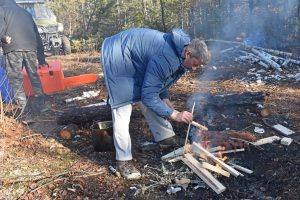
Kenny teaches outdoor education in Pikangikum, leading his students in lessons including shelter building.


One of my most fulfilling moments as a teacher came during my self-assessment when almost every student expressed their pride in providing firewood for Elders who were unable to collect it for themselves. Their positive feedback was a testament to the importance of teaching my students while also instilling a sense of community responsibility in them.


I have learned some critical lessons during my time in Pikangikum. I learned that being flexible and patient is essential when working in a community where cultures and priorities may differ from mine. I have found that what I consider to be important may not be the same for others, and that’s okay. It has been vital for me to remain adaptable and make an effort to support the community’s goals, aligning my approach as an educator with the community’s needs and desires for their students.


Despite the challenges I have faced this year, such as frequent school closures, I have remained patient and flexible. I started a Facebook group where I posted daily workout videos for students and community members to participate in, which helped keep them fit and active during community lockdowns. I also created a group chat for sports so we could come together to play during school closures. These initiatives not only kept me sane but also helped to strengthen my relationship with members of the community.


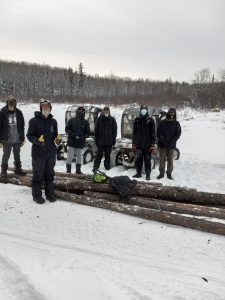
The students in Kenny’s outdoor education class spend time out on the land in Pikangikum.


My experience living and teaching in Pikangikum First Nation has been significant and rewarding. I have learned valuable lessons about flexibility, patience, and community responsibility. My dedication to my students and the community has led to many successful and fulfilling moments in my career as a teacher, and I look forward to the future gifts that my time in Pikangikum will bring.


Are you a certified teacher interested in going North with Gakino’amaage: Teach For Canada? Learn more and apply.


adfafda

From Transition to Transformation: A Gakino’amaage: Teach For Canada Teacher’s First Year in Deer Lake

Posted by Meredith Stapon

Elsa Rey is a Teach For Canada–Gakinaamage Teacher in Deer Lake First Nation. She joined Gakino’amaage: Teach For Canada’s 2022 Cohort and is completing her first year of teaching Grade 7 at Deer Lake School. This Teacher Appreciation Week, Gakino’amaage: Teach For Canada is highlighting educators like Elsa, who have demonstrated outstanding and continued dedication to their students.


Despite the challenges of adapting to a new environment and teaching role, Elsa has embraced new opportunities, learned from her colleagues and community, and found great joy in teaching and living in the North. She encourages other teachers to take the leap and experience the rewards of making a real difference in the lives of students. Read on to learn more about Elsa’s positive and fulfilling experience teaching Grade 7 in the North.


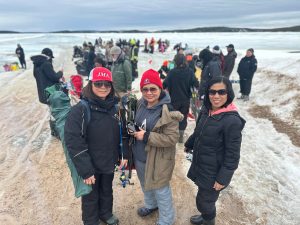
Elsa Rey is a Gakino’amaage: Teach For Canada Teacher who teaches Grade 7 in Deer Lake First Nation. She is pictured at the community’s National Day for Truth and Reconciliation Walk for a Cause.


My name is Elsa Rey, and I am a Gakino’amaage: Teach For Canada Teacher in Deer Lake First Nation. My journey this school year began with a transition to teaching Grade 7–a shift in my role that I was not anticipating but have very much enjoyed. As long as I have the skills and passion to teach, I believe any classroom role will challenge and fulfill me as an educator.


I have learned so much since moving to Deer Lake. Adapting to the school norms has inspired me to learn and try new things. Every day is a learning experience for me–from connecting with my community members, co-workers, staff, administrators, and especially the students. Learning and adapting to teach in the North is like testing the waters. I will never know everything, so it’s important that I stay adaptable and eager to learn. I am open to adjustments, changes, and new ideas–as long as they benefit my students.


I am proud of achieving many goals this school year. As a new teacher, my enthusiasm and zealous heart have helped me to succeed in my classroom. I like to share my values and wisdom with my Grade 7 class. I embrace diversity and honour my students’ culture, incorporating local knowledge and resources within our curriculum whenever possible. I’ve also introduced routines to my class, like maintaining a tidy classroom, filing tests and worksheets in a binder, and building good habits like washing our bowls and utensils.


Even though I am far away from my loved ones and simple pleasures like eating out, shopping, and drinking my favourite coffee, I have learned to enjoy the peace, serenity, and beauty of Deer Lake. I was not used to the northern cold and severe weather, and I persevered!


Apart from teaching, I have accomplished several milestones in the community, including fishing, eating moose meat, and spotting a big black bear for the first time. I have enjoyed the breathtaking lakes, sky, clouds, stars, sunrises, sunsets, wild plants and flowers. I like spending time on the land, hiking and going on long walks, including one on a frozen lake. Nothing beats having a warm piece of bannock–best with butter and jam–and listening to folk songs. 


Many of these are experiences I would not have had outside of Deer Lake, and I am fortunate and grateful for them.


Elsa has enjoyed spending time on the land and making connections with fellow educators and community members.


In addition to these activities, I have participated in community events, including the fishing derby, Deer Lake Community Revival Church Meeting and the National Day for Truth and Reconciliation Walk for a Cause. On this four-hour walk, I joined teachers, students, and community members to honour the lives lost and affected by Canadian Indian Residential Schools.


I have learned a lot from my colleagues, some of whom are also Gakino’amaage: Teach For Canada teachers. We often share ideas, strategies, and resources to improve our teaching skills and help our students succeed. It’s inspiring to see how committed and passionate they are about their work, which motivates me to do better.


My experience teaching in Deer Lake has been one of my life’s most rewarding and fulfilling experiences. It’s not always easy, but the challenges make it so worthwhile. The students, the community, and my fellow teachers have all taught me so much. Together, they have helped me grow both personally and professionally.


Elsa teaching her Grade 7 at Deer Lake School in Deer Lake First Nation.


To any teacher considering joining Gakino’amaage: Teach For Canada and teaching in the North, I would encourage you to take the leap. It may be outside your comfort zone, but the rewards are amazing. You will have the opportunity to make a real difference in students’ lives, and you will learn so much about yourself and the world around you in the process. Don’t be afraid to take the chance and see where it takes you–I promise it will be worth it.


Are you a certified teacher interested in going North with Gakino’amaage: Teach For Canada? Learn more and apply.

adfafda

Healing Through Hip Hop: Students in Fort Severn First Nation Learn Alongside Cree Musician Shibastik

Posted by Meredith Stapon

Teach For Canada–Gakinaamaage offers in-classroom Teacher Development support to educators throughout their two-year commitment in the North. They receive professional, peer, and personal support, including funding to pursue additional qualifications, access to classroom resources, regular check-ins with their Teacher Development Managers, access to counselling services, and opportunities to connect with a dedicated network of Northern educators. These supports help to ensure success in the classroom and the community. 


After several years of providing remote teacher support, our Teacher Development team has returned to in-person visits. Beginning in November 2022, we’ve made our way back into classrooms to see firsthand the amazing work and dedication of Northern educators.


In November, one of our Teacher Development Managers, Danielle Consitt, visited Fort Severn First Nation to provide in-classroom support to five Gakino’amaage: Teach For Canada teachers, three of whom teach at Wasaho Cree Nation School and two at Keewaytinook Internet High School (KiHS). While spending time in Taylor Lambie’s 5th and 6th Grade classroom, Danielle witnessed Healing Through Hip-Hop, a workshop led by special guest facilitator Shibastik.


Shibastik teaches a Healing Through Hip Hop workshop to Gakino’amaage: Teach For Canada Teacher Taylor Lambie’s 5th and 6th Grade class in Fort Severn First Nation.


Taylor Lambie is a certified teacher and member of Gakino’amaage: Teach For Canada’s 2022 cohort. She accepted an offer to teach 5th and 6th Grade at Wasaho Cree Nation School in Fort Severn First Nation and is completing the first year of her two-year commitment.


Taylor expressed that the workshop led to increased participation from students who hadn’t previously shown enthusiasm for writing. Not only were participants expressing themselves in both Cree and English–there were multiple elements of the wider curriculum woven into the activity.


“The best lesson that came out of Shibastik’s visit was self-confidence. Students who are typically quiet and hesitant in class were engaged and participated in different ways.”


“Some helped create the beat, others shared lyrics, and a few even tried their hand at rapping in front of the class,” recalled Lambie.


Taylor Lambie joined Gakino’amaage: Teach For Canada’s 2022 Cohort and accepted a position teaching 5th and 6th Grade at Wasayo Cree Nation School in Fort Severn First Nation.


Throughout the lesson, students were able to practice their reading, writing, listening, and comprehension skills and walked away with a better understanding of form and style, including the use of rhymes to link verses together. Because the lyrics were layered over music, the lesson also incorporated elements of numeracy. 


Shibastik, Mushkego Cree for “underground flow,” is an accomplished rapper, hip-hop producer, painter, athlete, and a proud Moose Cree First Nation member. He was born in Moose Factory, Ontario, and grew up across the Moose River in Moosonee. He is a Native American Music Awards nominee.


For nearly twenty years, he has offered multiple programs geared toward engaging youth. His workshops, Healing Through Hip Hop, Fighting through PAINt, Hunting for Healing, and Hurt People, are grounded in Indigenous histories and knowledge and aim to create a healing space for students to express themselves.


Shibastik regularly performs his workshops in First Nations schools across the country. Photo courtesy of Shibastik.


“For Healing Through Hip Hop, I bring a beat-making machine into the classroom. The students and I write music together, focusing on self-expression and addressing emotions. We work together to create a collaborative song.”


Shibastik says that when he was growing up, he had a hard time expressing himself until he discovered poems as a way of his sharing feelings with his family.


While he has lived in Thunder Bay, Ontario, for 16 years, his website lists over 50 First Nations across Turtle Island where he has offered his programs. 


“I am from Moosonee. When I visit a First Nation, I feel like I am going home,” says Shibastik.


“There is so much that inspired me to start working with youth. I got into rapping because I wanted an outlet to address the serious issues going on in my community. Throughout my life, I have been affected by suicide and have lost many people close to me. Getting into music was a way of connecting with others–to share the beautiful side of living in a First Nation and educate through lyrics. I hope that my work helps to share the perspectives of people living in small northern communities.”


Shibastik has been told that he might not succeed due to his music’s focus on issues affecting many First Nations–including the effects of intergenerational trauma, histories of Canadian Indian Residential Schools, increased suicide rates, and access to clean water and healthy food–but that’s never bothered him. “I speak to my community,” he says.


“Something magic happens every time I facilitate a workshop, and each time it’s different. I have an outline, but the process is very spiritual to me. I remain open to my feelings and what I share. The most recent session I led was about sexual abuse and Residential Schools. These topics can be difficult to address, but it’s important that my workshops create platforms for children to open up.”


Shibastik integrates elements of spoken word, visual art, and education into his programming. Photo courtesy of Shibastik.


For Taylor Lambie, Shibastik’s visit to Fort Severn gave her students the gift of seeing themselves reflected in his art. 


“My students don’t often get to see their lives, experiences, and cultures represented in the media or the world around them. They still talk about Shibastik and their songwriting session–and even sing their lyrics at times!”


When asked what message he would like to share with his community, Shibasik turned to the importance of preserving Indigenous knowledge.


“I want the people in Northern First Nations to realize how vital the information that they have is. Keep our traditions alive, and pass them on to the younger generations.”


“Even if we run into people who look down on us, we must remember that Indigenous education is important.”


“Lots of effort was put into trying to abolish Indigenous culture and change the ways that we live and interact with the land. We need to be brave. Today, we are being listened to, and the way to fight is different. We need to be warriors. Now is the time to use our words. I want to do what I can to help Indigenous voices be heard.”


Join teachers like Taylor Lambie in the movement to make education more equal. We’re accepting applications for certified teachers interested in teaching in the North. Learn more and apply now.

Celebrating 10 Years of Gakino’amaage | Strengthening education for generations to come. Explore Our Impact Goose Icon
This is default text for notification bar