
adfafda

The Story of Gakino’amaage, Teach For Canada’s Anishinaabemowin Name

Posted by Meredith Stapon

The Beginning of Teach For Canada


Teach For Canada was established in 2015 with the vision of ensuring that every child could have access to high-quality education in their community. 


In its early days, conversations between Teach For Canada and First Nations Community Partners established a shared goal of First Nations education equity. The organization required a distinct model and approach to address the twin challenges of teacher supply and turnover, compounding historical injustice and systemic inequities that produce a statistical education gap between First Nations and non-First Nations students.


Teach For Canada began collaborating with First Nations Community Partners, recruiting certified teachers to fill roles in northern schools. The organization provided community-led training and support to these teachers in an effort to improve student outcomes. This approach was based on the belief that by connecting talented, motivated teachers with opportunities in First Nations schools and providing individualized preparation and support to them throughout their first two years, the organization could complement the work of First Nations, peer organizations, and many others in a movement towards equity in First Nations education.


Since its founding, Teach For Canada has partnered with 23 First Nations Community Partners in Northern Ontario and Manitoba. Its programs have adapted based on the needs of these First Nations to include teacher recruitment, development and support. Additionally, Teach For Canada offers leadership development programs and advocacy efforts aimed at supporting First Nations community capacity building, and addressing the root causes of educational inequality in Indigenous communities.


Founding Bodies


Teach For Canada was established under the guidance of First Nations community members and a Circle of Advisors that included Indigenous professionals from various fields. The Circle of Advisors played a critical role in the foundation of Teach For Canada. Together, they brought national experience in rural, remote, and Indigenous education, having served as teachers, principals, superintendents, education directors, professors, and in other leadership positions nationwide. 

 

Members of Teach For Canada’s Circle of Advisors (2015).


The Advisory Council, made up of representatives from First Nations Community Partners, played a critical role in ensuring that Teach For Canada was established as culturally responsive, accountable, and effective in addressing educational inequality in First Nations communities. Today, the Council’s input and guidance continue to ensure that Teach For Canada’s approach to partnerships and programming remains respectful, collaborative, and impactful.


Teach For Canada recognizes the historical and ongoing impacts of colonialism on Indigenous peoples in Canada and understands education’s role in perpetuating these injustices. The organization, under Executive Director, Ken Sanderson’s leadership, has been on an organization-wide decolonization journey. As part of this journey, Teach For Canada sought a traditional name obtained through ceremony.


Receiving a Traditional Name


In December 2022, Ken Sanderson was introduced to Elder Wally Swain of Keeseekoowenin Ojibway Nation (Treaty 2), who he approached with tobacco to request a name. Elder Swain is part of a group of Elders and Traditional Knowledge Keepers working to protect and share traditional knowledge and teachings. 

 

Executive Director Ken Sanderson is leading Gakino’amaage: Teach For Canada’s decolonization journey.


The name given to Teach For Canada through ceremony is Gakinaamaage, Anishinaabemowin for “one who teaches”. The meaning behind the name extends beyond literal translation. It speaks to the fact that we are all teachers and that both teaching and learning are lifelong processes. It encompasses the reciprocal nature of teaching and learning and how teachers learn as much from their students as their students learn from them. 


Moving Forward as Gakino’amaage


You might ask yourself, what does this change mean for Teach For Canada? We are still the same team, working towards our mission to support student success by recruiting and developing committed educators in partnership with First Nations, teachers and supporters.


Going forward, you will hear us refer to our organization less as Teach For Canada and more as Gakino’amaage. We hope to become increasingly identified by our Anishinaabemowin name, and we understand that this process takes time. 


We had a ceremony to unveil the name Gakino’amaage at our 2023 Summer Enrichment program, together with Advisory Council members, Community Partners, teachers, and our team. The annual Summer Enrichment Program, which prepares and supports teachers to succeed and stay in Northern classrooms, took place at Lakehead University in Thunder Bay from Sunday, July 16th – Saturday, July 22nd, 2023.


Please join us in celebrating the gift of receiving our new name: Gakino’amaage.
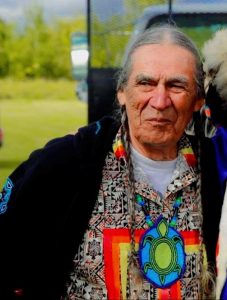


Elder Wally Swain, who conducted the naming ceremony. Photo via Chief Derek Nepinak of Pine Creek First Nation.


Visit the Our Name page to learn more about Gakino’amaage.
 

adfafda

Supporting Administrator Success in First Nations Schools

Posted by Meredith Stapon

Elisa Bourdon is a Teach For Canada alumni and Principal at John C. Yesno Education Centre in Eabametoong First Nation. She joined Teach For Canada’s 2017 cohort and began teaching science. In her first year, she was asked to step into the role of acting Principal before becoming Vice Principal in 2018 and, in 2022, Principal. 


Elisa Bourdon is a Teach For Canada alumni and Principal of John C. Yesno Education Centre in Eabametoong First Nation.


Elisa’s transition from a teaching role into a series of administrative positions made her an ideal candidate for Teach For Canada’s Administrator Support Programming, which equips Northern educators with the tools and resources to support successful school leadership and reduce First Nations teacher attrition rates. 


Teach For Canada proudly offers northern principals like Elisa wraparound personal, professional, and peer support, including monthly check-ins, biannual coaching, and resource support from an experienced practitioner. We also offer regular opportunities for administrators to come together as a peer network to connect with, learn from, and support each other. 


Like many First Nations, Eabametoong has experienced its fair share of challenges throughout the past year. 


“Eabametoong has been struggling without access to potable water while navigating school closures due to COVID-19,” says Judy Blaney, Administrative Development Manager at Teach For Canada. “But when you dig deeper, there are so many good things happening in the community.”


One great thing happening in Eabametoong is an Ojibwe language course sponsored by Matawa First Nations Management. Established in 1988, Matawa is a non-profit Tribal Council that provides advisory services and programs to nine-member Ojibwe and Cree First Nations.


Elisa Bourdon and her colleague, Vice Principal Thomas Stanley, are two of four educators in Eabametoong who received special permission to take part in the Ojibwe language course hosted by community member Gordon Yellowhead.


Thomas Stanley and Elisa Bourdon take part in an Ojibwe language course.


The 32-week program invites community members over 16 to attend two three-hour classes a week. Outside of learning the basics of Ojibwe, Bourden has found the connections she makes with community members to be just as valuable.


“You aren’t just learning a language. You’re sitting in a room for six hours a week with members of your community,” says Blaney of Elisa and Thomas’s participation.


“It’s great,” says Bourdon. “I didn’t expect to be given the chance to take part. I wanted the seats to be filled by community members, and to be honest, I anticipated a high demand from locals.” Ten participants signed up initially, and the course now has 20 attendees.


There are approximately 20 attendees in the 32-week Ojibwe language course offered by Matawa First Nations Management.


Bourdon says that the language program being offered in Eabametoong is long overdue. 


“Language revitalization is important,” she says. While John C. Yesno has three native language teachers on their staff team, many of the students do not speak fluent Ojibwe. 


Stanley mentioned that he typically practices his Ojibwe outside the school with older people in the community because many of his students do not understand it. 


“In our school, a lot of [Ojibwe] vocabulary is being taught. The kids write in syllabics, but they don’t speak Ojibwe conversationally.”I would love for the language to be used completely throughout the school,” says Bourdon.


“I am not sure how frequently students use it outside of school, but in the classroom, I would love to hear students speaking to each other in Ojibwe.”


In an effort to further integrate Ojibwe into their school, both Elisa and Thomas have begun to open morning announcements and assemblies in Ojibwe and plan to continue using the language as much as they can.


As their language courses continue, Elisa and Thomas will continue to participate in Teach For Canada’s Administrative Support Programming. 


“Judy is awesome,” says Elisa of Judy Blaney, Teach For Canada’s Administrative Development Manager. “She’s easy to speak to, and her knowledge is invaluable. She’s helped me to remain calm and not get overwhelmed.”


“One piece of advice that Judy shared with me was to always have something in your back pocket, so that if things fall through–if the unexpected happens–you have something planned. I took that seriously, and it has allowed me to have more success as a leader. Up in the North, nothing is guaranteed–not the deliveries, the weather, the power, or the water. You always have to be thinking ahead.” 


As the team at John C. Yesno continues to adapt and overcome challenges while making an effort to deepen its students’ understanding of Ojibwe, Blaney hopes that the peer network of administrators accessible through Teach For Canada will support Elisa in working toward her goals.


“Teach For Canada’s network of administrators is useful for sharing experiences and knowing that you are not alone. While hardships can be shared across communities, finding solutions can be particular to the community that you’re in,” says Bourdon.


“My vision is an Anishinaabe school, where teachers speak Ojibwe all the time. We’ve got to plant those seeds early–and my hope is that if kids become immersed in Ojibwe at school, they will bring it home with them. Supporting new generations to retain and revitalize Indigenous language is as important as ever.”


Are you interested in teaching in a northern First Nation? Learn more and apply.


adfafda

Going North with My Husband

Posted by Meredith Stapon

Ruth Hamilton is a Teach For Canada teacher living and working in God’s Lake Narrows First Nation in Manitoba. She joined the 2022 cohort of Teach For Canada, and teaches English at God’s Lake Narrows First Nation School. Ruth is accompanied by her husband, Bill, who also works at the school as a teacher assistant.


We connected with Ruth to hear about her experience going North with her husband, settling into her new role, and getting to know the students of God’s Lake Narrows.


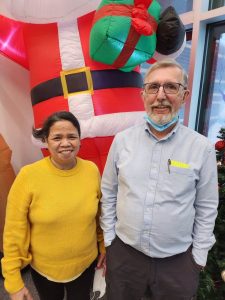
Ruth Hamilton and her husband, Bill, both work at God’s Lake Narrows First Nation School. They moved North as a family.


I had been teaching in the Philippines and Cambodia for over a decade when a Teach For Canada Facebook post caught my eye. I began researching the organization, digging into all of the information that I could find. I read up on their community partners, watched YouTube videos about living and working in a First Nation, and read many Stories From The North. Once I had an understanding of their teacher recruitment, support, and preparation programming, I spoke with my family and made the decision to apply. I felt nervous, yet excited to be part of this great opportunity. 


The process of becoming a Teach For Canada teacher happened rather quickly. I took part in a series of interviews, participated in the two-week virtual Summer Enrichment Program, and before I knew it, me and my husband, Bill, were boarding a flight to God’s Lake Narrows First Nation.


Our flight to God’s Lake Narrows was nerve wracking and exciting. Things started off well at the airport when we weren’t charged for being over the baggage allowance. We landed at night at a small airport overlooking God’s Lake Narrows–our new home.


As we got out of the plane, Bill and I were surprised by the familiar feeling of the land around us. It reminded us both of our lives back in Cambodia–especially at dusk. 


At the airport, we were greeted warmly by members of the community, who kindly brought us to our new home. As we walked through the door, we noticed that our unit had been stocked with groceries and essential items. It was a kind, wholesome gesture that made us feel welcomed and excited for the journey ahead.


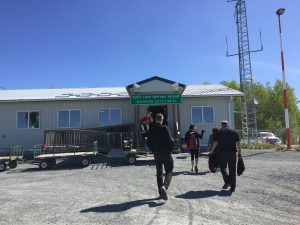
God’s Lake Narrows Airport.


My husband and I woke up early the next day, eager to begin meeting people, and start our new lives in God’s Lake Narrows. While walking around town, many people waved, smiled, and introduced themselves to us. 


The timing of our arrival aligned with the local Sundance Festival, which gave us an opportunity to make new friendships while learning about the community’s culture. Everyone in God’s Lake Narrows gathered together at the Sundance Festival and participated in a ceremony to pray for healing. I am so happy that Bill and I arrived in time to take part. It was an experience that I will never forget.


When I arrived at God’s Lake Narrows First Nation School, I was introduced to the staff team, who were all very friendly and welcoming. They helped me develop lesson plans to fit the kids’ needs, and supported me continuously. My students were a bit shy at first, but they were always respectful, with great manners. 


Everyone that I’ve met has been so friendly and welcoming. Even the principal was encouraging, and offered me tips on how to fit in around the community. She made me feel comfortable, and made my family feel that we were already an integral part of God’s Lake Narrows–so much so that my husband, Bill made the decision to become a teacher assistant (TA) at the school. He currently works as a TA for math, and helps out in other areas when he can. 


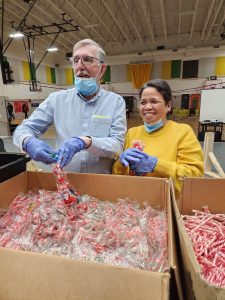
Ruth and her husband, Bill, work together to pack holiday gift bags.


Before we knew it, a month of classes had passed. It has been wonderful to see my students become more communicative and expressive with me. I’ve been enjoying the new school, which was constructed in God’s Lake Narrows in March 2022. It is well equipped with SMART Boards, computers, and state-of-the-art supplies for me to use in my lessons. 


This year is the first year that God’s Lake Narrows has been able to offer a high school program in-community for grades ten through twelve. Before the new school was constructed, students would have to leave God’s Lake Narrows to finish their high school education, which was a barrier to graduation. The community is very excited to celebrate their first graduating class in 2023.


Photo taken during the construction of the new school in God’s Lake Narrows First Nation.


Traveling up North to teach was not just a regular job to me–it is a commitment that I made to my students, and a decision that my family and I have taken seriously. 


One of my goals as an educator was to inspire students by teaching them about their heritage and culture.


I wanted to show my students that the opportunities for them are vast.


I decided to spend the first 15 minutes of each day highlighting a successful Indigenous individual in the community.


Every morning, I hand out a story for our class to read together. My students love it–we even have kids who are not part of my homeroom drop by to read the articles. While we’re reading, the students ask questions and pick up on new vocabulary.


Since joining Teach For Canada, it has been clear that their organization deeply values teachers. I have been in constant contact with my Teacher Development Manager, who is always helpful and quick to respond when I need to talk through school-related questions, or anything that my family and I need. 


Going North has been a great experience for me and my family. Although we are living in a new place, we are at home here. With the connections that Bill and I have made, it already feels like we have been living in God’s Lake Narrows for a long time. I feel welcomed and taken care of by my community, and by Teach For Canada. 


Interested in teaching in a northern First Nation? Apply now.

adfafda

The Importance of Reconciliation for First Nations Education

Posted by Meredith Stapon

The National Day for Truth and Reconciliation is an Indigenous-led, grassroots commemorative day that takes place on September 30th across Canada. It was founded by Phyllis Webstad, who is Northern Secwpemc (Shuswap) from the Stswecem’c Xgat’tem First Nation (Canoe Creek Indian Band) and stands as a day of recognition for the thousands of lives lost or affected by the Residential School system. The day, also known as Orange Shirt Day, represents a tangible and meaningful opportunity to support Survivors and their families, who are reeling from the horrific actions of the past.


In wake of this year’s National Day for Truth and Reconciliation, Ken Sanderson, Executive Director at Teach For Canada, shares a reminder of the importance of continuing the work of reconciliation each day.


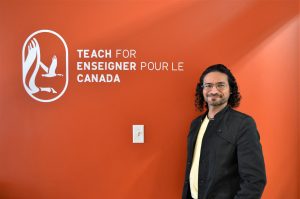
Ken Sanderson, Executive Director at Teach For Canada, pictured at the organization’s Toronto office.


Here we stand, in year three of a long and impactful pandemic. A pandemic that not only changed aspects of our lives and society that we took for granted, but also opened our eyes to glaring inequities. So, where are we now, and what is the current state of education? For many students, access to education is determined by realities that are out of their control—including their postal codes.

We knew that there were challenges in Canada before COVID-19. We were aware that the education systems were fraught with increased demand and decreased support and resources, and that the educational experiences of children in southern schools greatly outstripped the experience and outcomes of students in First Nations.

All of this we knew, as it was outlined in the Truth and Reconciliation Commission’s 94 Calls to Action.


Reflecting on the National Truth and Reconciliation Commission’s 94 Calls to Action


The following calls to action, numbers 6-12, are directly related to education:


6. We call upon the Government of Canada to repeal Section 43 of the Criminal Code of Canada.

7. We call upon the federal government to develop with Aboriginal groups a joint strategy to eliminate educational and employment gaps between Aboriginal and non-Aboriginal Canadians.

8. We call upon the federal government to eliminate the discrepancy in federal education funding for First Nations children being educated on reserves and those First Nations children being educated off reserves.

9. We call upon the federal government to prepare and publish annual reports comparing funding for the education of First Nations children on and off reserves, as well as educational and income attainments of Aboriginal peoples in Canada compared with non Aboriginal people.

10. We call on the federal government to draft new Aboriginal education legislation with the full participation and informed consent of Aboriginal peoples.

11. We call upon the federal government to provide adequate funding to end the backlog of First Nations students seeking a post-secondary education.

12. We call upon the federal, provincial, territorial, and Aboriginal governments to develop culturally appropriate early childhood education programs for Aboriginal families.


There have been countless commissions and studies that detail many of these issues in education. It is not only the studies that require our attention—what is most needed is action.


Reconciliation amid the Nationwide Teacher Shortage


When COVID began, it became clear that First Nation schools had limited resources and could not pivot as easily as southern schools. Teachers  across the country faced high levels of stress, turnover, early retirement, and burnout. The need to support educators became increasingly evident across the profession.

On top of this, we are experiencing a nationwide shortage of certified educators in every province. It has become more difficult than ever for First Nation schools to fill roles. Schools with limited budgets and remote locations inevitably experience more barriers. Between the transition that comes with a big move, and the standard pressures of teaching in a new school, finding a teacher with the right motivation and fit is a highly specialized, and challenging task.


Pushing forward towards Reconciliation


The work that we do at Teach For Canada is crucial to the First Nations that we have partnered with. Our focus on recruiting certified teachers, before supporting them with resources, training, and mental health support throughout their tenure in the North, has helped prevent schools from experiencing high degrees of turnover. This work has become increasingly meaningful as we seek to rebuild a world impacted by the pandemic.


Reconciliation was an important subject pre-pandemic, but now, it is unconscionable for it to be overlooked.


With the National Day for Truth and Reconciliation not far behind us, many wonder how they can tangibly and meaningfully contribute to this work. I feel that investing in educational support and outcomes is one of the most effective ways to yield far-reaching impacts, as it helps to equip the next generation of Indigenous learners.

First Nations have been last on the list for many things for far too long. The programming and support that we provide at Teach For Canada is community-driven, and responsive to the changing needs of the communities that we serve.

By supporting our work, you are actively supporting the future of Indigenous thinkers and leaders, and truly investing in reconciliation. Thank you—chi miigwetch—for your continued support as we push forward in the movement to make education more equal.


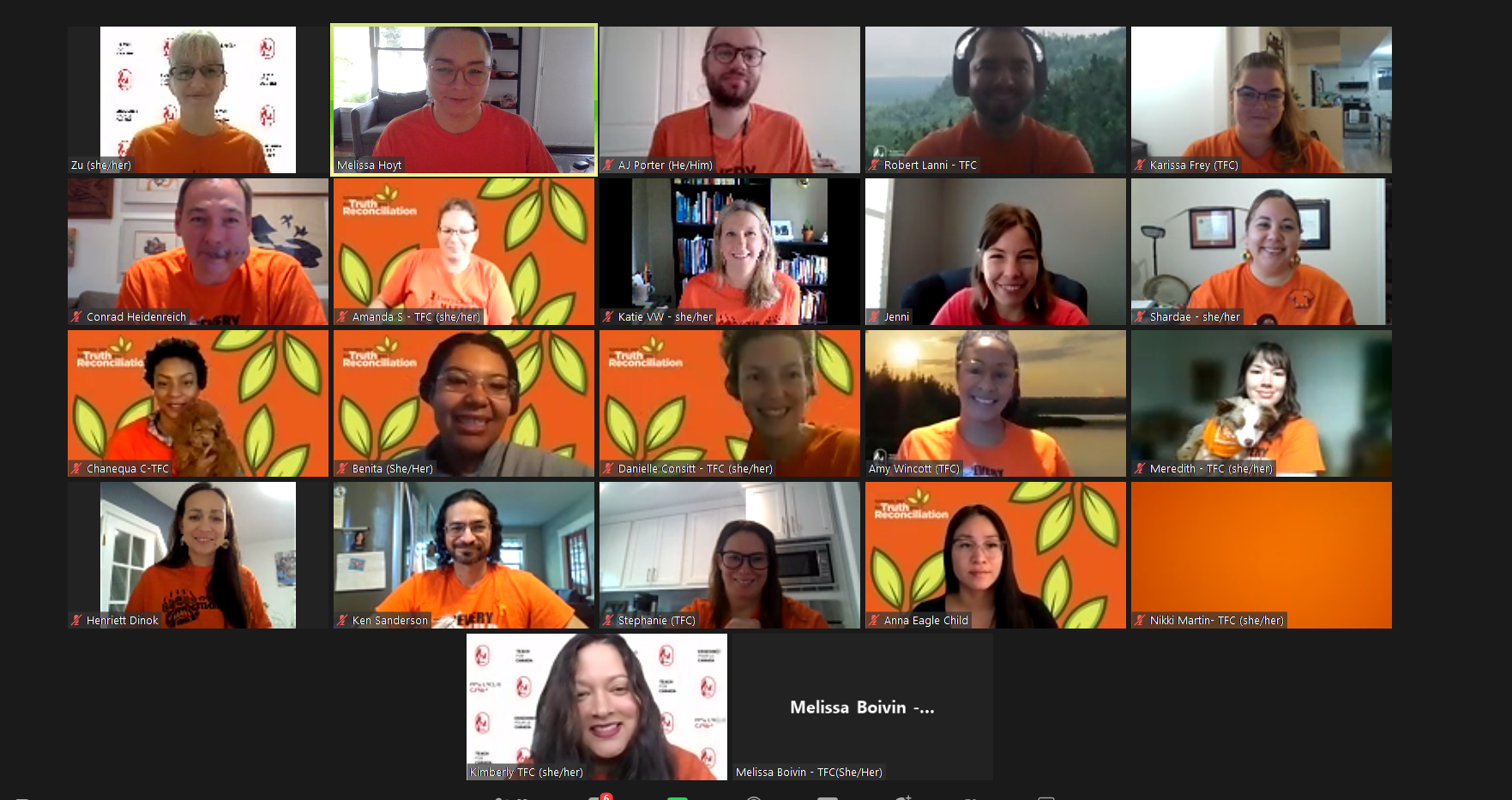
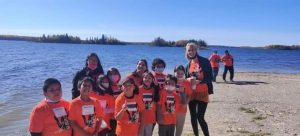
Members of the Teach For Canada team wear orange on the National Day for Truth and Reconcilation.

adfafda

A Teacher Candidate Goes North: Teach For Canada’s Northern Practicum Program sparks meaningful learning in Big Grassy River First Nation

Posted by Meredith Stapon

Throughout the 2021-22 school year, Teach For Canada partnered with Trent University’s School of Education to offer a Northern Practicum Program. This program connects teacher candidates with short-term teaching placement opportunities in the First Nations that Teach For Canada serves, and is now a permanent program offering, being carried into the 2022-23 school year and beyond.


The program provides meaningful educational experience in a northern classroom, where aspiring teachers can deepen their understanding of Indigenous ways of being, gain professional experience, and familiarize themselves with initiatives that they can later integrate into their lessons.


Leah Morrow is a Teacher Candidate at Trent University, and participant in Teach For Canada’s 2022 Northern Practicum Program, who completed her fourth and final teaching placement at Pegamigaabo School in Big Grassy River First Nation. We sat down with Leah while she was taking part in the practicum to hear about her reasons for going North, as well as her experience teaching at Pegamigaabo. 


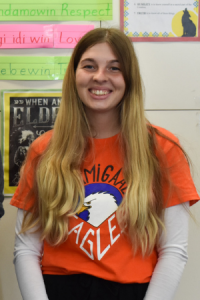
Leah Morrow is a Teacher Candidate at Trent University, and a participant in Teach For Canada’s 2022 Northern Practicum Program. Leah completed a four-week practicum at Pegamigaabo School in Big Grassy River First Nation.


Applying to the Northern Practicum Program


Leah first heard about Teach For Canada’s Northern Practicum Program through an email from Nicole Bell. Dr. Bell is Anishinaabe (bear clan) from Kitigan Zibi First Nation, and is an Associate Professor, Senior Indigenous Advisor in the School of Education and Professional Learning at Trent University. The email introduced the Northern Practicum Program and invited those interested in participating to apply.


Leah had always thought that she wanted to teach in an Indigenous community, but never knew how to go about it.


“There had never been a clear path. Once I heard about Teach For Canada, I had found a reason, and a way to go North.”


Leah expressed her interest and later attended an information session co-hosted by Trent’s School of Education and Teach For Canada. Teacher candidates then took part in interviews to determine whether they would be selected for the program.


“During the interview, Dr. Bell asked about my experience with First Nations culture, and my connection to the land. She also wanted to know about my self care practices, and mental health hygiene. I was asked why I wanted to teach in the North and whether there was potential for me to extend my time there, and teach in a First Nation once certified.”


What drew Leah to work in a northern First Nation? 


“I felt that the faculty here would have knowledge that stretched beyond what I could access in a Southern Ontario school. This experience would give me an opportunity to learn from students who live in other parts of the province.”


Leah was also interested in gaining experience with the needs of First Nation students. She was interested in the specialized skills required to support their success, and learning strategies to make her students into better learners.


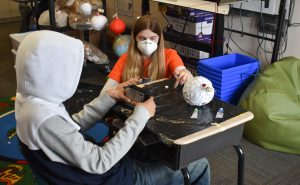
Leah leading a paper mache lesson with her class.


What surprises new teachers to the North the most?


Freedom to teach outdoors

Small class sizes

The ability to try new things and creatively expand upon the curriculum

Daily collaboration with other faculty members


Prior to teaching in Big Grassy River, Leah’s placements had been in Southern Ontario, in the Kawartha Pineridge School Board, at Bowmanville Highschool, Crestwood Intermediate and Secondary School, and Colbert Collegiate. 


Participants in the Northern Practicum Program gain meaningful experience teaching in a First Nation classroom, while helping to fulfill the short-term staffing needs of Indigenous communities. Teach For Canada’s Northern Practicum Program allows participants to share their gifts, hone their craft, and gain hands-on teaching experience, all while finding out whether the North is the right fit for them.


What Leah learned throughout the Northern Practicum Program


“Since coming to Pegamigaabo, I have learned that teaching takes more of a backseat to meeting the needs of students in other areas of their lives. My experience has taught me that children need someone to care for the whole child.”


“Leah has brought a lot of passion with her to Big Grassy River,” says Beth Shaw, a Teach For Canada educator who was matched with Leah for her four-week practicum, “Since Leah is still in teachers college, she is constantly learning. She brings a passion for learning with her, which is always a benefit when you are teaching. Students see value in what you think is valuable, and having enthusiasm can encourage them to deepen their learning even further.”


Beth Shaw, a Teach For Canada educator and Trent University alumni, is a teacher in Big Grassy River First Nation, and was matched with Leah for her four-week practicum.


When asked what approach Leah had taken throughout her practicum, Beth pointed out her willingness to listen, learn, and step into a new environment. “Her flexibility and willingness to ebb and flow with the changes that happen in a First Nation school is important. Not everything goes the way that we anticipate, so flexibility is very important in the North”.


“Beth is awesome. She’s been very open. Karen, another Teach For Canada alumni, is a second mentor in the school who I have learned from since beginning my journey in Big Grassy River.


“Nothing is off the table. I know that I can ask them anything”. 


Beth Shaw is an alumni of Trent’s Bachelor of Education program, and graduated in 2018. “We were able to connect on those similarities,” says Beth of Leah. “We have had some of the same teachers, and we’ve also been able to connect through math. Leah came into the classroom thinking that math wasn’t her strong suit, and I remember feeling that way when I began teaching, too. It has been great to see her get out of her comfort zone.”


“Beth has encouraged me to try new things in my lessons–she has given me the freedom to explore new ideas, and if something doesn’t work, that’s okay.” 


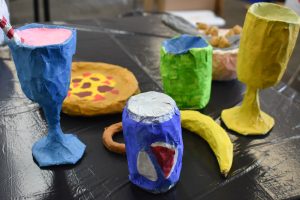
Beth expressed that mutual respect is important to achieving a successful teaching placement. “It’s understood that we work collaboratively on lessons. We work together to brainstorm ideas, and find a balance that we are comfortable with. The outcome of this collaboration is that we’re now offering a language unit, and an art lesson with a focus on paper mache.”


Beth and Leah led their class in a paper mache project, where students were tasked on making representations of their favourite foods.


Before leaving Leah and Beth’s class for the afternoon, Leah and Beth shared their advice for someone thinking about teaching in a First Nation.


Leah: “If you want to do it, go for it. If you even have that thought–that curiosity–see it through. Teaching in the North is a great opportunity. The faculty and school has been welcoming, and amazing.


“It can be intimidating to walk into a community that is not your own, but Big Grassy River has been really great.”

– Leah Morrow


Beth: “Teaching in a First Nation allows you to make meaningful connections that I have not been able to experience anywhere else. This community-based learning opportunity, and feeling like you are connecting with those around you on a deeper level, is something that you don’t always get with teaching. It makes you grow as an educator at a quicker pace, and has given me a lot of confidence in my abilities.  This is my third year here, and it’s been the best teaching experience ever.”


“If you feel a pull or draw to teach in the North, honour that. It might open doors for you that you didn’t think were possible.”

– Beth Shaw


Teach For Canada is currently seeking partnerships with Canadian universities to offer our Northern Practicum Program. Join us to help support teacher candidates in gaining meaningful experience teaching in First Nation schools. Click here for information.


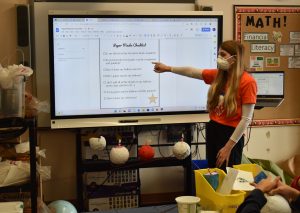
Leah Morrow works with a student at Pegamigaabo School.

adfafda

Tools for Incorporating Indigenous Language in your Classroom

Posted by Meredith Stapon

Sharing our Gifts sessions are an important part of Teach For Canada’s Summer Enrichment Program. This year’s sessions brought First Nations Elders and Knowledge Keepers together with the 2022 Teacher Cohort to share lessons, teachings, and knowledge with educators, as they prepare to fill roles in northern First Nation schools.


What participants are saying about the Summer Enrichment Program Sharing Our Gifts sessions:

“That Ojibwe lesson was awesome–I loved connecting words. As you begin to expand your vocabulary, you start to see some of the patterns that connect phrases, and it’s really neat.”


The 2022 Summer Enrichment Program offered a total of three Sharing Our Gifts sessions, which included storytelling and a beading lesson. In addition to Sharing Our Gifts, teachers also participate in language courses, where they have the opportunity to learn Ojibwe, Oji-Cree, and Cree from First Nations community members.


Languages spoken in the First Nations that Teach For Canada serves


Anishinaabemowin & OjibweBig Grassy River First Nation
Cat Lake First Nation
Eabametoong First Nation
Lac La Croix First Nation
Lac Seul First Nation
Marten Falls First Nation
Ojibways of Onigaming First Nation
Pikangikum First Nation
Poplar Hill First Nation
Sagkeeng First Nation
Slate Falls Nation
Oji-CreeBearskin Lake First Nation
Deer Lake First Nation
Kitchenuhmaykoosib Inninuwug
St. Theresa Point First Nation
North Spirit Lake First Nation
Sachigo Lake First Nation
Sandy Lake First Nation
Lac Seul First Nation
Red Sucker Lake First Nation
DenesųłįnéNorthlands Denesųłįné First Nation
Swampy CreeFort Severn First Nation
God's Lake Narrows First Nation
Rocky CreeNisichawayasihk Cree Nation


Incorporating Indigenous languages is an important part of culturally responsive teaching. While Teach For Canada acknowledges that it is always best for educators to defer to the school’s language teacher, or bring local language speakers into their classrooms, beginning to understand some words themselves is a great first step.

The following resource list was created to supplement virtual Sharing Our Gifts Language Lessons, and encourage educators to continue their own learning beyond the two-week program.

Check out the resources below to familiarize yourself with the languages used across the First Nations that Teach For Canada serves.


Anishinaabemowin & Ojibwe


Online ResourcesMa Mawi Wi Chi Itata Centre Ojibwe and Cree DictionaryAnimal Bingo Cards (Cat Lake Dialect)
AppsKOBE Learn Ojibway (Google Play)
(iOs)
Cat Lake Ojibway Flashcards
Videos7000 Languages Transparent Language Learning


Oji-Cree


Online Resources7000 Languages Transparent Language Learning
AppsKOBE Learn Oji-Cree (Google Play) (iOs)
VideosWord Wednesday (Anisininew Isikkeesiwaywin/Island Lake Dialect) with Lyle Wood


Denesųłįné


Online Resources7000 Languages Transparent Language Learning
AppsLearn Cold Lake First Nations Denesųłįné
Clearwater River Dene Language
VideosMonths in Dene


Swampy Cree


Online Resources7000 Languages Transparent Language Learning
Fort Severn Cree Dictionary
AppsKOBE Learn Cree (Google Play)
(iOs)


Rocky Cree


AppsPrism Interactive Story and accompanying Teachers Guide by William Dumas (Culture and Language Program Coordinator in Nisichawayasihk Cree Nation)


Teach For Canada’s Summer Enrichment Program is a two-week educator preparation program, led by Indigenous leaders, northern teachers, and education experts. The program prepares teachers to fill roles in northern First Nation schools. 

2022 marks the third year that the cornerstone program has been fully digitized in response to COVID-19. From 2015-2019, the program was held in-person at Lakehead University in Thunder Bay.

Learn more about the Summer Enrichment Program here.

adfafda

Reflections from a Teacher Assistant in Eabametoong First Nation

Posted by Meredith Stapon

Dinah Meeseetawageesic is a Teacher Assistant in Eabametoong First Nation. She works at John C. Yesno Education Centre, and is an active participant in Teach For Canada’s TA Program. 


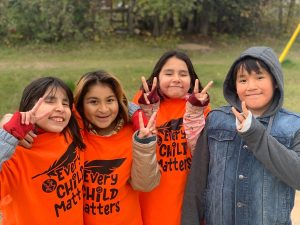
Dinah with a colleague and her students on The National Day for Truth and Reconciliation, also known as Orange Shirt Day.


About the Program


The Teacher/Education Assistant Professional Development Program (TA Program) is currently open to teacher assistants, teacher escorts, education assistants, and paraprofessionals in the First Nations that Teach For Canada serves in Ontario.


The TA Program engages local participants with opportunities to support their growth, professional skills, build community capacity, and increase student success.


Teach For Canada’s TA Program has three focuses: teaching strategies, the classroom environment, and individual student needs. It is presently being offered virtually, and provides:


• Personalized skills development based on individual goals
• Monthly coaching with a certified experienced northern educator
Professional development workshops tailored to the northern TA context
Information on pathways to becoming certified teachers or TAs
Work-related resources and support, such as mental health counselling


Dinah has demonstrated excellence this school year, while working to assist Teach For Canada alumnus Erik Streufert.  We connected with her to ask her about her experience taking part in the Program, and to hear about what she likes the most about being a TA in Eabametoong


“My favorite part of being a TA is getting to see the kids every morning with smiles on their faces. I just love working with them.”


Dinah Meeseetawageesic is a Teacher Assistant (TA) in Eabametoong First Nation, and an active participant in Teach For Canada’s TA Program.


Dinah has attended each webinar that has been offered in Teach For Canada’s TA Program. She says that they teach her approaches and strategies to connect with her students that she wouldn’t have considered before participating.


“A piece of advice that I would give to TAs, or to anyone working with students, is that when you are talking to a child, do not talk or stand over them. Instead, get to their level, and talk to them softly.”


Dinah learned about this approach to communication in Teach For Canada’s webinar on behaviour–the first TA session of this school year. “We talked about the importance of speaking to students and getting down on their level. I’ve enjoyed learning new things, especially strategies that I can apply when working with my students.”


Aside from the program, Dinah has been receiving in-classroom support from the teacher she works with, Erik Streufert. 


Erik is an alumnus who joined Teach For Canada’s inaugural Cohort in 2015. He accepted a position teaching at John C. Yesno Education Centre in Eabametoong First Nation, and he has been there ever since. Erik is an experienced outdoor educator who currently teaches Grade 1, and Special Education.


Erik is a Teach For Canada alumnus who joined the organization’s inaugural Cohort in 2015. He has been teaching Grade 1 and Special Education at John C. Yesno Education Centre ever since.


“Erik and I work together in his classroom. He supports my work with our pupil who has autism. He has supported me by telling me what I should expect from them, and by teaching me approaches to take when working with them.”  She says that working with this student has been her most proud accomplishment, because they inspire her to learn something new every day. 


Dinah takes great pride in watching her students grow throughout the year. Sometimes they get frustrated while getting dressed to go outside, however, they’ve been improving and are now able to do it by themselves. Even with small everyday tasks like that, you can see the small improvements over time, and it is just great to see them achieve new things.”


“Working with my students has taught me to have a lot of patience. I’ve learned that patience is very important.” 


Dinah hasn’t given much thought into whether she wants to become a teacher in the future, but she knows one thing for sure. “I want to keep working with children. For now, I definitely want to keep working at our local school.”


Before ending our conversation with Dinah, she shared some positive words about her experience working with Teach For Canada. “You guys–and the resources that you provide–are amazing. Teach For Canada’s TA Program has been really great to be a part of.”


If you are a community partner TA interested in getting involved in Teach For Canada’s TA Program, please contact selection@teachforcanada.ca.

adfafda

Out from the Classroom and onto the Land in Fort Severn First Nation

Posted by Meredith Stapon

Stephanie Liew is Teach For Canada Teacher in Fort Severn First Nation. Stephanie joined Teach For Canada’s 2021 Cohort and accepted a position teaching Grades 1 and 2 at Wasaho Cree Nation School.


We connected with Stephanie to hear about her experiences in Fort Severn, and how building relationships with students has encouraged them to participate more fully in her classroom.


Stephanie loves spending time outside on the land with her students and their families. Here, she shows off a fish that she caught.


I’ve loved working in Fort Severn because there are so many opportunities to interact and build relationships with my students and community outside of school. I like to find opportunities to spend time outdoors with my students as much as I can. You can often find us wandering down to the river bank, taking a trip to the store, and when it’s snowy, going sledding.


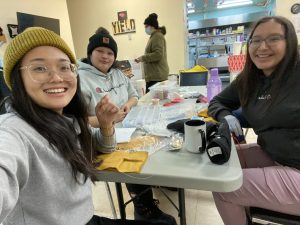
I have also enjoyed participating in community events. Choose Life, a Nishnawbe Aski Nation program that funds several activities that promote mental, emotional, and behavioural well-being of youth, offers several programs in Fort Severn. I’ve been able to take part in beading and sewing nights, where we make mitts and moccasins. During the Christmas season, we’ve also had bingo and dice nights. These events were a lot of fun, and provided me with great opportunities to spend time with students and families.


Stephanie spending time with her students at bingo night.


This year has had its challenges, including the significant loss of in-person learning. Anyone with a family member who was returning from out of town had to isolate for 7 days, which has since dropped to 5. These isolation periods resulted in inconsistent attendance by students and staff. 


These unpredictable changes and absences have encouraged me to adapt as an educator. I have learned that every day is different, and that I have to be ready to pivot, and make changes–sometimes with very little time to prepare. An important lesson that I’ve learned since becoming a Teach For Canada Educator is that you’re not alone. When I connect with other Teach For Canada teachers, I often hear that they are experiencing similar obstacles as I am. It’s nice to know that we’re in the same boat, and I appreciate being able to confide in them for advice and friendship.


When the heat broke down at our school and we had to temporarily close the building, some of my students asked me to take them sledding or go on walks together. The issues with the heating lasted longer than anticipated, and Wasaho ended up being closed for nearly five weeks. 


Throughout this time, my TAs and I drove around Fort Severn to drop off and pick up schoolwork packages, which provided a great opportunity for us to say a quick hello to our students. I was pleased to see that a number of kids who didn’t regularly attend school were able to complete and submit homework packages to us. 


While Wasaho Cree Nation School was closed down for several weeks, Stephanie was able to use some available outdoor equipment to take students cross country skiing.


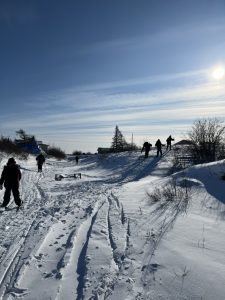
One highlight of the closure was being able to use the school’s winter sports equipment to take students cross country skiing. I brought out some older kids who had expressed an interest in it, and later invited my class to give it a try.


I’ve made some amazing friends in Fort Severn who have demonstrated their unending hospitality in a number of ways. They’ve invited me to learn how to drive a four wheeler and ski-doo, spend time out on the land, go ice-fishing, bead earrings, build a fire, and bake homemade recipes together. 


“Building relationships and trust with my students and their families has had a visible improvement on my students’ levels of engagement in class.”


I’m always encouraged when a pupil comes into my room with a big smile on their face, and is excited to tell me all about their day. I want students to feel cared for in my classroom, and for school to be a safe space for them.


Stephanie and her students enjoy taking part in Choose Life programs, offered by Nishnawbe Aski Nation. She has enjoyed taking part in beading and sewing nights, where participants make mitts and moccasins.


I value Teach For Canada’s model, since it requires that educators make a 2 year teaching commitment to their community. This provides a clear trajectory for my next year, and allows me to plan for the future. I can think forward in my lesson planning, and figure out what I want to try again, or do differently in the following year. I’ve loved that I can tell my students that they’ll be in my class next year, or that I’ll be back–especially when our school had all new homeroom teachers at the beginning of the year.


I can’t wait to spend more time out on the land, and make lifelong memories with my students and their families. It is a gift to live and teach here in Fort Severn First Nation.


adfafda

Connecting with Others is the Key to Overcoming Challenges

Posted by Meredith Stapon

Alana Andrea Tiffen is a resource and special education teacher living and working in St. Theresa Point First Nation in Manitoba. She joined the 2021 Cohort of Teach For Canada and is completing her first year teaching at St. Theresa Point Early Years School. Alana is joined by her husband, Moe, who is from Cairo, Egypt.  

We connected with Alana to hear more about the many ways that she has been connecting with her community this year, and how she has learned to value the Teach For Canada network along the way.


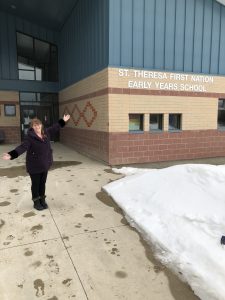
Alana joined Teach For Canada’s 2021 Cohort and accepted a position as a resource and special education teacher at St. Theresa Point Early Years School.


This year has reminded me of the importance of in-person connection. As has been the case in many communities, the COVID-19 pandemic brought challenges to St.Theresa Point as well. School began later than anticipated, and repeated closures limited my face-to-face interactions with students and community members. Chatting with friends and neighbours around St. Theresa Point has helped tremendously, and has allowed me to learn about, and settle into, life here.

When I moved to St. Theresa Point in September 2021, I received a warm greeting and personal tour of the community. By the end of the month, I had already witnessed a traditional bear harvest, facilitated staff training sessions on topics like team building, and joined community members in the first truth and reconciliation ceremony on September 30th. 


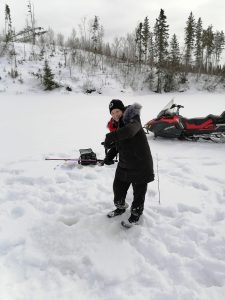
Alana enjoying some ice fishing in St. Theresa Point.


I assisted with meal prep for funerals, visited community agencies such as CFS, Healing Center, Police Station, Health Centre, and Jordan’s Principle, and assisted with three student vaccination clinics. I’ve had a lot of fun participating in various staff activities such as fishing, accompanying two communities on the winter road, and learning to ice fish. Through these experiences, I was able to learn more about the culture, traditions, food, histories, and language of St. Theresa Point.

This year, I have been able to participate in many school and community initiatives, which has helped me meet and deepen my relationships with many amazing people. These crucial connections have helped me strengthen my approach to teaching the community’s most precious gift–the children.

When you reach out and connect with others, inspiration and learning appears, and the outcome is amazing.


Alana has been building relationships by taking part in a number of community activities and initaitives.


This school year, I am the most proud of the fact that I was able to make an impact in the community despite the challenges of the pandemic.

As St. Theresa Point continued to navigate COVID-19, I took on the role of wellness worker on the pandemic committee. I was responsible for phoning folks with their test results, conducting initial symptom interviews, discussing pandemic protocols, conducting daily check-ins to gauge household health, and providing information on services available in the community. 

This role allowed me to learn many names, and people have begun recognizing me around the community, which makes me very proud. Being present in the community by helping with road security during a lockdown, and making hampers of essential supplies for Elders has helped me further grow these relationships.


Alana has enjoyed getting on a first name basis with the folks around St. Theresa Point First Nation.


The most important lesson that I have learned since becoming a Teach For Canada Teacher is that I am now part of a highly skilled network of people, including educators, First Nations community members, and Teach For Canada Staff.


This dynamic group shares ongoing inspiration, exceptional expertise, knowledge, unique life experiences, training, and fantastic support for living and teaching successfully in a First Nation.


With Teach For Canada’s amazing support, you never walk alone in the North. I am truly honoured to be a Teach For Canada Teacher living and teaching in St. Theresa Point First Nation.


adfafda

Making Unforgettable Memories in Nisichawayasihk Cree Nation

Posted by Meredith Stapon

Ashley Buck is a Teach For Canada Teacher in Nisichawayasihk Cree Nation (NCN). She teaches Grade 6 at Otayitiskiwin Kiskinwahamakikamik, which translates to “Footprint House of Learning and Teaching”. Ashley was part of Teach For Canada’s 2020 cohort, and is completing the second year of her two-year teaching commitment in NCN.

This school year, Ashley has been involved in all sorts of activities in the classroom and in the community. From organizing teacher trivia nights and supporting outdoor events, to implementing a classroom economy to educate and engage her students, Ashley has undoubtedly made a positive impact in the lives of her colleagues, neighbours, and students since moving to NCN.

We connected with Ashley to hear more about her school year, and what she’s learned since Going North with Teach For Canada.


Ashley joined Teach For Canada’s 2020 cohort and accepted a position teaching Grade 6 in NCN.


As a Teach For Canada Teacher, coming to Nisichawayasihk has allowed me to meet many families and students who show a willingness to learn and enjoy themselves. The more time spent with my students outside of the classroom–on the lake, in the trails, to the granny and grandpa cabins, and in the hallways of the school–the more engaged they become.

There is so much that I have been busy with this school year, including a lot of fishing, ski-dooing, moose hunting, kayaking, and camping out at the cabins. I could write a novel about how amazing my experience has been so far here in Nisichawayasihk Cree Nation.


Ashley and the Moodie family. “The Moodie family are a lovely family that I have been helping and spending time with. They have given me many unforgettable life experiences, and even gave me a ribbon skirt out of kindness.”


Over the past year, I’ve been able to support many parks and recreation activities around the community. I’ve helped with our sledding and tubing party, long distance race, talent shows and chili cook offs, ice fishing derbies, skating parties, community skating track, and food deliveries to families around the community. I have also assisted with other community initiatives, like helping the dog rescue with dog pulls, driving animals into the rescue in Thompson, and delivering food to the veterinarians who fly in to offer spay and neuter clinics.

In my new role as Vice President of the teachers union, I’ve hosted a successful staff trivia event, and teacher awards ceremony. I have also been able to help with the bargaining for a new collective teaching agreement. During March break, I helped graduates and the Assistant Director of the school board, Nic Campbell, to move classroom supplies and equipment into our new high school.


Ashley helped this year’s graduates move school supplies into their new high school.


One of the challenges that I have faced this year has been the unstable internet connection. The connection could be spotty at times, which made it difficult to conduct research for lessons. The good news is that we’ve recently had fiber-optic cable installed, as well as an update to our cell tower, which has made the service much faster and more reliable.

Throughout the pandemic, we have seen lower student attendance at school, so I have been offering new classroom initiatives to engage and encourage my kids to come to class. This year, I’ve implemented a classroom economy to teach my students with their budgeting skills and responsibility through classroom jobs. They earn special money that can be used to buy real items from the classroom store, which has been generously filled with donations from around the community.


“I am so proud of my students, and of how hard they have worked this year.”


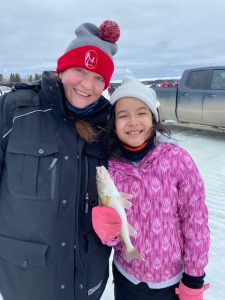
Ashley and her student, Lyrica, at the RCMP Fishing Derby for Kids.


One of my favourite projects that we’ve worked on has been the creation of a classroom book, called “Our Future in STEAM”, about the jobs that my students would like to pursue in the future. It’s being printed, and each will receive their own copy.

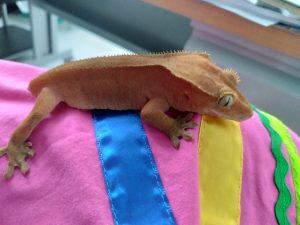
I am also proud of how well my students are taking care of our classroom pet, a crested gecko that I purchased through a class pet grant. Each morning, my students check on her to see where she has hidden for the day. We often have staff and students from other classes drop in to see her amazing tank, which is filled with live plants.


The class’s crested gecko is named is Ashley III. She was named after Ashley and another teacher at school who is also named Ashley.


As a teacher, I have learned to always accept the community into my classroom. I have been fortunate to welcome community members and Elders in my class to show my kids how to make bannock, tell stories, and share life experiences.

Everything that I’ve taken part in so far in Nelson House has been amazing, and I look forward to many more experiences to come. I’ve brought two beautiful dogs into my home, and plan to spend a very long time here in Nisichawayasihk Cree Nation.


Celebrating 10 Years of Gakino’amaage | Strengthening education for generations to come. Explore Our Impact Goose Icon
This is default text for notification bar