
adfafda

Anishinaabe Winter Games Create Friendly Competition in Lac La Croix First Nation

Posted by Meredith Stapon

Rob Mitchell is Principal and Education Director at Zhingwaako Zaaga’Igan Private School in Lac La Croix First Nation. Rob started as a Teach For Canada teacher in Lac La Croix First Nation in 2018, before transitioning into the role of principal in 2020.

Rob has completed and surpassed his two-year teaching commitment, making him a Teach For Canada alumnus. This summer, Rob participated in Teach For Canada’s Administration Preparation Program, and continues to be part of the Administration Development Support Program, providing educators in leadership roles with personalized professional support from an experienced practitioner.
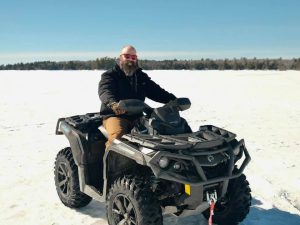
 

Rob Mitchell is Principal and Education Director at Zhingwaako Zaaga’Igan Private School in Lac La Croix First Nation.


Grand Council Treaty #3 organizes an annual Anishinaabe Winter Games to bring students in different First Nations across Treaty 3 territory together to engage in friendly competition through winter sport.


Because of the COVID-19 pandemic, in-person games have been on hold since 2020. But this year, 11 First Nation schools, with a total of 300 students ranging from junior kindergarten to high school, coordinated to participate in the 2021-2022 Anishinaabe Winter Games from their home communities.
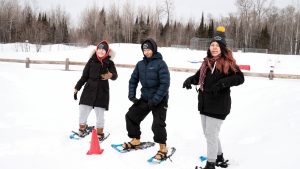
 

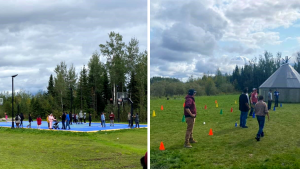
Snowshoeing was one of many events offered at the 2022 Anishinaabe Winter Games in Lac La Croix First Nation.


Teach For Canada teacher Katherine Golden, who accepted a position teaching math and science at Zhingwaako Zaaga’Igan Private School in 2021, had fun getting involved in this year’s Games. She helped out with setting up the events and supporting kids when they needed a break to warm up, and she ended up earning the role of “main snowshoe fastener”.


“The teachers had a lot of fun helping out with the event. We helped lead the kids in the activities, and cheered everyone on.”


“It was a great day of fun in the snow, and the students had an awesome time. I think that they enjoyed being outside much more than they expected.”
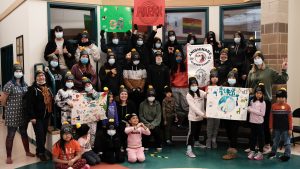
 

Teach For Canada Teacher Katherine Golden (far left) stands with teaching staff and student participants of the 2022 Anishinaabe Winter Games.


We asked principal Rob Mitchell how the students at Zhingwaako Zaaga’Igan Private School enjoyed their Winter Games, which took place on Wednesday, March 9th. He had lots of positive things to say about the momentous occasion.


“When it comes to competition people can get into it, but the Anishinaabe Winter Games was an opportunity to have fun.”


“Even though we couldn’t be together this year, Grand Council Treaty #3 delivered black and gold toques to every participating school. It’s great because, in the photos of kids from other First Nations, all of the participants will be wearing the same hat. It’s like a thread that connects us all together for the games.”
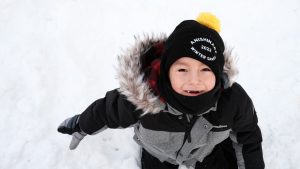
 

A student shows off their hat, provided by Grand Council Treaty #3.


Because the games were remote, the participating schools could not necessarily achieve continuity in terms of the exact events that were offered, but they did their best. The principals from schools in the 11 participating First Nations communicated via email to share ideas and organize the games that would be hosted.
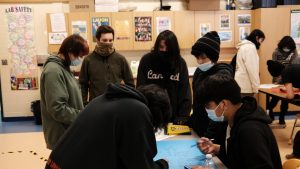
 

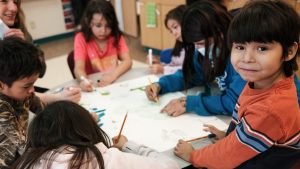
Teach For Canada Teacher and alumnus Nolan Wurfel stands with students as they design their team flag.


At Lac La Croix First Nation, kids were split into cohorts based on their grades, before being separated into teams. The three cohorts included kindergartners through grade 2, grades 3-4, and 6-12.


“When we first split up into cohorts, each team worked together to design their own nation flag, and came up with a cheer or anthem for their group. During the opening ceremony, we got to hear the cheers and see what designs everyone had come up with.”
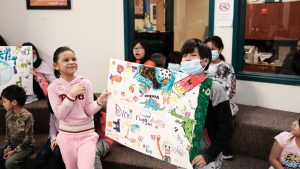
 

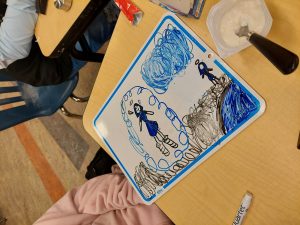
Team ‘Dino Nuggies’ shows off their flag.


The events that Zhingwaako Zaaga’Igan Private School offered in their Anishinaabe Winter Games included:


Tug of war
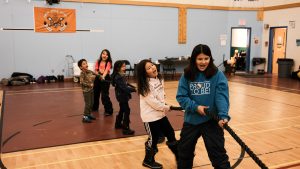
Obstacle course
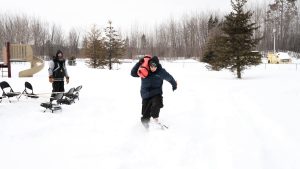
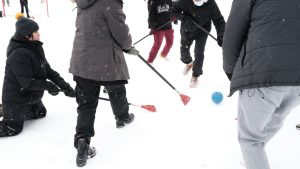
Broomball
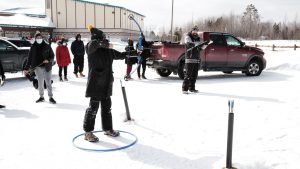
Outdoor archery
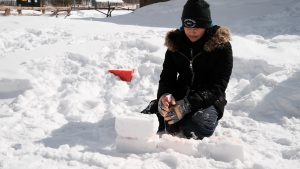
Snow sculpture
 

When asked what the best part of the day was, Rob said that it was having his school come together, and seeing the kids smile. “At one point, the younger children grabbed a bunch of sleds and had fun tobogganing down the hill together.”


The event welcomed people from around the community, with parents being encouraged to stop by and enjoy the competition. Rob reached out to local community members on Facebook to remind them of the games and stir up excitement. 


“The kids were doing their best to run through the obstacle course wearing snowshoes. As you can imagine, it gave us a good laugh.”


To show their support, Teach For Canada’s Community Engagement team shipped out some hot chocolate for participants to enjoy during their day of outdoor fun. 

 

Teach For Canada mailed kits containing hot chocolate and marshmallows to community partners in Ontario and Manitoba to show their support.


This isn’t the only winter activity that students in Lac La Croix First Nation have to look forward to. Shortly after the games, they planned a big ice fishing day with their students before the school closed for March Break.


“Our ice fishing day will be a school event. We’re going to have local fishermen drill about 30 holes in the ice, and we’ll go out between 10 AM-2:30 PM to catch some fish, have a few laughs, and enjoy some hot chocolate.”


The recent school years have challenged teachers and students in many ways. It’s moments like these that showcase fresh air, community, and friendly competition, that remind us of how lucky we are to have each other.


All Winter Games photos are courtesy of Aaron Joo
adfafda

Upholding the Importance of First Nations Data Sovereignty

Posted by Meredith Stapon

About Teach For Canada’s Impact and Learning Team

 
Teach For Canada recognizes that First Nations have an inherent right to the ownership, control, access, and possession (OCAP®) of their information and should be active partners in every aspect of research taking place in their communities. Across Turtle Island, Indigenous communities have a history of colonial-imposed research practices, aimed at conducting research “on” rather than “with” First Nations. These methods typically fail to include Indigenous perspectives, ways of knowing, and culture in their approach.
The Impact and Learning department—an arm of Teach For Canada dedicated to upholding First Nations data sovereignty when determining the impact of our organization—was launched with this as a fundamental principle.
 
Research-Evaluation-Framework-Graphic_2022


How Impact and Learning Came to Be

 
Teach For Canada was founded in 2015, as the result of an Action Canada Fellowship. Around this time, Danbi Cho (former Director of Impact and Learning), met with Kyle Hill (co-founder and former Executive Director), to discuss the approach that many non-profits across Canada had been taking to determine, communicate, and showcase their impact.

They noted that while First Nations had indicated an interest in becoming more involved in research processes, many organizations had not been conducting this work in the spirit of respect and reciprocity. While First Nations were expressing an eagerness to slow down the rapid process of data collection and learn more about conducting research and evaluation themselves, many organizations had failed to center Indigenous perspectives, or recognize First Nations as leaders in research.
 

Danbi Cho, former Director of Impact and Learning, meeting with community partners in Pikangikum First Nation (2019).


Conducting Research in a Good Way

 
Since 2017, Teach For Canada’s Impact and Learning team has worked to develop a unique Research and Evaluation Framework in partnership with the First Nations we serve. The framework is the result of a multi-year learning journey. Throughout this time, Danbi traveled to First Nations to meet and spend time with community partners. Nearly two years were invested into extended visits in communities, where Danbi met with Chiefs, Elders, Council Members, and Education Authorities.

“When meeting with community partners, I’ve been learning that what’s different from our approach is that we’re actually taking the time to do this research in a good way. When I meet with Chief and Council and Education Authorities, I’m not just arriving and dropping a proposal on their desk. I am working with them to determine what needs to be included in this proposal and identify what values, cultural norms, and agreements need to be in place for us to do this work effectively.” – Danbi Cho, Former Director of Impact and Learning

Building upon the framework, First Nations are involved in every aspect of Research and Evaluation Projects, from determining educational goals that both the community and Teach For Canada are looking to advance, to developing research questions, selecting data collection methods, and finalizing a report that reflects our collective impact.

The outcome of these partnership-based research projects, including project results and proposed next steps, are beneficial to First Nations because they can be leveraged to influence policy, or provide insights and information to help close an identified education gap.

“It’s about a true partnership where the findings of our Research and Evaluation work benefit both parties.”

Danbi Cho, Former Director of Impact and Learning


Community First Research and Evaluation Projects

 
Now directed by Deanna Matthews, the Impact and Learning team piloted two community research projects in 2021, with Kitchenuhmaykoosib Inninuwug in northern Ontario, and God’s Lake Narrows First Nation in northern Manitoba.

While travel restrictions have prevented Deanna from visiting with community partners in-person, the Impact and Learning team has been working to building meaningful relationships with First Nations community leadership. Taking the time to incorporate traditional Indigenous knowledge in every element of the proposal design and research processes ensures that the resulting research projects are conducted in close partnership with First Nations and respect a community first approach.

Through Teach For Canada’s 16-week Research Training Program, Deanna has supported program participants to develop research and evaluation skills, while simultaneously identifying community-specific education goals.

Dennis Keaveney was one of the community-based research leads who took part in a 2021 pilot project, with the goal of identifying ways to better incorporate Oji-Cree into the school’s curriculum.
 

Dennis Keaveney participated in Teach For Canada’s Community Research Training Program in 2021.


When asked what drew him to take part in the Program, Dennis mentioned a town hall meeting where he had listened to Indigenous language teachers talk about the pressure that they were receiving from administration to follow the provincial curriculum. The teachers were seeing serious problems with the way that language was being valued at the school and felt that they were being closed off from speaking their language and effectively doing their work.
 

“When I heard about this research opportunity, I was immediately thinking about how I could strengthen their concerns by using community input to put some real data behind them.”

Dennis Keaveney, 2021 Research Training Program participant
 
The findings from these projects have brought community-specific education goals to light and will help demonstrate the collective impact of First Nations partnerships with Teach For Canada. The resulting data will ultimately feed into Teach For Canada’s evidence-based programming while supporting school improvement efforts and local advocacy.

In 2022, the Impact and Learning team continues to advocate for First Nations data sovereignty, and they are working hard to offer the online Research Training Program to even more community partners. Teach For Canada is grateful to be working with communities, and greatly values the input, feedback and guidance we receive from these partnerships.

adfafda

From Toronto to North Spirit Lake First Nation: A Teacher’s Journey North

Posted by Meredith Stapon

Janak Chemjong is a Grade 3 & 4 teacher at Victoria Linklater Memorial School in North Spirit Lake First Nation. Janak joined Teach For Canada’s 2021 cohort, and moved from Toronto to North Spirit Lake in August 2021. 

Below, Janak writes about why connecting with community members has helped him settle into his new role and community, and shares his journey North.


Janak Chemjong is a Teach For Canada teacher living in North Spirit Lake First Nation. He teaches Grades 3 & 4 at Victoria Linklater Memorial School.


Finding Community Connection 

Building relationships with community members is essential when moving to a new place. I am fortunate to have built some strong relationships already, and after four months at North Spirit Lake, I look forward to welcoming the New Year in my new community. I have some tips for the trip that I’ll get to later, but first, I want to share how wonderful North Spirit Lake has been to me.


A Warm Welcome

After I arrived from Toronto in early September, The North Spirit Lake Chief and Council organized a festival week from September 6-10, 2021, for community members, students and teachers. It was the perfect time for me to introduce myself, meet and greet Elders and neighbours, and begin building relationships with parents and students.

One day of the festival was specially allocated for the Victoria Linklater Memorial School staff to coordinate activities for community members and students. I took charge of a “Free Throws” basketball event, and it was wonderful to see students and parents participating enthusiastically.


Janak hosted a Free Throws event and got to know students, parents and community members at North Spirit Lake’s Festival Week.


During the festival, I initiated small talk with students, parents, and Elders in my free time. An Elder, Charlotte Rae, later called me and said, “Thank you so much for deciding to come to North Spirit Lake to teach our children!” Her words meant a lot to me.

My coworker and fellow Teach For Canada educator, Salvador and I regularly visit Church on Sundays to listen to stories from Elders and community members. We like to prepare and serve food to those who come to pray. The church has provided us with many opportunities to get to know parents, Elders and community members. A Native Language teacher, named Rachel, has also greatly assisted with getting me involved in the community. I am very grateful for her support.


Harvest Time Church has become a place for Janak to connect with fellow teachers and neighbours.


First day of Class

On the first day of school, I was greeted by the friendly faces of my students, many whom I recognized from festival week. I welcomed my class before developing classroom norms and sharing stories and expectations. We went for a nature walk in the afternoon and plucked some flowering plants. The students loved being out in nature.


Artwork by one of Janak’s students.


Preparing to Move to the North

The trip from Toronto to North Spirit Lake was quite an adventure!  Here is my story, and a couple of tips for new teachers venturing North!

Preparing to move to a remote First Nation has its challenges. Although I moved within Ontario, relocating to North Spirit Lake meant travelling 1,400 km north of my home in Toronto. 

As my departure date approached, the busier I became preparing for my move. Once a representative from North Spirit Lake Education Authority (NSLEA) confirmed my flight, the ticket arrived by mail, and I started to get organized. Throughout the packing process, I consulted the “Packing to Move” list that was provided by Teach For Canada.

When I arrived in the North and began settling into my new home, I realized that many of the kitchen utensils I had purchased were not needed. The kitchen of my teacherage came well stocked with plates, cooking utensils, pots and pans.

Teach For Canada Tip: Before moving North, ask the local Education Authority to provide you with a detailed list of what is included in your living space. If possible, it may be helpful to ask teachers living in the community for advice on what to bring.


Going North

Janak at the airport.

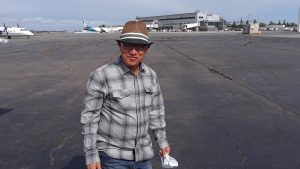
My flight from Toronto to Thunder Bay was delayed three hours due to a thunderstorm. When we arrived in Thunder Bay, a representative from the Education Authority received and greeted the teachers at our hotel. I felt welcomed, and despite the initial delay, I knew that my journey north was off to a positive start. The representative informed the staff that they had chartered a private flight for us from Thunder Bay to North Spirit Lake.

I felt thankful that they were taking care of us.

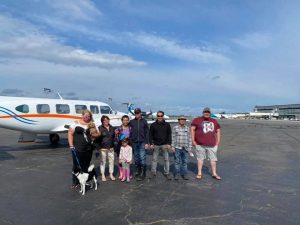
Around 2:00 PM, all of the teachers arrived at the airport with our luggage and groceries, prepared for our flight. After twenty minutes, a young man in his mid-twenties approached, and loaded our things onto the plane. There was only space for three passengers to fly with cargo on the first flight, so I boarded with my colleagues, Luc and Valerie.

Once the young man had finished loading us in, he signaled for the departure. I was expecting the pilot to arrive soon. To my surprise, the same young man who had loaded our bags climbed into the pilot’s seat and started the engine. We landed safely in North Spirit Lake at around 4:00 PM.


The NSLED (North Spirit Lake Education) staff, John and Timmy, received Janak and his colleagues at the airport.


Arriving in North Spirit Lake

NSLEA’s policy requires all teachers arriving in-community to self-isolate for 72 hours before passing a COVID-19 test. We took the swab test at the Stanley Rae Memorial Nursing Station. 

Unexpectedly, my test results came back positive, so the nurses informed the three teachers who had been in close contact with me to remain in isolation until further notice. The nurses had me take a second test, but this time, the results were sent to Sioux Lookout Meno Ya Win Health Centre. 

After 48 hours, I got a phone call from the nursing station. 

“Hi, Janak, we have good news for you. We have received the results of the swab test, and it is negative. The swab machine at the nursing station gives a false reading sometimes,” the nurse added, “and this one is more reliable. Now, you may follow your normal schedule.”

My co-workers and I began preparing for the school year, as well as the upcoming community festival for students, community members, and teachers.

It was quite the journey, but the warm welcome and the community connections made it all worthwhile.

I am excited to be here, and to be working with all of these great children and their families.


adfafda

Summer Enrichment Program 2021: Week Two In Review

Posted by Meredith Stapon

On Monday, July 19th, Teach For Canada’s 2021 Teacher Cohort continued the Summer Enrichment Program, joining Indigenous leaders, northern teachers, and education experts online for a second week of meaningful learnings.

This unique, two-week program typically brings cohorts together in-person, at Lakehead University in Thunder Bay, Ontario. Since 2020, the Summer Enrichment Program has been fully digitized as a result of the Coronavirus pandemic.


Day 1: Monday, July 19, 2021


Participants began the week with a presentation on Trauma Informed Classrooms led by Emily Blackmoon. This content has been removed due to fraudulent identity claims.


The afternoon had the cohort participating in their first language lesson, where they familiarized themselves with the the basics of Swampy Cree, Oji-Cree and Ojibwe with Darlene Kakepetum, Patricia Ningewance and Rita Thompson.


Participating teacher Salvador Flamenia expresses his excitement at learning Indigenous languages during Teach For Canada’s 2021 Summer Enrichment Program.


Day 2: Tuesday July 20, 2021


On Day 7 of the 2021 Summer Enrichment Program, our Teacher Cohort had the unique opportunity of immersing themselves in nature from behind a screen.


Guided by Brian Bellefeuille, this Land Based Learning session had participants discussing the role of the land in Indigenous education and culture, as well as the importance of the environment. Using imaginative and innovative techniques, like digital environments created with home-made video, Brian led a digital walk in the bush and offered teachings on teepees, directional trees, and pine groves.


Brian Bellefeuille presented a session on Land Based Learning on day 7 of Teach For Canada’s 2021 Summer Enrichment Program.


In the afternoon, participants continued their Indigenous language lessons in Swampy Cree, Oji-Cree, and Ojibwe with Darlene Kakepetum, Patricia Ningewance, and Rita Thompson.


Here’s what our participants had to say about Day 7:


“Songlines are navigational routes that trace the journey of ancestral spirits.”

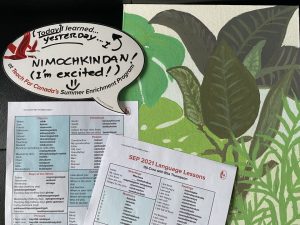
“Today I learned that there is no word for “you’re welcome in Oji-Cree.”

“Today I learned how teepees work in the winter.”

“Today I learned about directional trees (and lots more traditional knowledge)!”


Day 3: Wednesday, July 21, 2021


Wednesday marked the midway point of the second week of SEP. Our teacher cohort began the day with an informative and meaningful presentation entitled miýikosowin: Finding Our Giftedness, in which Ida Swan and Angelina Weenie discussed  the importance of supporting student giftedness in the classroom. 


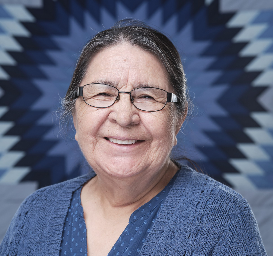
Ida Swan, M.Ed. presented on miýikosowin: Finding our Giftedness during Teach For Canada’s 2021 Summer Enrichment Program.

Dr. Angelina Weenie, Ph.D, presented on miýikosowin: Finding our Giftedness during Teach For Canada’s 2021 Summer Enrichment Program.


Swan and Weenie, Assistant Professors of Indigenous Education at the First Nations University of Canada, discussed the power of storytelling, the need to view children as whole people, and the importance of looking within ourselves, and towards our origins and traditions, to discover who we are as a people.


“It is in our traditional stories and beliefs that we find ways to reconnect and to reclaim who we are. It is within self that we come to know and understand. It is the inward journey that begins the process of how we work forward.” – Angelina Weenie


Through this workshop our teacher cohort began to understand their own giftedness, so that they could then better help their students understand and build on their own giftedness.


“The magic begins with us.” – Angelina Weenie


Read The Magic Begins with Us, a blog highlighting Angelina and Ida’s presentation.


In the afternoon, participants took part in their final language-learning session of the program.


Participating teacher Salvador Flamenia shows off what he learned from his language lessons, during Teach For Canada’s 2020 Summer Enrichment Program.


Participant feedback:

“Miskâsowin means finding our sense of belonging. Miýikosowin means finding our giftedness.”

“Today I learned that a talking circle is a platform to connect children to their language, culture and self.”


Day 4: Thursday, July 22, 2021


Day 9 of our Summer Enrichment Program had an emphasis on the Duty to Report. It is the law in Ontario for those who works closely with children and youth to report suspected child abuse or neglect. 


Kevin Berube leading a session during Teach For Canada’s Sumer Enrichment Program in 2019.


The session was led by panelists Kevin Berube, former Teach For Canada Executive Director, Edith Sanderson from Child and Family Services Manitoba, Leo Atlookan, social counsellor at Eabametoong First Nation, and Karen Cox-Curdon, special education teacher at Big Grassy River First Nation.


Later in the day, participants had the chance to hear Teach For Canada alumni speak on their experiences moving, teaching, and living up North.


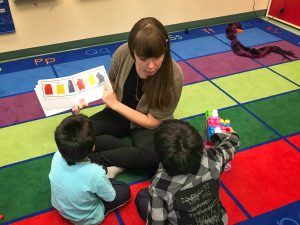
Reading to students up North.


After a day full of discussion, participants shared their learnings:

“Today I learned about the importance of understanding community contex.t”

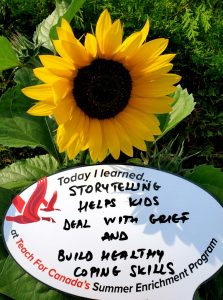
“Storytelling helps kids deal with grief and build healthy coping skills.”

“Today I learned I should be an advocate for my students, ALWAYS.”

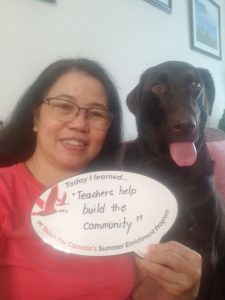
“Teachers help build the community.”

“Point with your lips, not with your fingers.”


Day 5: Friday, July 23, 2021


Today marked the final day of Teach For Canada’s 2021 Summer Enrichment Program. Our Teacher Cohort started off with a session on Literacy Gap Management led by Joanna Lindeman, kindergarten teacher at Ears Falls Public School, and Rachelle Bergen, special education teacher with the Ministry of Education. Participants learned how to support emergent readers and ensure equitable learning outcomes for young Indigenous learners.


Joanna Lindeman presented on Literacy Gap Management during Teach For Canada’s 2021 Summer Enrichment Program.

SEP Presenter Rachelle Bergen is a special education teacher with the Ministry of Education.


In the afternoon, our teacher cohort took part in a SEP Closing Ceremony, which featured thoughtful messages from Prime Minister Justin Trudeau, Tai Kwon Do Olympic athlete Skylar Park who represented RBC, Joshua Cayer, Diversity and Inclusion Talent partner from TD, and Honourable Murray Sinclair, the first Indigenous Judge in Manitoba. The ceremony closed with heartfelt congratulations to the new teaching cohort followed by an epic musical performance by Juno-award winning Indigenous band Digging Roots.


Over the course of Teach For Canada’s Summer Enrichment Program, our 2021 Cohort learned valuable lessons from incredibly knowledgeable and experienced professionals. These learnings will stay with them as they move North to fill much needed teaching roles in First Nations in northern Ontario and Manitoba.


We leave you with some final, post-SEP reflections:

“Everyone has giftedness and when we all work together amazing ideas, learning, and positive change for [the] future can happen.”

“Going North will add so much more in my life learning and experiences.”

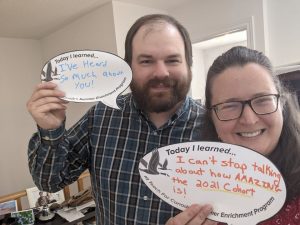
“I can’t stop talking about how amazing the 2021 cohort is!”


Teach For Canada staff member Nicole Journal share her love for the 2021 teacher cohort as the Summer Enrichment Program comes to a close.


Miigwetch to our presenters, facilitators, and all who made SEP possible. Congratulations to the 40 Teach For Canada educators who are one step further on their journeys North.

adfafda

“The Magic Begins with Us” – Valuing Giftedness in the Classroom with Angelina Weenie and Ida Swan

Posted by Meredith Stapon

Teach For Canada’s Summer Enrichment Program brings teachers together with Indigenous leaders, northern teachers, and education experts to prepare them to support student success in northern First Nations in Ontario and Manitoba. Since 2020, the Summer Enrichment Program has been fully digitized as a result of the COVID-19  pandemic. 

The 2021 program featured a presentation by Dr. Angelina Weenie and Ida Swan of the First Nations University of Canada.


Dr. Angelina Weenie is an Associate Professor of Indigenous Education at the First Nations University of Canada, Regina Campus. Her research interests include First Nations pedagogy and language and literacy development, among other areas. Dr. Weenie, a Cree y speaker, hails from Sweetgrass First Nation.


Dr. Angelina Weenie presented miýikosowin: Finding our Giftedness at Teach For Canada’s 2021 Summer Enrichment Program. Photo courtesy of the University of Regina.


Ida Swan. M.Ed, is an Associate Professor of Indigenous Education at the First Nations University of Canada, Saskatoon Campus. Her research interests include Cree Language Stories and Legends – Oral Tradition, and Indigenous Epistemologies and Pedagogy. Ida Swan is a Cree th dialect speaker from Peter Ballantyne Cree Nation.


Ida Swan, M.Ed, joined Dr. Weenie for an engaging presentation on the importance of building on student giftedness in the classroom. Photo courtesy of the University of Regina.


Angelina and Ida joined the 2021 Teach For Canada cohort to lead a presentation on miýikosowin: Finding our Giftedness. This two-hour workshop led participants to understand the significance of their own giftedness. “Only once we understand that,” said Ida Swan, “Can we help our students to understand and build on their own.”

The presenters shared some ways to identify the positive attributes, languages and gifts that each student brings to the classroom. Read on for some strategies that Ida and Angelina offered Teach For Canada educators to encourage the use of these gifts in their lessons.


Storytelling

Storytelling is one First Nations strategy that is proven to motivate, improve students’ self-esteem, and build relationships. Ida and Angelina shared the importance of incorporating storytelling in the classroom wherever possible.

The power of storytelling relates well to Indigenous perspectives and helps reconnect Indigenous people to their histories and cultures. 


“It is in our traditional stories and beliefs that we find ways to reconnect and to reclaim who we are. It is within self that we come to know and understand. It is the inward journey that begins the process of how we work forward.”

– Angelina Weenie.


Emphasizing the Four Aspects of the Child

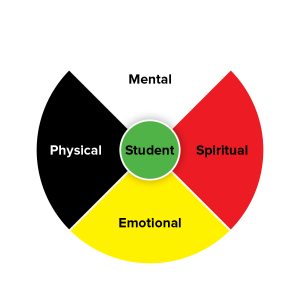
Ida and Angelina referenced the Medicine Wheel Teachings and shared four aspects of the child that should be considered in all teachings: mental, emotional, physical and spiritual.


“The child should always be considered as a full person, and the approach should consider how to help the child in every way.”

– Ida Swan.


They explained that the spiritual domain develops when we see children wanting or being motivated to learn. For this reason, educators must ensure that both the physical and spiritual parts of the child are properly cared for in the classroom.

The spiritual domain is related to being good as a human. Along with the seven disciplines, or Grandfather teachings, these values guide how we conduct ourselves and are necessary to draw from in every aspect of life.


The Importance of Language and Culture


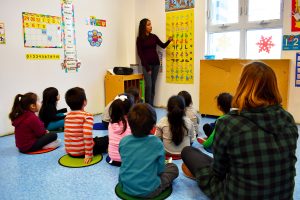
A group of students learning Oji-Cree during a native language lesson.

Angelina and Ida demonstrated some ways that integrating traditional languages within storytelling can provide a path to miýikosowin. If unfamiliar with the language, teachers are encouraged to prioritize the inclusion of Elders in lessons so meaningful knowledge can be passed onto students in their mother tongue.


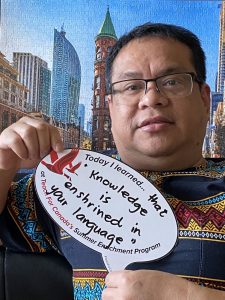
“Knowledge is enshrined in your language.”

– Musqua.


The telling of ancestral stories, myths and legends is a significant way to pass cultural wisdom and knowledge onto First Nations children. Healing stories point the way toward a higher power and the wisdom that exists.

Storytelling allows ancient and hidden wisdom to become more accessible to us. Angelina Weenie insists that creating space for Indigenous perspectives is key for Indigenizing and decolonizing our classrooms.


“I have been told that every time I speak my language, I am decolonizing my mind.”

– Angelina Weenie.


In Closing

The session concluded with an exercise connecting teachers to their own giftedness. Angelina and Ida shared some final kind words and advice as the cohort continued their journey.

“It’s very exciting to go and teach in the North. It’s always a good experience. I love to go North; I’ve taught in Nunavut and spent time in Norway House. I hope the experience is good for you.” – Angelina Weenie.

“There are a couple of things you have to remember about teaching in the North. First of all: you have to dress for the cold weather, but there are many more things to look forward to. The children will be very excited to see you.

Teaching is an exciting time, and teaching in the North is a great opportunity. I’m glad that you have taken this step. I commend you for taking this step, to be able to give yourself up to go North and teach children, and be willing to share your experiences with them.” – Ida Swan.


Interested in learning more about Teach For Canada’s Summer Enrichment Program? Click here.

adfafda

Summer Enrichment Program 2021: Week One In Review

Posted by Meredith Stapon

On Monday, July 12th, Teach For Canada’s 2021 Cohort began their Summer Enrichment Program, joining Indigenous leaders, northern teachers, and education experts online for a meaningful virtual learning experience braiding tradition, history, and pedagogy with technology.

This unique, two-week program typically brings cohorts together in-person, at Lakehead University in Thunder Bay, Ontario. Since 2020, the Summer Enrichment Program has been fully digitized as a result of the Coronavirus pandemic. 


Day 1: Monday, July 12, 2021


The first day’s sessions were all about introductions. Participants collaborated and got to know each other with a Welcome Circle led by Elders-In-Residence Tammy and Bernard Nelson, followed by icebreakers.


Tammy and Bernard Nelson, Elders-In-Residence, Teach For Canada’s 2021 Summer Enrichment Program.


Participant thoughts: 

“It was great to meet all the TFC staff and teachers going up to the North today. Thank you as well, to Tammy and Bernard Nelson, for welcoming us, the prayer, smudging, and song at the end.”

“Today I learned that everyone is different, but that is what makes us unique educators!”


Day 2: Tuesday July 13, 2021


Randy Weekes presenting in-person at Teach For Canada’s 2020 Summer Enrichment Program

Participants in Day 2 of our Summer Enrichment Program learned all about Cultural Adjustment from Randy Weekes, Director, Duty of Care Programs at CANADEM.

Randy provided guidance for our 2021 Teacher Cohort on making adaptations as they prepare to transition into new roles, cultures, and communities in remote First Nations.


What the 2021 Cohort is saying about Randy’s session: 

Today I learned that “Curiosity trumps judgement.” – Randy Weekes

“Remain true to who you are! Be a learner! Thank you, Randy!”


Tuesday’s afternoon programming featured the first Sharing our Gifts session, a meaningful program series connecting teachers with Elders and Knowledge Keepers as they share their gifts. This session featured Traditional Healing with Elder Ralph Johnson.


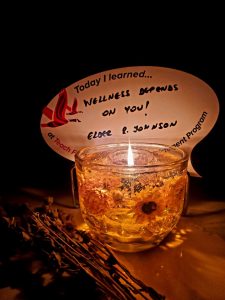
Participant feedback from the 2021 Summer Enrichment Program: “Today I learned… wellness depends on you – Elder R. Johnson”


Day 3: Wednesday, July 14, 2021


‘Laura Maracle presented on Indigenous Histories of Turtle Island at Teach For Canada’s 2021 Summer Enrichment Program’

On Wednesday, Laura Maracle led the 2021 Cohort through a virtual presentation on the Indigenous Histories of Turtle Island.

Participants were encouraged to learn and unlearn, while taking part in meaningful discussions as a group and in smaller break-out rooms.

Wednesday afternoon’s Sharing our Gifts session featured Outdoor & Land-based Teaching, and Community Life with Elder Ron Kelly from Ojibways of Onigaming First Nation.


What did our SEP participants think of Day 3?

“Today I learned to listen to understand, not merely to respond.”

“Today I learned about the power of love and perseverance in the face of pain and suffering.”

“Today I learned that stories from our past can be painful but meaningful. The Elders and Knowledge Keepers help to keep culture alive and remind us who we are.”

“We are not more important than the birds, the bees, rocks, leaves etc… We are all connected.”


Day 4: Thursday, July 15, 2021


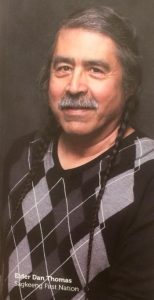
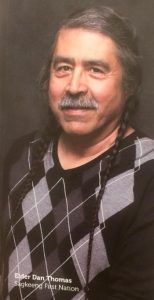
Dan Thomas, Elder & presenter, Teach For Canada’s 2021 Summer Enrichment Program.

On Day 4 of SEP, our 2021 Teacher Cohort learned about Historical Trauma and Indian Residential Schools in an emotional and impactful discussion led by Elder Dan Thomas.

During this session, Thomas discussed his own experiences as a survivor of the residential school system. He touched upon the ways that intergenerational trauma has and continues to negatively affect Indigenous populations.

Participants were able to reflect and comment on the magnitude of the session by sharing their takeaways.

Some themes covered in this session may have been triggering for some. Participants were reminded that Teach For Canada educators are encouraged to connect with SEP Elders-in-Residence for support, and may take advantage of counselling sessions to talk through their learnings. These resources are readily available for all Teach For Canada educators at no-cost, leading up to and throughout their time in the North. 

Thursday afternoon’s Sharing our Gifts session featured Star Chart Teachings lead by William Dumas & Larry Bird.


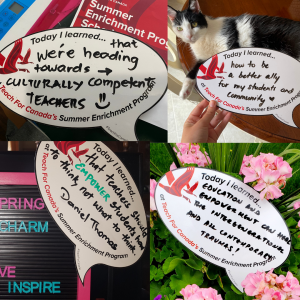
Participant feedback on Day 4:

“Education and empowerment can heal all intergenerational and contemporary traumas!”

“Today I learned how to be a better ally for my students and community.”

“Storytelling is historical, not legend. Oji-Cree comes from the stars.”


Day 5: Friday, July 16, 2021


Dr. Niigaan Sinclair presented ‘How Indigenous Education Can Save the World’ at Teach For Canada’s 2021 Summer Enrichment Program

Friday marked the halfway point of the 2021 Summer Enrichment Program. Our Teacher Cohort engaged with award-winning columnist, scholar, and educator, Dr. Niigaan Sinclair, to explore how Indigenous Education can save the world.

Sinclair’s presentation highlights the importance of Indigenous Education in uplifting communities. During the session, he discussed how the maintenance of community and one’s role within both the community and family is crucial to understanding the Indigenous lens of education. Success is measured, not in terms of the money or status achieved, but by one’s ability to lift up the community and improve the lives of the next generation.

Friday afternoon’s program offering was Meet The Teacher: an interactive virtual event connecting matched teachers with members of their chosen communities. The goal of this session was to begin to foster and build relationships between teachers and community members.


Here’s what our 2021 teacher cohort had to say about Friday’s sessions:

“Indigenous education is about the future, not the past”.

“We can teach our students to live effectively in their space”


We’re looking forward to another week of learning and getting to know our 2021 Teacher Cohort, as we prepare them to fill much needed roles as educators in remote First Nations.

Click here to view the 2021 Summer Enrichment Program Schedule

adfafda

Indian Residential Schools & Intergenerational Trauma with Elder Dan Thomas

Posted by Meredith Stapon

Teach For Canada’s Summer Enrichment Program brings teachers together with Indigenous leaders, northern teachers, and education experts to prepare them to support student success in northern First Nations in Ontario and Manitoba. Since 2020, the Summer Enrichment Program has been fully digitized as a result of the COVID-19 pandemic. 

Dan Thomas presented on Indian Residential Schools and Intergenerational Trauma as part of the 2021 program. Dan is an Elder and Instructor at the University of Winnipeg, where he serves as Elder-in-Residence at their Aboriginal Student Centre and the Seven Oaks School Division.


Elder Dan Thomas presented on Indian Residential Schools and Intergenerational Trauma at Teach For Canada’s 2021 Summer Enrichment Program


Teachings centered around Indigenous histories are a significant part of Teach For Canada’s Summer Enrichment Program. Providing educators with a foundational understanding of the historical treatment of Indigenous peoples in Canada is imperative to preparing educators for their time in the North. 

We are grateful for Elders like Dan who have taken the time and courage to share their stories. Dan is a survivor of Manitoba’s first Provincial residential school, the Frontier Collegiate Institute. He spoke with Teach For Canada educators to share his story, explain his experience navigating historical trauma, and share some steps that we may take to begin to heal.


Residential Schools in Canada


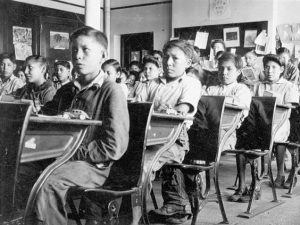
Residential school students in a typical classroom. (Photo courtesy Truth and Reconciliation Commission / Anglican Church Archives, Old Sun)


“A school on every reserve.” This was one of the many treaty promises that the federal government knowingly and willingly broke. 

Not only were First Nations not granted education infrastructure in their communities, but their children were uprooted from their homes to attend residential schools thousands of kilometers away. These children, many as young as 6 years old, were taken at night from spaces filled with love, humour, and honour to institutions that were cold, sterile, and abusive.

This was the reality for over 150,000 First Nations, Inuit and Métis children in Canada, including Elder Dan Thomas. 

Since the first residential school opening in the early 19th century, Canada has operated approximately 130 residential schools, the most recent closing its doors in 1996. Around 150,000 First Nations, Inuit and Métis children were removed from their communities and forced into these government-funded, church-run facilities. 

Here, many faced cruel conditions such as severe malnutrition, abuse at the hands of teachers and staff, and a lack of adequate medical care. With the knowledge and approval of the federal government, some schools conducted nutritional experiments on students without the knowledge or consent of the subjects or their parents. As a result of these inhumane conditions, over 6,000 children were known and recorded to have died at Indian residential schools. 

According to the 1907 Bryce Report, the mortality rate in western Canada’s residential schools was an annual 52%. In 2021 alone, the remains of more than 1,600 children have been found so far, with many school sites to be searched.


What is Historical Trauma?


Historical trauma, also referred to as intergenerational trauma, is trauma faced by a specific cultural group as a result of historic systematic oppression. When these traumas are ignored and no support is offered to those experiencing it, they are passed down to the next generation. In this way, unhealthy, harmful or destructive trauma-induced behaviours become normalized and remain in families. As Elder Thomas puts it, “this cycle becomes a norm, but it is far from natural.”

Canada’s Indigenous communities have suffered consistent traumas since the 1400s. In the past 500 years, communities were decimated by mass deaths, with some losing up to 90% of their populations. These deaths were caused largely by disease, invasion of and expulsion from their homelands, loss of economic self-sufficiency, removal of children from homes, brutal assimilation tactics, and residential school incarceration. 

The traumas that Indigenous communities have faced have been further compounded by the intentional destruction of Indigenous culture, art and community, which eliminated traditional healing and coping mechanisms. Loss of ceremonial freedom, dance, song and use of sacred medicines meant that Indigenous people were unable to properly express or grieve their losses.

In his session, Elder Dan Thomas shared his experience navigating intergenerational trauma. When he encountered triggers that reconnected him to his time at Frontier Collegiate, he would experience extreme physical and emotional distress. Fortunately, Dan was able to identify his trauma and work to process it. Many others remain unable to do so.


Where Do We Go From Here?


Elder Dan Thomas closed his session by sharing what he believes are the necessary next steps to address the historical trauma faced by Indigenous peoples across Canada. Below are his suggestions on how we may work towards a better, more just future.


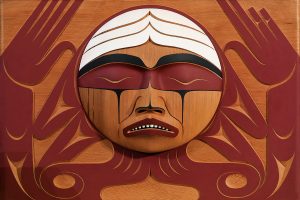
Commissioned by the Truth and Reconciliation Commissions (TRC), this Coast Salish Bentwood Box was carved by artist Luke Marston. The box represents the distinct cultures of former residential school students, and stands as a tribute to all Indian Residential School Survivors. Photo courtesy of the University of Manitoba.


Listen and acknowledge

Before any healing can occur, survivors must release their traumas. But to do this, there must be a genuine acknowledgment of the truth. The Canadian government must prioritize real action and take concrete steps toward reconciliation. For real change to occur, it is not enough for residential school survivors to process their traumas. As Elder Thomas states, we all have a part to play.


Learn and unlearn

Non-Indigenous Canadians must do their part in understanding the historical treatment of Canada’s First Peoples. Canadians must make ongoing efforts to educate themselves on Canada’s unfavourable history and the dark truths this nation holds. They must work to learn and unlearn the histories of Canada from the perspectives of First Nations.

“If enough of us change,” Elder Thomas insists, “we’ll reach a tipping point. This is what is needed to see real change. We must accept nothing less than changed behaviour at all levels of society.”


The role of Educators

Educators must teach Indigenous children how to think instead of what to think. They must empower and encourage Indigenous kids to be proud of who they are. 

When possible, educators should take steps to thoughtfully integrate Indigenous knowledge, values and teachings into their curricula. Culturally responsive lessons, like land-based learning, can pass on meaningful knowledge to new generations and strengthen the pride and Indigeneity of students.


Participants were encouraged to reflect on their learnings following the presentation.


Interested in learning more about this year’s Summer Enrichment Program? Click here.

adfafda

The Elder, the Teacher, and the Beaver: One Teacher’s Learning Story in Sachigo Lake

Posted by Meredith Stapon

Steeves Guild is a grade 3 teacher at Martin McKay Memorial School in Sachigo Lake First Nation.  2021 marks Steeves’s second year with Teach for Canada. He’s been with the organization since graduating from Teacher’s College in 2018 and credits Teach For Canada for providing him with the opportunity to start his teaching career in a northern First Nation.


Elders serve a vital role within Indigenous communities. They are Knowledge Keepers who ensure that skills, traditions, and customs are passed down from one generation to the next. Not only are Elders pillars of their communities, but they also serve as teachers and leaders who foster unity and act on their duty to give back.


Elders are instrumental in the sharing of cultural knowledge and passing down lessons of all sorts. In the case of one Teach For Canada teacher, learning how to traditionally skin a beaver from an Elder in his community has been an exciting and meaningful journey.

The beaver is a national symbol of Canada, and yet, many have never seen one before. Though this wasn’t the case for Steeves, learning the skills necessary to successfully skin a beaver traditionally has required listening, patience and practice.


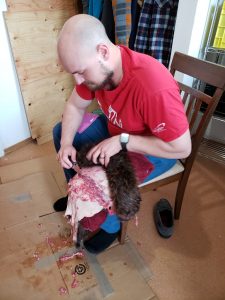
Steeves skinning the beaver.

While working as a teacher at Martin McKay Memorial School in Sachigo Lake, Steeves met Rosemary, an Oji-Cree Elder. When they met, Rosemary worked as the school chef, preparing breakfast and lunch for the students each day. On his way to class in the morning, Steeves would greet Rosemary with an enthusiastic, “Hello, Kookum.”.

It wasn’t long before Rosemary was responding in kind, dubbing him her honourary grandson. The relationship grew over the months, and by the winter holiday, Rosemary had gifted Steeves and his partner a beaver-skin hat and gloves.


Rosemary’s gift meant a lot to Steeves. It made him feel that he had truly been accepted into the Sachigo Lake community.


One early March day, during Sachigo Lake’s annual hunt week, Rosemary returned to Sachigo with a beaver. She asked Steeves to skin it, and he enthusiastically accepted. Steeves had learned early on that you never say no to any kind of experience up North.


The beaver, ready to be skinned.

Steeves returned home that night, threw on a couple of YouTube videos on how to skin, slice, and quarter up a beaver, and felt ready to go. The next day, he reported back to Rosemary that he’d successfully learned how to skin a beaver. In hindsight, this might not have been the wisest statement to make in the presence of a skilled trapper.

She encouraged him to go ahead and demonstrate what he’d learned. After school that day, Steeves collected the beaver, brought it home, and got to work. Once he had removed the animal’s hide and feet, he sent Rosemary a picture, claiming to be finished. Rosemary came over and proceeded to show Steeves how to properly cut off the meat and finish the process.


Steeves skinning the beaver.

In addition to Rosemary, Steeves received several tips from other school staff members, which helped him during the next step of skinning: the boarding process. Steeves learned how to construct the board, and properly nail down, shape, and soften the skin. After all was said and done, Steeves was left with a finished beaver pelt on the wall of his home.


The process of traditionally skinning a beaver

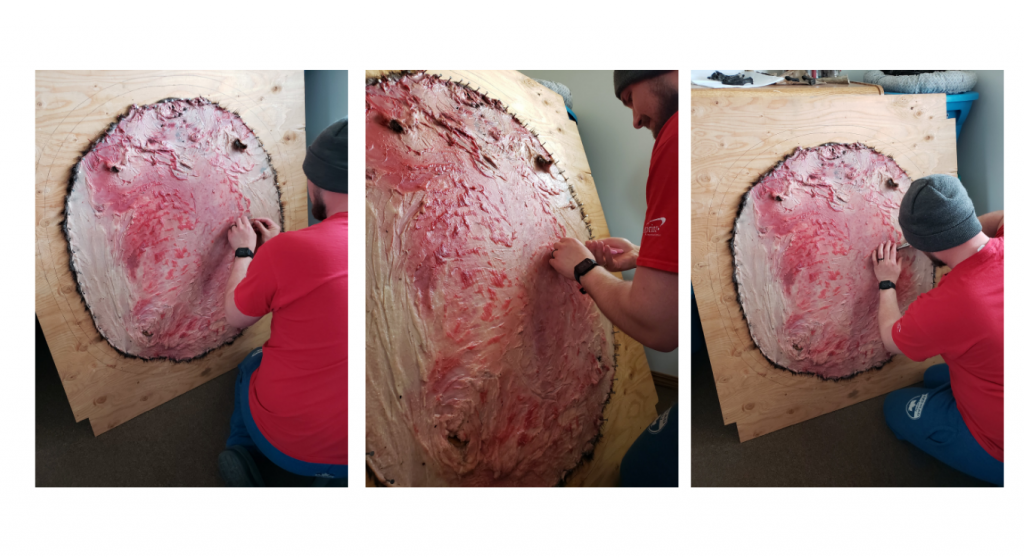
Steeves removing residual fat from the pelt after boarding it.

Step 1: Skinning

First, remove the feet. Make a straight cut from the base of the tail, along the belly, to the bottom lip. Then, begin pulling back the skin, cutting gently until the pelt is completely removed.

Step 2: Fleshing

While carefully holding the pelt, use a knife and a flat tool to slice and cut away any extra meat or fat from the pelt.

Step 3: Boarding

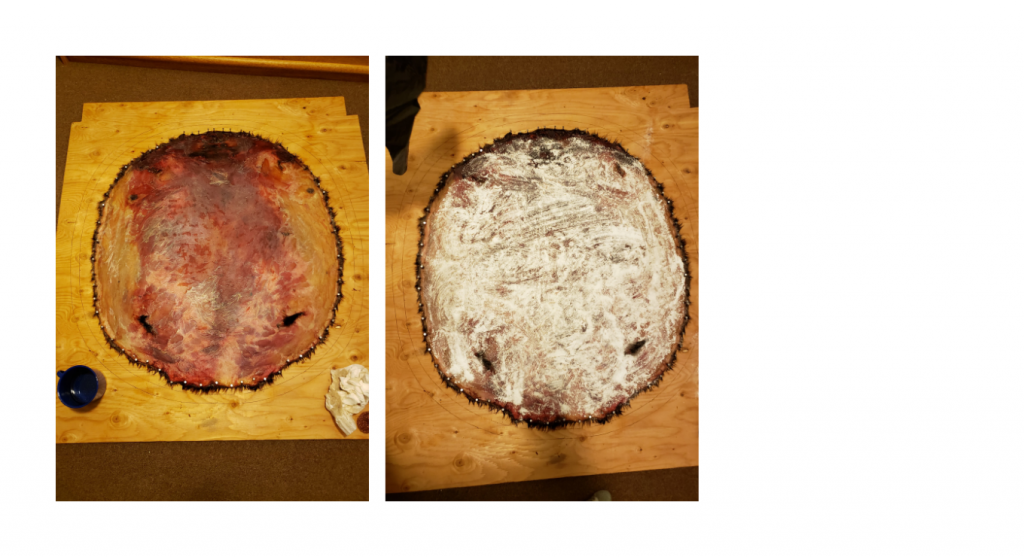
On a large board (Steeves used plywood) trace several large ovals to use as guidelines. Stretch the pelt, and nail it to the board. As the hide dries, continue to scrape away any fat that might have been missed in the fleshing process. After a few days, raise the hide to the top of the nails to allow for airflow so the fur side dries as well. In time, the hide will dry and can be removed from the board, resulting in a perfect beaver pelt.

The drying pelt, after skinning, fleshing, and boarding.


The Influence of Elders

When asked about the influence of Elders on his life in Sachigo Lake, Steeves had nothing but praise to share.

“Rosemary has done much more than coach me through how to skin and cut up a beaver,” Steeves says. “She taught me how to clean a fish, ducks and geese, skin all six of the rabbits my students and I trapped this winter, and skin and section a moose.”


From Steeves’s experience, it’s clear that building relationships with community Elders has been an invaluable way to get the most out of his time up North. He urges new teachers to get their hands dirty and recognize the wealth of cultural knowledge at their fingertips.

“To truly grow as an individual and a teacher, you need to be open to new experiences. Integrate yourself into the community and create your own learning story!”

As for Steeves, now nearing the end of his second year with Teach For Canada, he has more to be proud of than the beaver pelt on his wall. He has new knowledge, meaningful learning experiences, and cherished memories with his chosen family in Sachigo Lake.


Interested in learning more about living and teaching in a northern First Nation? Read our FAQ.


adfafda

Keeping the Team Close: Creative Virtual Meetings in Lac Seul First Nation

Posted by Meredith Stapon

Alisha Hill is a Teach For Canada alumnus and principal at Waninitawingaang Memorial School in Lac Seul First Nation. She joined Teach For Canada’s 2015 cohort and accepted a position teaching kindergarten in Kejick Bay

Alisha transitioned into the role of principal in 2017 and is being supported by Teach For Canada’s Administrative Preparation Program (APP), a new initiative offering northern principals wraparound personal, professional, and peer support, including monthly check-ins, bi-annual coaching, and resource support from an experienced practitioner.

We connected with Alisha to hear more about her efforts to organize unique and engaging virtual activities for her school and staff throughout COVID-19.


Alisha Hill headshot

Alisha Hill joined the 2015 cohort of Teach For Canada and taught kindergarten in Lac Seul First Nation for two years before transitioning into the role of principal.


Due to pandemic restrictions, the staff at Waninitawingaang Memorial School have been unable to travel or take part in many activities together. To help boost morale, I organized the following virtual events for my team:


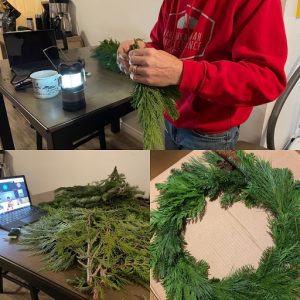
Holiday wreath-making

We purchased wreath-making kits from a local supplier and met virtually to chat and create together.


Game night

This activity engaged folks with games of chess, asking questions to a magic 8-ball, singing karaoke, and even taking on virtual escape rooms!


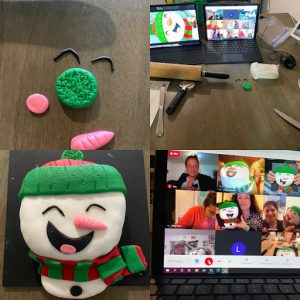
Cake decorating

After providing each member of our team with cake, fondant, and buttercream, we took part in an online workshop led by a local cake decorator.


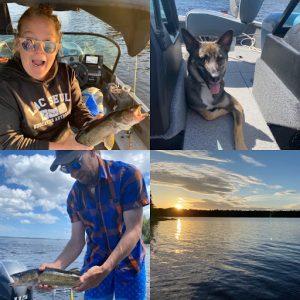
Fishing derby

We organized a fishing derby using an app! Participants went fishing and logged their catches to win prizes.


Informal virtual coffee chats

We did our best to maintain connection with each other while working online. This included lots of birthday songs and philosophical conversations at 8:30 AM.


Our admin team also organized paint nights, scavenger hunts and some great virtual professional development opportunities.

In addition to virtual sessions, we’ve also found ways to connect as a team in-person. I’ve cooked and served many staff lunches, wheeled a ‘room service’ snack cart around to classrooms, and have hosted school-wide theme days. When COVID restrictions have allowed, we’ve held a few bonfires with peanut butter s’mores.


What did this year look like for your students?

Adaptations were made to our programming in an effort to involve community members and staff who were unable to meet in-person with students. 

We’ve organized virtual drumming sessions and have had one of our mental health counselors virtually demonstrate large-scale chainsaw carving, so students could watch and participate in real time. We’ve also had a parent who is well-versed in trapping show the students their animals and skins during Native Language class. 

The students have had a wonderful year taking part in small group or class-only activities. One highlight was participating in Global Play Day. This event had students and staff engaged playing educational games all day, and featured an intense teacher-student chess match. 

Throughout the year, classes were able to go camping, ice fishing, hunting, and make birch syrup.


What steps have you and your community taken to support Lac Seul?

My goal for the year was to keep everyone safe and happy. This meant staying strict about public health guidelines, preparing delicious team lunches at school whenever possible, and making sure that I checked in with staff and students as often as I could.

It was also important for me to work with the Lac Seul Pandemic Planning Committee to get as many staff vaccinated as possible. I was able to organize a session with a professor and epidemiologist from Johns Hopkins University for staff who had questions leading up to their dose.

In March 2020, all administrators, teachers and staff were invited to start planning for a smooth school start in late August, so we were exceptionally prepared for whatever came our way this school year. 

In an attempt to connect with families, our entire board facilitated report card nights. Along with the report cards, food was delivered to each family at their homes. We received 100% attendance! 

We were fortunate to have a community member organize a community-wide food delivery service. Students participated by making apple rings and fried rice with their families. 


What challenges have you experienced as a principal this year?

Not being able to connect with students everyday has been difficult for me. I am normally in classrooms regularly and like to meet with students one-on-one. With strict COVID protocols, my classroom visits became far less frequent. 


Alisha handing out water to students

Alisha spending time with her students before the pandemic.


It hasn’t always been easy to engage students in online learning. We’ve transitioned online for a few short periods of time during the school year, and these times have brought challenges in getting our students to connect and attend classes.  


Despite the challenges of COVID-19, please share something positive that has happened to you this year.

This year has been an interesting one for sure. I have done a lot of personal and professional growth. I am working on my Masters of Education in Digital Technology and Leadership. I have also done lots of Marie Kondo-ing of my personal space, and am learning to prioritize self-care and work-life balance. Taking our new boat out on Lac Seul helps with that! 


It was a year like no other in Lac Seul, but I am proud of all we have achieved. As a team, we have worked together and connected with each other in fun and innovative ways. I am hopeful that next year will bring brighter days, and more memories made with my students. 


Interested in learning more about teaching in the North during COVID-19? Read our FAQ.

adfafda

Working Together while Staying Apart: Pandemic Teaching in Eabametoong First Nation

Posted by Meredith Stapon

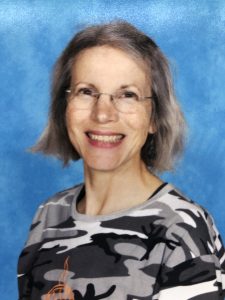
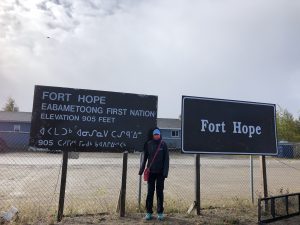
Frances Youck is a grade 6 and 8 teacher who lives and works in Eabametoong First Nation. Eabametoong is located 300 km northeast of Thunder Bay, Ontario. Frances joined Teach For Canada’s 2019 cohort and accepted a teaching position at John C. Yesno Education Centre. Read on to hear how Frances’s work and approach have adapted during COVID-19.


Frances Youck is a Teach For Canada educator who teaches grades six and eight in Eabametoong First Nation.


I am fortunate to be living in Eabametoong First Nation for many reasons, but I am especially proud of how well our Band Council has handled COVID protocols since the pandemic began. Their dedication and proactive approach have kept our case numbers low and allowed in-person learning to continue at the John C. Yesno Education Centre.

In fall of 2020, our team worked together to prepare a safe learning environment at the school. Classes began meeting three days each week towards the end of October. Unfortunately, it wasn’t long before our school experienced a temporary closure following a breach of quarantine. 

For the remainder of the term, teachers were permitted to invite a maximum of three students to the school for hour-long tutoring sessions. We began preparing and distributing homework packages after an extended Christmas break, continued the tutoring sessions, and finally opened the school for classes in mid-February.  


The traditional name ‘Eabametoong’ means the reversing of the water place. Today, the natural occurrence of reversing waters is less visible since the dams diverted the headwaters of the Albany River. The name ‘Fort Hope’ comes from the fur trade era where the Hudson’s Bay Company constructed a fur trading post here in 1890. Both names are still in active use.


Our school administration sought staff input on schedule adaptations from the very beginning. The decision was made to divide students into 10-person cohorts for half days. I was assigned to teach eight grade 6 students in the morning and six grade 8 students in the afternoon.

My teaching experience throughout COVID-19 has consisted of preparing worksheets for homework packages and facilitating intermittent in-person teaching. I have kept in regular contact with students’ parents and guardians through letters, phone calls, text messages, and sometimes a socially distanced knock on the door.


I’ve had to innovate the ways in which I connect with my students during lockdown. In some cases, I’ve had the opportunity to listen to them read their homework passages to me over the phone.


One challenge of homework packages is preparing exercises that students can complete on their own.  It’s my understanding that some students find it challenging to muster the motivation, and at times find the physical space to successfully complete their work from home. The first thing I did after receiving my class list was find out the reading levels of each student. This way, I could create lessons suiting different abilities. 


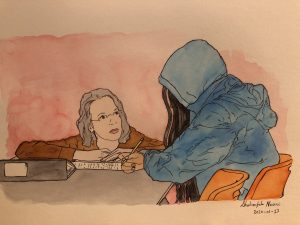
An illustration of Frances and a student by Shokoufeh Nasiri.


On days when in-person teaching is permitted, I keep a range of materials and lessons on hand, so I am ready for whomever shows up. I think routines are helpful during the uncertainty of the pandemic, so I always begin my lessons with an inspiring word of the day. Students then work independently on literacy and numeracy worksheets with some encouragement and coaching. 

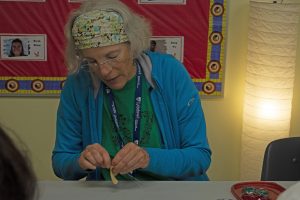
Half-way through the 2 ½ hour session, we have a 30-minute Native Language lesson taught by a local Elder. If more than one student shows up, I like to wrap up this session with a tactile lesson. My favourite way to end our day is by reading from “Tales of Nanabozhoo”, as told by my local Teacher Escort. Students are encouraged to sculpt or draw as they listen.   

One triumph that has come out of this year is the actualization of an After School Program. The program commenced with skating before switching to our mainstay—art. 


Last week, some out-of-town guests led modified versions of active games. I am thrilled  that we can now offer this program in our school and community. So far, it has been very well received— the children and adults who attend always have a blast.

In the face of COVID-19, Eabametoong First Nation has demonstrated a strong sense of togetherness. From the beginning, my school and community have come together to solve problems, uplift one another, and keep each other safe. I am proud to call Eabametoong; home.


Interested in learning more about teaching in the North during COVID-19? Read our FAQ.


Celebrating 10 Years of Gakino’amaage | Strengthening education for generations to come. Explore Our Impact Goose Icon
This is default text for notification bar